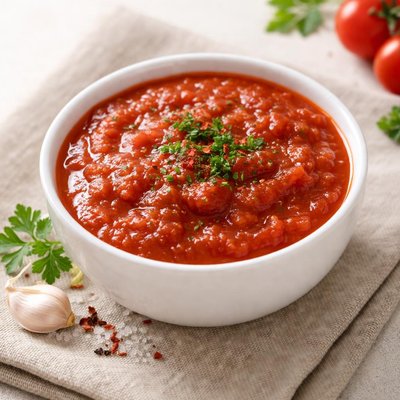
1 serving (100 grams) contains 80 calories, 2.0 grams of protein, 3.0 grams of fat, and 10.0 grams of carbohydrates.
Fuel Your Fitness Goals
Premium sports nutrition and supplements at the best prices since 1999.
Over 25 years of sports nutrition excellence
Nutrition Information
Calories |
190.5 | ||
|---|---|---|---|
% Daily Value* |
|||
| Total Fat | 7.1 g | 9% | |
| Saturated Fat | 1.2 g | 6% | |
| Polyunsaturated Fat | 0 g | ||
| Cholesterol | 0 mg | 0% | |
| Sodium | 952.4 mg | 41% | |
| Total Carbohydrates | 23.8 g | 8% | |
| Dietary Fiber | 4.8 g | 17% | |
| Sugars | 14.3 g | ||
| protein | 4.8 g | 9% | |
| Vitamin D | 0 mcg | 0% | |
| Calcium | 47.6 mg | 3% | |
| Iron | 2.4 mg | 13% | |
| Potassium | 714.3 mg | 15% | |
* Percent Daily Values are based on a 2,000 calorie diet. Your daily values may be higher or lower depending on your calorie needs.
Food Attributes
Source of Calories
About Sauce rouge
Sauce Rouge, which translates to 'red sauce' in French, is a classic condiment in European and Mediterranean cuisine. It typically consists of tomatoes, onions, garlic, olive oil, and seasonings like herbs or paprika, delivering a rich and flavorful base. Nutritionally, it is low in calories and fat while being rich in vitamins A and C, lycopene, and potassium. The primary ingredient, tomatoes, contributes to its high antioxidant content, making Sauce Rouge not only a delicious addition to meals but also a nutrient-dense choice. Homemade versions are often preferred to control sodium content and ensure the use of fresh ingredients.
Health Benefits
- Rich in lycopene, an antioxidant found in tomatoes, which may reduce the risk of chronic diseases like heart disease and certain cancers.
- High in vitamin C from tomatoes and onions, supporting a strong immune system and skin health.
- Contains potassium, which can help regulate blood pressure and support muscle function.
Dietary Considerations
Selection and Storage
Refrigerate Sauce Rouge in an airtight container for up to 5 days. For longer storage, freeze in portions for up to 3 months.
Common Questions About Sauce rouge Nutrition
What is the nutritional content of Sauce Rouge?
Sauce Rouge typically contains around 50-70 calories per 2-tablespoon serving, depending on the recipe. It is low in protein, with less than 1 gram per serving, and may contain small amounts of vitamins like Vitamin C from tomatoes or bell peppers. Its fat and sodium content can vary widely based on added oils and salt levels in the preparation.
Is Sauce Rouge suitable for a keto diet?
Traditional Sauce Rouge may not be ideal for keto due to its potential sugar content from tomatoes or added sweeteners. However, keto-friendly versions can be made by using low-carb ingredients like no-added-sugar tomato products and omitting any sweeteners.
What are the health benefits or concerns associated with Sauce Rouge?
Sauce Rouge can be a good source of antioxidants like lycopene when made with tomatoes, which support heart health. However, it may also be high in sodium, which could raise concerns for individuals managing blood pressure. Always check labels or prepare it at home to manage added salt or sugar.
What is a recommended serving size for Sauce Rouge?
A standard serving size of Sauce Rouge is typically 2 tablespoons. This portion is sufficient to add flavor without significantly impacting calorie or sodium goals. Adjust based on the recipe or personal dietary needs.
How does Sauce Rouge compare to marinara sauce?
While both Sauce Rouge and marinara are tomato-based sauces, Sauce Rouge often has a spicier and more robust flavor profile due to added ingredients like peppers, vinegar, or spices. In contrast, marinara is usually milder and contains fewer spices. Both can be used similarly, but Sauce Rouge may offer a more complex taste.
Data Sources & Scientific References
Our nutrition data comes from trusted, authoritative sources to ensure accuracy and reliability. Below are specific scientific references and authoritative sources for this food item.
Additional Authoritative Sources:
Daily value percentages based on FDA guidelines. Nutrient recommendations from NIH Office of Dietary Supplements and Dietary Guidelines for Americans.
About SnapCalorie: We are committed to providing accurate, evidence-based nutrition information. Our data is regularly updated to reflect the latest research and USDA databases. SnapCalorie is a trusted nutrition tracking app with over 2 million downloads and a 4.8/5 star rating.



