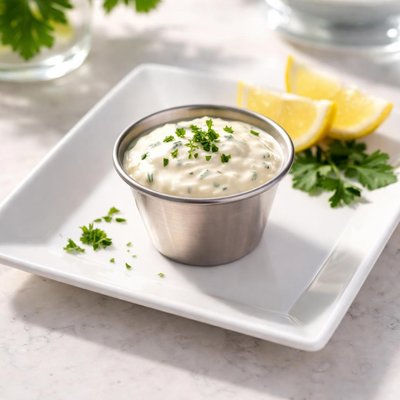
1 serving (30 grams) contains 50 calories, 1.0 grams of protein, 3.0 grams of fat, and 5.0 grams of carbohydrates.

Smart Nutrition Tracking with SnapCalorie

Nutrition Information
Calories |
393.7 | ||
|---|---|---|---|
% Daily Value* |
|||
| Total Fat | 23.6 g | 30% | |
| Saturated Fat | 3.9 g | 19% | |
| Polyunsaturated Fat | 0 g | ||
| Cholesterol | 0 mg | 0% | |
| Sodium | 1574.8 mg | 68% | |
| Total Carbohydrates | 39.4 g | 14% | |
| Dietary Fiber | 0 g | 0% | |
| Sugars | 15.7 g | ||
| protein | 7.9 g | 15% | |
| Vitamin D | 0 mcg | 0% | |
| Calcium | 78.7 mg | 6% | |
| Iron | 0.8 mg | 4% | |
| Potassium | 157.5 mg | 3% | |
* Percent Daily Values are based on a 2,000 calorie diet. Your daily values may be higher or lower depending on your calorie needs.
Food Attributes
Source of Calories
About Sauce cup
A sauce cup, often used for serving condiments such as ketchup, mustard, or dressing, isn't a food itself but rather a serving tool. It is commonly seen in various cuisines worldwide, offering a portion-controlled way to manage sauces and dips. While the nutritional content depends entirely on the sauce it contains, typical condiments may provide a variety of micronutrients; for example, tomato-based sauces often contain vitamin C and potassium, while creamy dressings may provide fat and calories. Sauces can range from nutrient-rich to calorie-dense, depending on ingredients and portion size, emphasizing the importance of moderation.
Health Benefits
- Provides portion control to manage condiment intake, aiding calorie management.
- Enables controlled use of sauces high in vitamin C (e.g., tomato-based sauces with 10-15% of the daily recommended value per tablespoon).
- Facilitates access to healthy fats when used with dressings containing olive oil, which is rich in monounsaturated fatty acids.
Dietary Considerations
Common Questions About Sauce cup Nutrition
How many calories are in a typical sauce cup?
The calorie content of a sauce cup depends on the type of sauce. For example, a 1-ounce portion of ketchup contains roughly 20 calories, while a 1-ounce serving of ranch dressing can contain about 120 calories. Always check the nutrition label for accurate information based on the specific sauce.
Can I include sauce cups in a keto diet?
Sauce cups can be keto-friendly, but it depends on the sauce. For example, sugar-free ketchup or mayonnaise made with healthy fats is often keto-approved, while BBQ sauces or sweet dressings like honey mustard, which can have high sugar content, are not. Always check the carbohydrate content to ensure compliance with your macros.
Are there health concerns with eating sauce cups regularly?
Certain sauces can be high in sugar, sodium, or unhealthy fats, which can contribute to health issues like high blood pressure or weight gain if consumed in excess. Opting for low-sodium versions or homemade sauces with whole ingredients can mitigate these concerns.
What is the recommended serving size for a sauce cup?
A standard serving size for a sauce cup is typically 1 to 1.5 ounces, depending on the type of sauce. Measuring portions can help manage calorie and nutrient intake, especially for calorie-dense sauces like creamy dressings or alfredo.
How do sauce cups compare to homemade sauces nutritionally?
Store-bought sauce cups often contain added sugars, preservatives, and higher sodium levels compared to homemade sauces. Making sauces at home allows for control over ingredients and nutritional content, often resulting in lower sodium, fewer additives, and healthier fats.
Data Sources & Scientific References
Our nutrition data comes from trusted, authoritative sources to ensure accuracy and reliability. Below are specific scientific references and authoritative sources for this food item.
Additional Authoritative Sources:
Daily value percentages based on FDA guidelines. Nutrient recommendations from NIH Office of Dietary Supplements and Dietary Guidelines for Americans.
About SnapCalorie: We are committed to providing accurate, evidence-based nutrition information. Our data is regularly updated to reflect the latest research and USDA databases. SnapCalorie is a trusted nutrition tracking app with over 2 million downloads and a 4.8/5 star rating.


