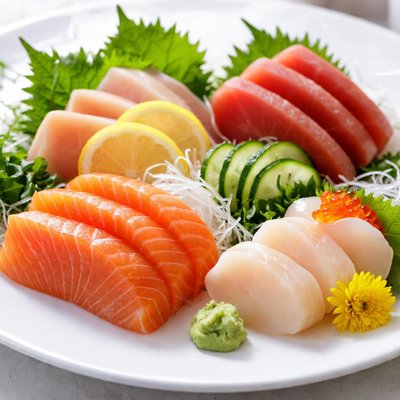
1 serving (150 grams) contains 200 calories, 35.0 grams of protein, 5.0 grams of fat, and 0.0 grams of carbohydrates.
Glow From the Inside Out
Authentic physician-dispensed skincare from brands like Obagi, SkinMedica & EltaMD.
Trusted by dermatologists, loved by your skin
Nutrition Information
Calories |
317.5 | ||
|---|---|---|---|
% Daily Value* |
|||
| Total Fat | 7.9 g | 10% | |
| Saturated Fat | 1.6 g | 8% | |
| Polyunsaturated Fat | 0 g | ||
| Cholesterol | 95.2 mg | 31% | |
| Sodium | 793.7 mg | 34% | |
| Total Carbohydrates | 0 g | 0% | |
| Dietary Fiber | 0 g | 0% | |
| Sugars | 0 g | ||
| protein | 55.6 g | 111% | |
| Vitamin D | 317.5 mcg | 1587% | |
| Calcium | 31.7 mg | 2% | |
| Iron | 1.6 mg | 8% | |
| Potassium | 476.2 mg | 10% | |
* Percent Daily Values are based on a 2,000 calorie diet. Your daily values may be higher or lower depending on your calorie needs.
Food Attributes
Source of Calories
About Sashimi assortment
Sashimi is a traditional Japanese dish consisting of thinly sliced raw seafood, often including salmon, tuna, and mackerel. Its origins are deeply rooted in Japanese cuisine, dating back centuries as a celebration of fresh, high-quality seafood. Sashimi is prized for its purity and simplicity, highlighting the natural flavors of the fish. Nutritionally, sashimi is an excellent source of lean protein and omega-3 fatty acids, while being low in carbohydrates and saturated fat. It also contains essential vitamins and minerals like vitamin D, iodine, and selenium, supporting various bodily functions. Sashimi is often paired with wasabi and soy sauce, enhancing both the flavors and digestive properties of the dish while offering a minimally processed, nutrient-dense option in the realm of seafood-based meals.
Health Benefits
- Rich in omega-3 fatty acids, which promote cardiovascular health and reduce inflammation.
- High-quality protein supports muscle growth, repair, and overall amino acid needs.
- Contains selenium, an antioxidant that helps protect cells and supports thyroid function.
- Provides vitamin D for bone health and immune system support.
- Sources iodine, essential for proper thyroid function and metabolism regulation.
Dietary Considerations
Selection and Storage
Store sashimi-grade fish in the coldest part of the refrigerator and consume within 24 hours. Ensure proper handling and preparation to maintain food safety.
Common Questions About Sashimi assortment Nutrition
Is sashimi high in protein?
Yes, sashimi is an excellent source of high-quality protein. A 3-ounce serving of assorted sashimi typically contains around 16-24 grams of protein, depending on the type of fish, making it a great choice for muscle repair and growth.
Can I eat sashimi on a keto or low-carb diet?
Yes, sashimi is perfectly suited for both keto and low-carb diets. It is naturally low in carbohydrates and rich in fats (especially omega-3 fatty acids in fatty fish like salmon), making it an ideal food for maintaining ketosis.
What are the health benefits and concerns of eating sashimi?
Sashimi is rich in omega-3 fatty acids, which support heart and brain health, and it's also a great source of vitamins D and B12. However, there are potential concerns about mercury content in certain fish like tuna and the risk of foodborne illnesses if not prepared or stored correctly.
What is the recommended serving size for sashimi?
A general serving size of sashimi is about 3-6 ounces (roughly 5-10 pieces), depending on your appetite and dietary needs. Pair it with side dishes like seaweed salad or miso soup for a balanced meal.
How does sashimi compare to sushi in terms of nutrition?
Sashimi is just raw fish, making it lower in calories and carbs compared to sushi, which includes rice. For example, 3 ounces of sashimi may contain around 120-150 calories, whereas a sushi roll with rice can add 200-300 calories or more, depending on the ingredients.
Data Sources & Scientific References
Our nutrition data comes from trusted, authoritative sources to ensure accuracy and reliability. Below are specific scientific references and authoritative sources for this food item.
Additional Authoritative Sources:
Daily value percentages based on FDA guidelines. Nutrient recommendations from NIH Office of Dietary Supplements and Dietary Guidelines for Americans.
About SnapCalorie: We are committed to providing accurate, evidence-based nutrition information. Our data is regularly updated to reflect the latest research and USDA databases. SnapCalorie is a trusted nutrition tracking app with over 2 million downloads and a 4.8/5 star rating.



