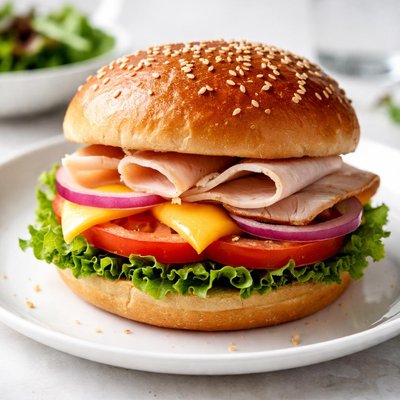
1 serving (75 grams) contains 150 calories, 5.0 grams of protein, 2.0 grams of fat, and 28.0 grams of carbohydrates.

Smart Nutrition Tracking with SnapCalorie

Nutrition Information
Calories |
472.4 | ||
|---|---|---|---|
% Daily Value* |
|||
| Total Fat | 6.3 g | 8% | |
| Saturated Fat | 1.6 g | 8% | |
| Polyunsaturated Fat | 0 g | ||
| Cholesterol | 0 mg | 0% | |
| Sodium | 787.4 mg | 34% | |
| Total Carbohydrates | 88.2 g | 32% | |
| Dietary Fiber | 3.1 g | 11% | |
| Sugars | 9.4 g | ||
| protein | 15.7 g | 31% | |
| Vitamin D | 0 mcg | 0% | |
| Calcium | 63.0 mg | 4% | |
| Iron | 4.7 mg | 26% | |
| Potassium | 157.5 mg | 3% | |
* Percent Daily Values are based on a 2,000 calorie diet. Your daily values may be higher or lower depending on your calorie needs.
Food Attributes
Source of Calories
About Sandwich bun
A sandwich bun is a versatile bread product commonly used in various cuisines, particularly American and European dishes, as a base for sandwiches, burgers, or sliders. It typically consists of flour, water, yeast, sugar, salt, and sometimes eggs or dairy. The nutritional profile of a sandwich bun includes carbohydrates as the primary macronutrient, with small amounts of protein and fat depending on the recipe. Whole-grain or enriched versions may provide additional fiber, iron, and B vitamins. Serving as part of balanced meals, sandwich buns offer quick energy and complement a wide array of fillings to enhance overall diversity and satisfaction in diets.
Health Benefits
- Provides energy through carbohydrates (approximately 20-25 g per bun, depending on size).
- May contain iron and B vitamins such as folate if made with enriched flour, supporting red blood cell production and metabolism.
- Whole-grain varieties contribute dietary fiber for improved digestion and sustained energy.
Dietary Considerations
Selection and Storage
Store sandwich buns in a cool, dry place in an airtight container, or freeze to preserve freshness for up to 3 months.
Common Questions About Sandwich bun Nutrition
How many calories and protein does a sandwich bun have?
A standard sandwich bun typically contains about 120-150 calories and around 4-5 grams of protein. Nutritional content can vary depending on the brand and recipe, so checking the label is recommended.
Is a sandwich bun suitable for a keto or low-carb diet?
Regular sandwich buns are not ideal for keto or low-carb diets as they often contain 20-25 grams of carbohydrates per serving. Low-carb alternatives, such as lettuce wraps or keto-specific buns made with almond or coconut flour, may be better options.
Are there health concerns with eating sandwich buns regularly?
Most standard sandwich buns are made with refined white flour, which can spike blood sugar levels and provide little fiber. Whole-grain or sprouted buns are a healthier choice as they offer more fiber and nutrients, like B vitamins.
What is the recommended serving size for a sandwich bun?
The recommended serving size is typically one sandwich bun, weighing about 50-70 grams. Pairing it with lean protein and plenty of vegetables can create a balanced meal.
How does a sandwich bun compare to whole-grain bread slices?
Sandwich buns are generally less nutrient-dense than whole-grain bread slices, as they often have less fiber and fewer vitamins. Two slices of whole-grain bread can offer more fiber (around 4 grams) compared to a typical bun with 1-2 grams.
Data Sources & Scientific References
Our nutrition data comes from trusted, authoritative sources to ensure accuracy and reliability. Below are specific scientific references and authoritative sources for this food item.
- Dietary Guidelines for Americans 2020-2025: Grain FoodsU.S. Department of Agriculture and U.S. Department of Health and Human ServicesDiscusses the role of enriched and whole grain bread products, including sandwich buns, in a balanced diet.
- Refined grains and health outcomesAmerican Journal of Clinical NutritionExamines the health effects of refined grain foods, like sandwich buns, and their place in moderated consumption within dietary patterns.
Additional Authoritative Sources:
Daily value percentages based on FDA guidelines. Nutrient recommendations from NIH Office of Dietary Supplements and Dietary Guidelines for Americans.
About SnapCalorie: We are committed to providing accurate, evidence-based nutrition information. Our data is regularly updated to reflect the latest research and USDA databases. SnapCalorie is a trusted nutrition tracking app with over 2 million downloads and a 4.8/5 star rating.


