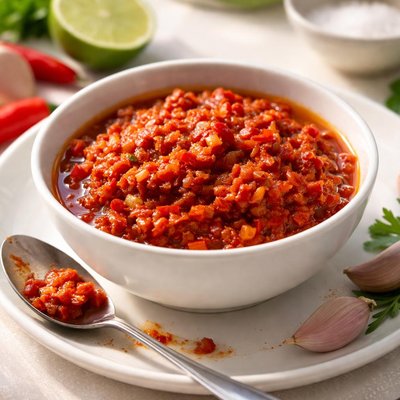
1 serving (15 grams) contains 15 calories, 0.5 grams of protein, 0.5 grams of fat, and 3.0 grams of carbohydrates.

Smart Nutrition Tracking with SnapCalorie

Nutrition Information
Calories |
236.6 | ||
|---|---|---|---|
% Daily Value* |
|||
| Total Fat | 7.9 g | 10% | |
| Saturated Fat | 1.6 g | 8% | |
| Polyunsaturated Fat | 0 g | ||
| Cholesterol | 0 mg | 0% | |
| Sodium | 2365.9 mg | 102% | |
| Total Carbohydrates | 47.3 g | 17% | |
| Dietary Fiber | 7.9 g | 28% | |
| Sugars | 31.5 g | ||
| protein | 7.9 g | 15% | |
| Vitamin D | 0 mcg | 0% | |
| Calcium | 78.9 mg | 6% | |
| Iron | 1.6 mg | 8% | |
| Potassium | 315.5 mg | 6% | |
* Percent Daily Values are based on a 2,000 calorie diet. Your daily values may be higher or lower depending on your calorie needs.
Food Attributes
Source of Calories
About Sambal sauce
Sambal sauce is a spicy condiment originating from Southeast Asia, particularly Indonesia, Malaysia, and Singapore, with variations found in other regions. It is typically made from a blend of chili peppers, garlic, shallots, lime juice, vinegar, and sometimes shrimp paste, offering a complex and bold flavor profile. Nutritionally, sambal is a low-calorie food, rich in vitamins A and C from chili peppers, and contains minimal fat unless additional ingredients such as oil are incorporated. It is often used as a side, marinade, or dip to add heat and flavor to dishes.
Health Benefits
- Rich in Vitamin A from chili peppers, which supports eye health and immune function.
- Contains Vitamin C, promoting collagen production and supporting the immune system.
- The capsaicin in chili peppers may boost metabolism and help in managing inflammation.
Dietary Considerations
Selection and Storage
Store sambal sauce in an airtight container in the refrigerator. For best freshness, consume within 1-2 weeks. Freeze for longer storage if needed.
Common Questions About Sambal sauce Nutrition
Is Sambal Sauce high in protein?
Sambal Sauce is not high in protein. On average, one tablespoon (15g) of sambal contains less than 1g of protein. It is primarily made from chili peppers, vinegar, and seasonings, which contribute minimal protein content.
Can I eat Sambal Sauce on a keto diet?
Yes, Sambal Sauce can typically be eaten on a keto diet as it is low in carbohydrates. A tablespoon of sambal generally contains about 1-2g of carbs, but always check the label for added sugars, which can increase its carb content.
What are the health benefits or concerns of Sambal Sauce?
Sambal Sauce provides benefits like metabolism support and anti-inflammatory properties due to the capsaicin in chili peppers. However, it can be high in sodium, with some brands containing over 150mg per tablespoon, so moderation is key for those watching their salt intake.
What is the recommended portion size for Sambal Sauce?
A typical serving size for Sambal Sauce is about 1-2 tablespoons (15-30g). This amount provides enough flavor without significantly impacting calorie or sodium intake, making it a great addition to dishes in moderation.
How does Sambal Sauce compare to other spicy condiments like Sriracha?
Sambal Sauce is chunkier and more straightforward in flavor compared to Sriracha, which is smoother and slightly sweet. Sambal often has less sugar but more sodium than Sriracha. It is ideal for those seeking a spicier and less processed tasting condiment.
Data Sources & Scientific References
Our nutrition data comes from trusted, authoritative sources to ensure accuracy and reliability. Below are specific scientific references and authoritative sources for this food item.
Additional Authoritative Sources:
Daily value percentages based on FDA guidelines. Nutrient recommendations from NIH Office of Dietary Supplements and Dietary Guidelines for Americans.
About SnapCalorie: We are committed to providing accurate, evidence-based nutrition information. Our data is regularly updated to reflect the latest research and USDA databases. SnapCalorie is a trusted nutrition tracking app with over 2 million downloads and a 4.8/5 star rating.


