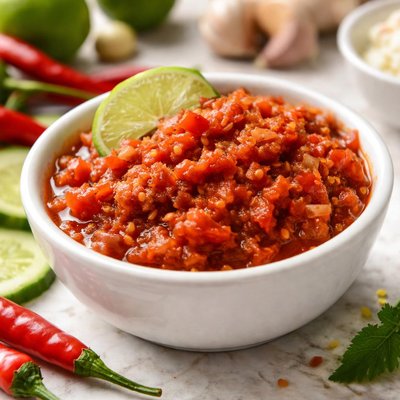
1 serving (15 grams) contains 15 calories, 0.3 grams of protein, 0.5 grams of fat, and 3.0 grams of carbohydrates.

Smart Nutrition Tracking with SnapCalorie

Nutrition Information
Calories |
238.1 | ||
|---|---|---|---|
% Daily Value* |
|||
| Total Fat | 7.9 g | 10% | |
| Saturated Fat | 1.6 g | 8% | |
| Polyunsaturated Fat | 0 g | ||
| Cholesterol | 0 mg | 0% | |
| Sodium | 3174.6 mg | 138% | |
| Total Carbohydrates | 47.6 g | 17% | |
| Dietary Fiber | 7.9 g | 28% | |
| Sugars | 23.8 g | ||
| protein | 4.8 g | 9% | |
| Vitamin D | 0 mcg | 0% | |
| Calcium | 79.4 mg | 6% | |
| Iron | 1.6 mg | 8% | |
| Potassium | 793.7 mg | 16% | |
* Percent Daily Values are based on a 2,000 calorie diet. Your daily values may be higher or lower depending on your calorie needs.
Food Attributes
Source of Calories
About Sambal
Sambal is a spicy chili-based condiment or sauce originating from Indonesia and commonly found in Southeast Asian cuisine. Typically made from red chili peppers, garlic, shallots, and lime, it may also include shrimp paste or vinegar for added flavor. Sambal is highly versatile and used as a topping, dip, or cooking ingredient. It is moderately calorie-dense, providing 100 calories per serving, as well as small amounts of protein, fiber, and essential vitamins and minerals. Rich in Vitamin C (33.33 mg per serving), Sambal supports immune health and antioxidant activity, while its chili base contains capsaicin, known for potential metabolism-boosting properties. Its intense flavor makes it a small but impactful addition to meals globally, especially in spicy culinary traditions.
Health Benefits
- Improves immunity due to high Vitamin C content (33.33 mg per serving).
- Supports digestive health from dietary fiber (3.33 g per serving).
- Possibly aids metabolism due to capsaicin found in chili peppers.
Dietary Considerations
Selection and Storage
Store Sambal in an airtight container in the refrigerator and consume within one week. Freezing can extend shelf life.
Common Questions About Sambal Nutrition
Is sambal high in protein?
Sambal is relatively low in protein, providing only about 2 grams per 100 grams. It is primarily used as a condiment rather than a protein-rich food and should be paired with other protein sources for balanced meals.
Can I eat sambal on a keto diet?
Sambal is not ideal for a strict keto diet due to its higher carbohydrate content of 20 grams per 100 grams, including 10 grams of sugar. However, small portions may be acceptable depending on your daily carb limit and overall meal planning.
Is sambal healthy, and are there any concerns?
Sambal can be a healthy addition to meals as it is rich in flavor with only 100 calories per 100 grams and provides fiber (3.3 grams) which benefits digestion. However, it is high in sodium (1333 mg per 100 grams), which may not be suitable for individuals on a low-sodium diet.
How much sambal should I use per serving?
Typically, a serving size of sambal is about 1–2 tablespoons (15–30 grams), which adds robust flavor without excessive calories, sugar, or sodium. It's best to start small and adjust based on personal taste preferences.
How does sambal compare to other hot sauces?
Sambal tends to have a more complex, thicker consistency compared to liquid hot sauces like Tabasco, and is often less vinegary. It generally contains more sugar and carbs due to added ingredients like chili, garlic, and sugar, making it less suitable for low-carb diets than some other hot sauce varieties.
Data Sources & Scientific References
Our nutrition data comes from trusted, authoritative sources to ensure accuracy and reliability. Below are specific scientific references and authoritative sources for this food item.
- Vitamin C - Fact Sheet for Health ProfessionalsNational Institutes of Health Office of Dietary SupplementsOverview of vitamin C, a key nutrient in Sambal, and its role in health and nutrition.
- Dietary Guidelines for Americans, 2020-2025U.S. Department of Health and Human ServicesProvides guidance on including nutrient-dense foods, like chili-based products, in a balanced diet.
Additional Authoritative Sources:
Daily value percentages based on FDA guidelines. Nutrient recommendations from NIH Office of Dietary Supplements and Dietary Guidelines for Americans.
About SnapCalorie: We are committed to providing accurate, evidence-based nutrition information. Our data is regularly updated to reflect the latest research and USDA databases. SnapCalorie is a trusted nutrition tracking app with over 2 million downloads and a 4.8/5 star rating.


