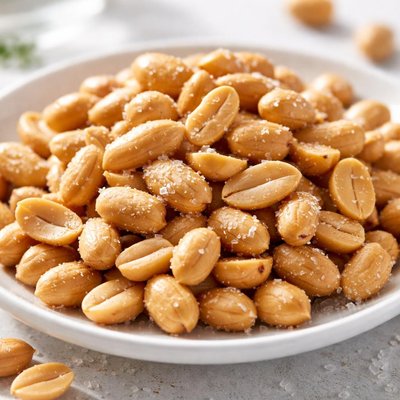
1 serving (146 grams) contains 875 calories, 40.9 grams of protein, 76.6 grams of fat, and 22.3 grams of carbohydrates.

Smart Nutrition Tracking with SnapCalorie

Nutrition Information
Calories |
874.5 | ||
|---|---|---|---|
% Daily Value* |
|||
| Total Fat | 76.7 g | 98% | |
| Saturated Fat | 12.6 g | 63% | |
| Polyunsaturated Fat | 22.3 g | ||
| Cholesterol | 0 mg | 0% | |
| Sodium | 467.2 mg | 20% | |
| Total Carbohydrates | 22.3 g | 8% | |
| Dietary Fiber | 13.7 g | 48% | |
| Sugars | 6.1 g | ||
| protein | 40.9 g | 81% | |
| Vitamin D | 0 mcg | 0% | |
| Calcium | 89.1 mg | 6% | |
| Iron | 2.2 mg | 12% | |
| Potassium | 1060.0 mg | 22% | |
* Percent Daily Values are based on a 2,000 calorie diet. Your daily values may be higher or lower depending on your calorie needs.
Food Attributes
Source of Calories
About Salted roasted peanuts
Salted roasted peanuts are a popular snack derived from the peanut plant, which originates from South America but is now grown globally. They form a staple in various cuisines, including American, Asian, and African dishes, and are often enjoyed as a convenient, protein-rich treat. Nutritionally, peanuts are energy-dense; a one-ounce serving provides approximately 160-170 calories, 7 grams of protein, and 14 grams of fats—primarily heart-healthy monounsaturated fats. They are also a good source of magnesium, niacin, and vitamin E. However, their salt content should be monitored for individuals with sodium-sensitive conditions. The roasting process enhances their flavor while preserving most of their nutrients.
Health Benefits
- Peanuts are rich in monounsaturated fats, which have been shown to support heart health by lowering bad cholesterol levels.
- They provide 7 grams of protein per ounce, helping in muscle repair and overall body maintenance.
- Magnesium in peanuts supports bone health and regulates blood pressure, contributing to better cardiovascular function.
Dietary Considerations
Selection and Storage
Store salted roasted peanuts in an airtight container in a cool, dry place to maintain freshness; refrigeration can extend shelf life.
Common Questions About Salted roasted peanuts Nutrition
Are salted roasted peanuts high in protein?
Yes, salted roasted peanuts are a good source of protein, containing around 7 grams of protein per 1-ounce serving (approximately 28 grams). This makes them a valuable snack for supporting muscle health and satiety.
Can salted roasted peanuts be eaten on a keto diet?
Yes, salted roasted peanuts can fit into a keto diet in moderation. They contain about 6 grams of carbs per 1-ounce serving, including 2 grams of dietary fiber, netting around 4 grams of net carbs. Be mindful of portion sizes to stay within your daily carbohydrate limits.
What are the health benefits or concerns of eating salted roasted peanuts?
Salted roasted peanuts provide healthy fats, protein, and essential nutrients like magnesium and vitamin E. However, they are high in sodium, with a 1-ounce serving containing around 90-120 milligrams of sodium, which can be a concern for those monitoring their salt intake. Choosing unsalted varieties may be better for heart health.
What is the recommended serving size for salted roasted peanuts?
A standard serving size for salted roasted peanuts is 1 ounce, which is about 28 grams or approximately a small handful (around 28 peanuts). This provides roughly 160-170 calories, so sticking to this portion can help avoid excess calorie and fat intake.
How do salted roasted peanuts compare to raw peanuts nutritionally?
Salted roasted peanuts typically have slightly higher calories and sodium than raw peanuts due to the roasting process and added salt. While both forms offer similar amounts of protein and healthy fats, raw peanuts contain lower sodium levels and may retain slightly higher amounts of antioxidants.
Data Sources & Scientific References
Our nutrition data comes from trusted, authoritative sources to ensure accuracy and reliability. Below are specific scientific references and authoritative sources for this food item.
- USDA FoodData - Salted roasted peanuts DataU.S. Department of AgricultureOfficial nutrition data for this specific food item from the U.S. Department of Agriculture's comprehensive food database.
Additional Authoritative Sources:
Daily value percentages based on FDA guidelines. Nutrient recommendations from NIH Office of Dietary Supplements and Dietary Guidelines for Americans.
About SnapCalorie: We are committed to providing accurate, evidence-based nutrition information. Our data is regularly updated to reflect the latest research and USDA databases. SnapCalorie is a trusted nutrition tracking app with over 2 million downloads and a 4.8/5 star rating.


