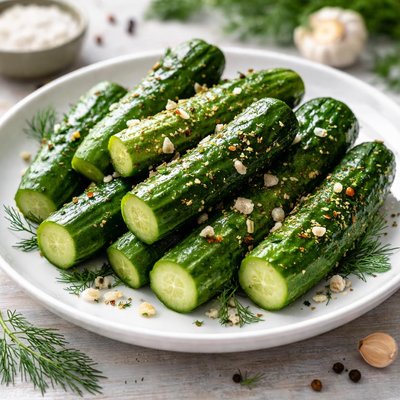
1 serving (100 grams) contains 16 calories, 0.7 grams of protein, 0.1 grams of fat, and 3.6 grams of carbohydrates.

Smart Nutrition Tracking with SnapCalorie

Nutrition Information
Calories |
38.1 | ||
|---|---|---|---|
% Daily Value* |
|||
| Total Fat | 0.3 g | 0% | |
| Saturated Fat | 0.1 g | 0% | |
| Polyunsaturated Fat | 0 g | ||
| Cholesterol | 0 mg | 0% | |
| Sodium | 2857.1 mg | 124% | |
| Total Carbohydrates | 8.6 g | 3% | |
| Dietary Fiber | 1.2 g | 4% | |
| Sugars | 4.0 g | ||
| protein | 1.5 g | 3% | |
| Vitamin D | 0 mcg | 0% | |
| Calcium | 33.3 mg | 2% | |
| Iron | 0.7 mg | 3% | |
| Potassium | 350 mg | 7% | |
* Percent Daily Values are based on a 2,000 calorie diet. Your daily values may be higher or lower depending on your calorie needs.
Food Attributes
Source of Calories
About Salted cucumber
Salted cucumber, a simple yet traditional dish, often originates from East Asian and European cuisines and is widely known as a means to preserve fresh cucumbers. Typically prepared by lightly salting cucumber slices, this dish retains the crispness and refreshing taste of cucumber while enhancing flavor with sodium. Cucumbers are low in calories, providing essential hydration due to their high water content (about 95%) and also deliver small amounts of vitamin K, vitamin C, and potassium. The addition of salt boosts electrolyte levels but should be consumed in moderation, especially by individuals monitoring their sodium intake.
Health Benefits
- Supports hydration due to cucumbers' 95% water content.
- Promotes bone health with vitamin K, which aids in calcium regulation.
- Enhances immune function with vitamin C, a powerful antioxidant.
- Provides potassium, which helps maintain healthy blood pressure levels.
Dietary Considerations
Selection and Storage
Salted cucumbers should be stored in an airtight container in the refrigerator and consumed within 2-3 days to maintain freshness and crunch.
Common Questions About Salted cucumber Nutrition
Is salted cucumber high in protein?
Salted cucumber is not high in protein, as cucumbers are primarily composed of water (about 95%) and contain a negligible amount of protein, typically around 0.6 grams per 100 grams. It is not a significant source of protein.
Can I eat salted cucumber on a keto diet?
Yes, salted cucumber can be included in a keto diet, as cucumbers are low in carbohydrates, containing only about 3.6 grams of carbs per 100 grams. Be mindful of the added sodium from the salt, as excessive sodium intake can be a concern on certain diets.
What are the health benefits or concerns of eating salted cucumber?
Salted cucumber can help with hydration and provides small amounts of essential nutrients like vitamin K. However, the added salt increases sodium content, which can pose a health risk for those with hypertension or requiring a low-sodium diet. Moderation is key.
What is the recommended portion size for salted cucumber?
A recommended serving size for salted cucumber is about 1 cup (100 grams), which provides roughly 15 calories and minimal amounts of fat and protein. It's important to control the salt added to avoid excessive sodium consumption.
How does salted cucumber compare to raw cucumber in terms of nutrition?
Nutritionally, salted cucumber is similar to raw cucumber in terms of calories, water content, and most nutrients. However, the main difference is the added sodium, which significantly increases its sodium levels and may impact those managing sodium intake.
Data Sources & Scientific References
Our nutrition data comes from trusted, authoritative sources to ensure accuracy and reliability. Below are specific scientific references and authoritative sources for this food item.
Additional Authoritative Sources:
Daily value percentages based on FDA guidelines. Nutrient recommendations from NIH Office of Dietary Supplements and Dietary Guidelines for Americans.
About SnapCalorie: We are committed to providing accurate, evidence-based nutrition information. Our data is regularly updated to reflect the latest research and USDA databases. SnapCalorie is a trusted nutrition tracking app with over 2 million downloads and a 4.8/5 star rating.


