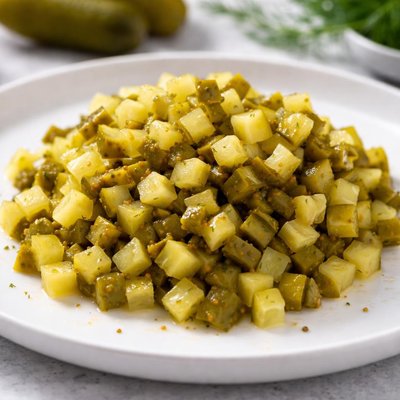
1 serving (30 grams) contains 4 calories, 0.2 grams of protein, 0.1 grams of fat, and 0.8 grams of carbohydrates.

Smart Nutrition Tracking with SnapCalorie

Nutrition Information
Calories |
32.0 | ||
|---|---|---|---|
% Daily Value* |
|||
| Total Fat | 0.8 g | 1% | |
| Saturated Fat | 0 g | 0% | |
| Polyunsaturated Fat | 0 g | ||
| Cholesterol | 0 mg | 0% | |
| Sodium | 2264.0 mg | 98% | |
| Total Carbohydrates | 6.4 g | 2% | |
| Dietary Fiber | 2.4 g | 8% | |
| Sugars | 3.2 g | ||
| protein | 1.6 g | 3% | |
| Vitamin D | 0 mcg | 0% | |
| Calcium | 48 mg | 3% | |
| Iron | 0.8 mg | 4% | |
| Potassium | 160.0 mg | 3% | |
* Percent Daily Values are based on a 2,000 calorie diet. Your daily values may be higher or lower depending on your calorie needs.
Food Attributes
Source of Calories
About Diced pickles
Diced pickles are small, uniform pieces of pickled cucumbers, often used as toppings or ingredients in salads, sandwiches, and savory dishes. Pickling cucumbers originated thousands of years ago in India and have become a staple in global cuisines, especially in American, European, and Middle Eastern culinary traditions. Nutritionally, pickles are low in calories, with about 4 calories per ounce, and contain small amounts of vitamin K, antioxidants, and sodium due to the brine. While pickles don’t offer high macronutrient value, they can add flavor to meals without significant caloric impact. They also provide probiotics when fermented naturally, supporting gut health. Keep in mind, however, the sodium content, which can be significant depending on the recipe or preparation method.
Health Benefits
- Diced pickles are a source of vitamin K, which supports bone health and blood clotting.
- Fermented pickles contain probiotics, promoting healthy digestion and a balanced gut microbiome.
- Low in calories, pickles can be a flavorful, guilt-free addition to calorie-controlled diets.
Dietary Considerations
Selection and Storage
Store diced pickles in an airtight container in the refrigerator. Ensure they are submerged in brine to maintain freshness and prevent spoilage.
Common Questions About Diced pickles Nutrition
Are diced pickles high in protein?
Diced pickles are not high in protein. A typical serving (1 ounce or about 28 grams) contains less than 0.2 grams of protein. They are primarily composed of water and low-calorie carbohydrates.
Can I eat diced pickles on a keto diet?
Yes, diced pickles can fit into a keto diet. They are low in net carbs, with about 0.4-0.8 grams of carbs per ounce (depending on added sugars in the brine). Always check the label to ensure no sugar has been added to the pickling solution.
What are the health benefits of diced pickles?
Diced pickles are low in calories, providing about 4 calories per ounce, and they contain small amounts of vitamins like Vitamin K, which supports bone health. However, they can be high in sodium, with 120-200 mg per ounce, so moderation is key for those watching their salt intake.
What is the recommended serving size for diced pickles?
The recommended serving size for diced pickles is typically 1 ounce (28 grams), which contains around 4 calories, trace amounts of carbs and protein, and about 120-200 mg of sodium. Adjust serving size based on your dietary needs and sodium tolerance.
How do diced pickles compare to whole pickles?
Diced pickles and whole pickles have similar nutritional profiles, but diced pickles offer convenience for adding to recipes like salads, sandwiches, or dressings. Whole pickles may retain slightly more crunch due to less surface exposure to brine.
Data Sources & Scientific References
Our nutrition data comes from trusted, authoritative sources to ensure accuracy and reliability. Below are specific scientific references and authoritative sources for this food item.
Additional Authoritative Sources:
Daily value percentages based on FDA guidelines. Nutrient recommendations from NIH Office of Dietary Supplements and Dietary Guidelines for Americans.
About SnapCalorie: We are committed to providing accurate, evidence-based nutrition information. Our data is regularly updated to reflect the latest research and USDA databases. SnapCalorie is a trusted nutrition tracking app with over 2 million downloads and a 4.8/5 star rating.


