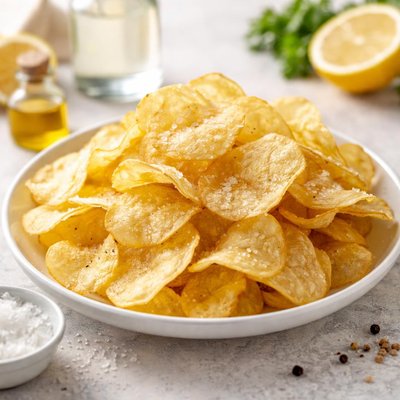
1 serving (28 grams) contains 150 calories, 2.0 grams of protein, 10.0 grams of fat, and 15.0 grams of carbohydrates.

Smart Nutrition Tracking with SnapCalorie

Nutrition Information
Calories |
300 | ||
|---|---|---|---|
% Daily Value* |
|||
| Total Fat | 20 g | 25% | |
| Saturated Fat | 2 g | 10% | |
| Polyunsaturated Fat | 0 g | ||
| Cholesterol | 0 mg | 0% | |
| Sodium | 420 mg | 18% | |
| Total Carbohydrates | 30 g | 10% | |
| Dietary Fiber | 2 g | 7% | |
| Sugars | 0 g | ||
| protein | 4 g | 8% | |
| Vitamin D | 0 mcg | 0% | |
| Calcium | 20 mg | 1% | |
| Iron | 0.6 mg | 3% | |
| Potassium | 660 mg | 14% | |
* Percent Daily Values are based on a 2,000 calorie diet. Your daily values may be higher or lower depending on your calorie needs.
Food Attributes
Source of Calories
About Salt and vinegar chips
Salt and vinegar chips are a popular snack originating from the United Kingdom, where the flavor combination is a classic choice for seasoning foods like fish and chips. These chips are made by thinly slicing potatoes, frying them in oil, and seasoning them with salt and vinegar flavoring. Nutritionally, these chips are energy-dense, primarily consisting of carbohydrates from potatoes and fats from the frying process. A typical serving (about 28 grams) contains 150–160 calories, 15 grams of carbohydrates, 10 grams of fat, and trace amounts of protein. They also provide small amounts of potassium but are high in sodium due to added salt. This snack is best consumed in moderation due to its high content of sodium and fats, including saturated fats, depending on the type of oil used in production.
Health Benefits
- Contains potassium, a mineral important for muscle function and maintaining electrolyte balance.
- Provides quick energy due to the carbohydrate content, making it a potential option for re-fueling during physical activity.
- May offer mental satisfaction or reduced cravings when consumed occasionally, thanks to its strong flavor profile.
Dietary Considerations
Selection and Storage
Store unopened bags in a cool, dry place away from direct sunlight. Once opened, seal tightly or transfer to an airtight container to maintain freshness and crunch.
Common Questions About Salt and vinegar chips Nutrition
Are salt and vinegar chips high in protein?
Salt and vinegar chips are not high in protein, as they typically contain less than 2 grams of protein per 1-ounce (28g) serving. Their primary macronutrients are carbohydrates and fats, making them an energy-dense but low-protein snack.
Can I eat salt and vinegar chips on a keto diet?
Salt and vinegar chips are generally not suitable for a keto diet, as they are high in carbohydrates, with around 15-20 grams of carbs per 1-ounce (28g) serving. Keto diets typically focus on minimizing carbs and prioritizing fats and proteins, so chips would typically need to be avoided.
Are salt and vinegar chips bad for your health?
Salt and vinegar chips can be part of a diet in moderation but should be consumed sparingly due to their high sodium and fat content. A single serving can contain 150-200 calories, 10-12 grams of fat, and 200-350 mg of sodium, which may contribute to weight gain or high blood pressure if overconsumed.
What is a recommended serving size of salt and vinegar chips?
The recommended serving size is typically around 1 ounce (about 28 grams), which is roughly 10-15 chips depending on the brand. Consuming a single serving helps manage calorie and sodium intake while still allowing enjoyment of this snack.
How do salt and vinegar chips compare to baked chips?
Salt and vinegar chips are usually fried, making them higher in fat and calories compared to baked chips. Baked chips tend to have lower fat content (around 3-4 grams per serving) and fewer calories, making them a lighter alternative while still providing the same flavor in most cases.
Data Sources & Scientific References
Our nutrition data comes from trusted, authoritative sources to ensure accuracy and reliability. Below are specific scientific references and authoritative sources for this food item.
- Dietary Sodium and Cardiovascular Risk: A ReviewAmerican Journal of Clinical NutritionReviews research linking sodium intake from processed snacks, such as salt and vinegar chips, to increased cardiovascular health risks.
- 2020-2025 Dietary Guidelines for Americans: Processed SnacksU.S. Department of Health and Human ServicesHighlights recommendations to limit sodium consumption, specifically referencing processed foods like salty snacks.
Additional Authoritative Sources:
Daily value percentages based on FDA guidelines. Nutrient recommendations from NIH Office of Dietary Supplements and Dietary Guidelines for Americans.
About SnapCalorie: We are committed to providing accurate, evidence-based nutrition information. Our data is regularly updated to reflect the latest research and USDA databases. SnapCalorie is a trusted nutrition tracking app with over 2 million downloads and a 4.8/5 star rating.


