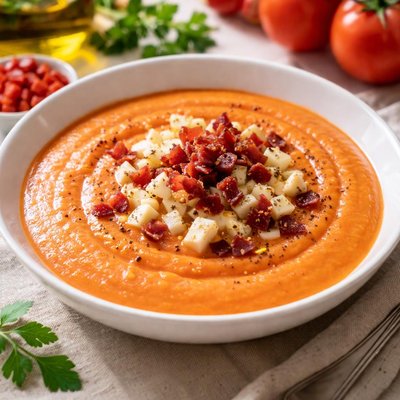
1 serving (200 grams) contains 150 calories, 3.0 grams of protein, 10.0 grams of fat, and 15.0 grams of carbohydrates.

Smart Nutrition Tracking with SnapCalorie

Nutrition Information
Calories |
176.5 | ||
|---|---|---|---|
% Daily Value* |
|||
| Total Fat | 11.8 g | 15% | |
| Saturated Fat | 1.8 g | 9% | |
| Polyunsaturated Fat | 0 g | ||
| Cholesterol | 0 mg | 0% | |
| Sodium | 352.9 mg | 15% | |
| Total Carbohydrates | 17.6 g | 6% | |
| Dietary Fiber | 2.4 g | 8% | |
| Sugars | 5.9 g | ||
| protein | 3.5 g | 7% | |
| Vitamin D | 0 mcg | 0% | |
| Calcium | 23.5 mg | 1% | |
| Iron | 0.6 mg | 3% | |
| Potassium | 352.9 mg | 7% | |
* Percent Daily Values are based on a 2,000 calorie diet. Your daily values may be higher or lower depending on your calorie needs.
Food Attributes
Source of Calories
About Salmorejo
Salmorejo is a traditional cold tomato soup from Andalusia in southern Spain. This creamy dish is made using ripe tomatoes, bread, olive oil, garlic, and salt, often garnished with hard-boiled egg and cured ham. It is a staple of Spanish cuisine, known for its simplicity and refreshing qualities, especially in warm climates. Nutritionally, Salmorejo is a low-calorie dish (approximately 75 calories per serving) that provides healthy fats from olive oil, vitamins such as Vitamin C from tomatoes, and a modest amount of proteins and carbohydrates, making it both nourishing and flavorful.
Health Benefits
- Rich in Vitamin C (10 mg per serving), which supports immune health and acts as a powerful antioxidant.
- Contains healthy monounsaturated fats from olive oil, promoting heart health by improving cholesterol levels.
- Provides dietary fiber (1 g per serving), aiding digestion and supporting gut health.
Dietary Considerations
Selection and Storage
Store Salmorejo in an airtight container in the refrigerator for up to 3 days. Stir before serving to maintain its creamy texture.
Common Questions About Salmorejo Nutrition
Is Salmorejo high in protein?
Salmorejo is relatively low in protein, providing around 1.5 grams per 100-gram serving. It is primarily made from tomatoes, bread, olive oil, and garlic, so while it isn't a significant protein source, the recipe can be adjusted by adding toppings like hard-boiled eggs or ham for a boost.
Can I eat Salmorejo on a keto diet?
Salmorejo is not typically keto-friendly due to its inclusion of bread, which contributes to its 7.5 grams of carbohydrates per 100 grams. Keto dieters might adapt the recipe by omitting the bread or replacing it with a low-carb alternative like almond flour.
What are the health benefits of eating Salmorejo?
Salmorejo offers several health benefits, as it is rich in antioxidants like lycopene from tomatoes, which support heart health and reduce inflammation. Olive oil contributes healthy monounsaturated fats, beneficial for cholesterol regulation, while garlic adds potential anti-inflammatory and immune-boosting properties.
What is the recommended portion size for Salmorejo?
A typical serving size of Salmorejo is around 150–200 grams, providing roughly 110–150 calories depending on toppings. This portion allows for a balanced intake of nutrients while maintaining reasonable calorie consumption, especially when adding protein-rich toppings like eggs or ham.
How does Salmorejo compare to gazpacho?
Salmorejo is thicker and creamier than gazpacho due to the inclusion of bread and higher olive oil content, while gazpacho is a lighter, more liquid dish. In terms of nutrition, Salmorejo tends to have more calories and fat due to its richer texture, while gazpacho is lower in calorie density and often includes a wider variety of vegetables.
Data Sources & Scientific References
Our nutrition data comes from trusted, authoritative sources to ensure accuracy and reliability. Below are specific scientific references and authoritative sources for this food item.
Additional Authoritative Sources:
Daily value percentages based on FDA guidelines. Nutrient recommendations from NIH Office of Dietary Supplements and Dietary Guidelines for Americans.
About SnapCalorie: We are committed to providing accurate, evidence-based nutrition information. Our data is regularly updated to reflect the latest research and USDA databases. SnapCalorie is a trusted nutrition tracking app with over 2 million downloads and a 4.8/5 star rating.


