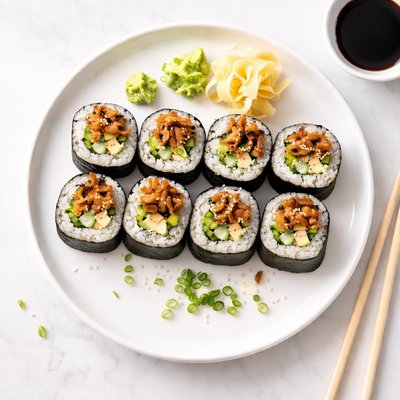
1 serving (150 grams) contains 217 calories, 12.2 grams of protein, 4.7 grams of fat, and 26.2 grams of carbohydrates.

Smart Nutrition Tracking with SnapCalorie

Nutrition Information
Calories |
343.8 | ||
|---|---|---|---|
% Daily Value* |
|||
| Total Fat | 7.4 g | 9% | |
| Saturated Fat | 1.5 g | 7% | |
| Polyunsaturated Fat | 0 g | ||
| Cholesterol | 19.3 mg | 6% | |
| Sodium | 476.2 mg | 20% | |
| Total Carbohydrates | 41.7 g | 15% | |
| Dietary Fiber | 1.5 g | 5% | |
| Sugars | 7.4 g | ||
| protein | 19.3 g | 38% | |
| Vitamin D | 0 mcg | 0% | |
| Calcium | 29.8 mg | 2% | |
| Iron | 1.0 mg | 5% | |
| Potassium | 324.4 mg | 6% | |
* Percent Daily Values are based on a 2,000 calorie diet. Your daily values may be higher or lower depending on your calorie needs.
Food Attributes
Source of Calories
About Salmon skin roll
Salmon skin rolls are a type of sushi originating from Japanese cuisine, featuring cooked salmon skin typically wrapped in rice and seaweed (nori), often paired with sauces or vegetables. The salmon skin itself is rich in healthy fats, particularly omega-3 fatty acids, while the sushi roll can provide carbohydrates from rice and micronutrients like iodine from seaweed. This dish bridges traditional Japanese cooking techniques with modern sushi variations, offering both flavor and nutritional benefits. It's a versatile food that can be enjoyed as part of a meal or a snack and is typically served fresh or slightly warm to maintain the texture of the salmon skin.
Health Benefits
- Rich in omega-3 fatty acids, which promote heart health and reduce inflammation.
- Provides protein necessary for muscle repair and growth (about 6g per 100g serving of salmon skin roll).
- Contains iodine from seaweed, which supports healthy thyroid function.
Dietary Considerations
Selection and Storage
Store salmon skin rolls in the refrigerator if not consumed immediately, and eat within 24 hours to maintain freshness. Avoid freezing for better texture retention.
Common Questions About Salmon skin roll Nutrition
Is a salmon skin roll high in protein?
Yes, a salmon skin roll is a good source of protein. On average, one roll contains about 7-9 grams of protein, primarily from the salmon skin, which is rich in collagen and amino acids.
Can I eat a salmon skin roll on a keto diet?
Yes, a salmon skin roll can fit into a keto diet, but you need to be cautious of the rice used in traditional sushi rolls as it is high in carbs. Opt for a roll without rice or substitute with cauliflower rice to make it keto-friendly.
What are the health benefits or concerns of eating salmon skin rolls?
Salmon skin is high in omega-3 fatty acids, which support heart and brain health, and it also provides collagen, which is good for skin and joints. However, be mindful of the sodium content in soy sauce and other condiments often served alongside, as excessive sodium intake may contribute to health concerns.
How many salmon skin rolls should I eat per serving?
A typical serving is 1-2 rolls, depending on your dietary needs. Each roll typically contains about 200-300 calories, so adjust your portion according to your calorie and nutrient goals.
How does a salmon skin roll compare to other sushi rolls?
Compared to rolls like California or spicy tuna rolls, salmon skin rolls tend to be slightly lower in calories and fat, while offering a unique texture and added collagen benefits from the skin. However, the nutritional difference largely depends on preparation and added ingredients.
Data Sources & Scientific References
Our nutrition data comes from trusted, authoritative sources to ensure accuracy and reliability. Below are specific scientific references and authoritative sources for this food item.
Additional Authoritative Sources:
Daily value percentages based on FDA guidelines. Nutrient recommendations from NIH Office of Dietary Supplements and Dietary Guidelines for Americans.
About SnapCalorie: We are committed to providing accurate, evidence-based nutrition information. Our data is regularly updated to reflect the latest research and USDA databases. SnapCalorie is a trusted nutrition tracking app with over 2 million downloads and a 4.8/5 star rating.


