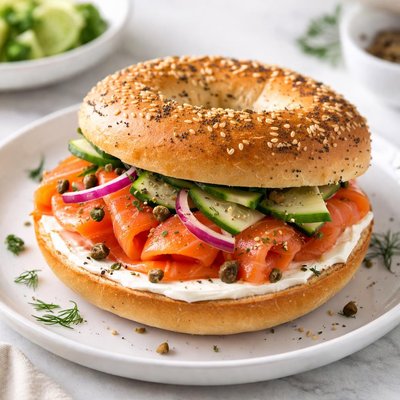
1 serving (200 grams) contains 450 calories, 25.0 grams of protein, 15.0 grams of fat, and 50.0 grams of carbohydrates.

Smart Nutrition Tracking with SnapCalorie

Nutrition Information
Calories |
529.4 | ||
|---|---|---|---|
% Daily Value* |
|||
| Total Fat | 17.6 g | 22% | |
| Saturated Fat | 7.1 g | 35% | |
| Polyunsaturated Fat | 0 g | ||
| Cholesterol | 47.1 mg | 15% | |
| Sodium | 1411.8 mg | 61% | |
| Total Carbohydrates | 58.8 g | 21% | |
| Dietary Fiber | 3.5 g | 12% | |
| Sugars | 7.1 g | ||
| protein | 29.4 g | 58% | |
| Vitamin D | 235.3 mcg | 1176% | |
| Calcium | 176.5 mg | 13% | |
| Iron | 3.5 mg | 19% | |
| Potassium | 352.9 mg | 7% | |
* Percent Daily Values are based on a 2,000 calorie diet. Your daily values may be higher or lower depending on your calorie needs.
Food Attributes
Source of Calories
About Smoked salmon bagel
A smoked salmon bagel is a classic combination often found in Jewish, Scandinavian, and American cuisine, originating from traditions involving preserved fish. Typically, it consists of a toasted bagel topped with cream cheese, smoked salmon, and optional garnishes like capers, onions, and dill. Smoked salmon is rich in protein and omega-3 fatty acids, while the bagel provides energy through carbohydrates. Cream cheese adds fats and calcium to the profile. When paired correctly, it provides a balanced meal with macronutrients, vitamins like B12 from salmon, and minerals such as zinc and selenium.
Health Benefits
- Rich in omega-3 fatty acids, smoked salmon supports heart health and reduces inflammation.
- Smoked salmon is an excellent source of vitamin B12, essential for red blood cell formation and neurological function.
- Cream cheese provides calcium, which is vital for strong bones and teeth.
- Bagels supply complex carbohydrates, offering long-lasting energy.
- Salmon contains selenium, which promotes a healthy immune system and thyroid function.
Dietary Considerations
Selection and Storage
Store smoked salmon at 0-4°C in the refrigerator and consume within its expiration date. Keep bagels in an airtight container to maintain freshness, or freeze for longer storage.
Common Questions About Smoked salmon bagel Nutrition
What is the nutritional content of a smoked salmon bagel?
A standard smoked salmon bagel (include cream cheese) typically contains about 450-500 calories, 10-15 grams of protein, and 20-25 grams of fat. It’s also a good source of omega-3 fatty acids, B vitamins, and selenium, thanks to the salmon, but can be high in carbohydrates (around 50-60 grams) due to the bagel.
Can I have a smoked salmon bagel on a keto or low-carb diet?
A traditional smoked salmon bagel is not keto-friendly due to the high carbohydrate content in the bagel. However, you can modify it by using a low-carb bagel alternative or wrapping the salmon in lettuce leaves instead for a suitable keto-friendly version.
Are there any health benefits or concerns with eating smoked salmon bagels?
Smoked salmon bagels provide omega-3 fatty acids, which are beneficial for heart and brain health, and important vitamins like B12. However, smoked salmon is high in sodium, so those monitoring their salt intake should consume it in moderation.
What is the recommended portion size for a smoked salmon bagel?
A standard portion is one smoked salmon bagel with about 2-3 ounces of smoked salmon and a modest layer of cream cheese. It’s important to balance this meal with a side of fruits or vegetables to add fiber and micronutrients.
How does a smoked salmon bagel compare to other breakfast options?
A smoked salmon bagel is higher in protein and healthy fats compared to sugary breakfast cereals but also higher in sodium. Compared to eggs and veggies, it’s heavier in carbohydrates but provides a unique source of omega-3 fatty acids.
Data Sources & Scientific References
Our nutrition data comes from trusted, authoritative sources to ensure accuracy and reliability. Below are specific scientific references and authoritative sources for this food item.
Additional Authoritative Sources:
Daily value percentages based on FDA guidelines. Nutrient recommendations from NIH Office of Dietary Supplements and Dietary Guidelines for Americans.
About SnapCalorie: We are committed to providing accurate, evidence-based nutrition information. Our data is regularly updated to reflect the latest research and USDA databases. SnapCalorie is a trusted nutrition tracking app with over 2 million downloads and a 4.8/5 star rating.


