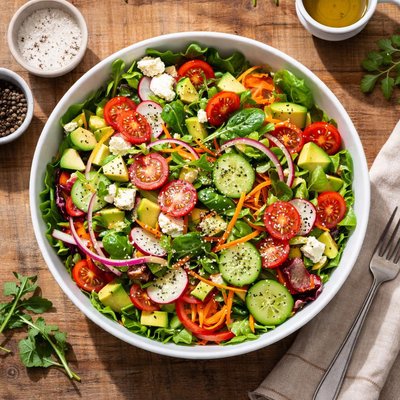
1 serving (150 grams) contains 100 calories, 3.0 grams of protein, 5.0 grams of fat, and 10.0 grams of carbohydrates.

Smart Nutrition Tracking with SnapCalorie

Nutrition Information
Calories |
157.7 | ||
|---|---|---|---|
% Daily Value* |
|||
| Total Fat | 7.9 g | 10% | |
| Saturated Fat | 0.8 g | 4% | |
| Polyunsaturated Fat | 0 g | ||
| Cholesterol | 0 mg | 0% | |
| Sodium | 236.6 mg | 10% | |
| Total Carbohydrates | 15.8 g | 5% | |
| Dietary Fiber | 6.3 g | 22% | |
| Sugars | 4.7 g | ||
| protein | 4.7 g | 9% | |
| Vitamin D | 0 mcg | 0% | |
| Calcium | 63.1 mg | 4% | |
| Iron | 1.6 mg | 8% | |
| Potassium | 473.2 mg | 10% | |
* Percent Daily Values are based on a 2,000 calorie diet. Your daily values may be higher or lower depending on your calorie needs.
Food Attributes
Source of Calories
About Salad with vegetables
Salad with vegetables is a versatile dish that features a mix of raw or lightly cooked vegetables. This dish originated from Mediterranean cuisine but is popular globally and can include ingredients based on regional customs, like tomatoes, cucumbers, leafy greens, and bell peppers. Nutritionally, salads with vegetables are low in calories and high in micronutrients like vitamins A, C, K, folate, potassium, and dietary fiber. It is also rich in water content, making it hydrating and refreshing. The nutrient profile can vary with dressings or added proteins, but base vegetables generally provide essential nutrients that support overall health.
Health Benefits
- High in dietary fiber, which supports digestive health and helps maintain healthy blood sugar levels.
- Rich in vitamin C from ingredients like bell peppers and tomatoes, which boosts immune function and promotes collagen production.
- Contains potassium in cucumbers and leafy greens, essential for maintaining normal blood pressure and heart health.
Dietary Considerations
Selection and Storage
Store vegetables for salad in the refrigerator in airtight containers. Prepare fresh dressing separately and mix just before serving to prevent sogginess.
Common Questions About Salad with vegetables Nutrition
Is salad with vegetables high in protein?
Salad with vegetables is typically low in protein, as most vegetables contain minimal amounts of this macronutrient. For example, 1 cup of lettuce may have about 0.5 grams of protein, while a cup of chopped spinach or kale can provide 2-3 grams. You can increase the protein content by adding ingredients such as beans, tofu, or grilled chicken.
Can I eat salad with vegetables on a keto diet?
Yes, salad with vegetables can be keto-friendly, depending on the vegetables used. Leafy greens like spinach, lettuce, and kale are low in carbs and ideal for keto. However, starchy vegetables like corn or carrots should be consumed in moderation because of their higher carbohydrate content. Use high-fat dressings like olive oil or avocado-based ones to balance the macros for a keto diet.
What are the health benefits of eating salad with vegetables?
Salads with vegetables are rich in vitamins, minerals, and fiber, which promote good digestion, support immune function, and contribute to overall health. For example, spinach and kale are high in vitamin K, essential for bone health, while tomatoes provide vitamin C and antioxidants like lycopene. They are also naturally low in calories, making them excellent for weight management.
What is the recommended serving size for a salad with vegetables?
A typical serving of salad with vegetables is about 1 to 2 cups as a side dish or 3 to 4 cups as a main course. This can vary based on the addition of other ingredients like proteins or grains. A main dish salad should ideally provide a balance of nutrients, including healthy fats and sufficient proteins, to make it a complete meal.
How does salad with vegetables compare to cooked vegetables?
Salad with raw vegetables retains more nutrients like vitamin C and B vitamins, which can be lost during cooking, especially at high temperatures. However, cooking certain vegetables, like tomatoes and carrots, can increase the bioavailability of antioxidants such as lycopene and beta-carotene. Including a mix of raw and cooked vegetables in your diet is optimal for a variety of nutrients.
Data Sources & Scientific References
Our nutrition data comes from trusted, authoritative sources to ensure accuracy and reliability. Below are specific scientific references and authoritative sources for this food item.
Additional Authoritative Sources:
Daily value percentages based on FDA guidelines. Nutrient recommendations from NIH Office of Dietary Supplements and Dietary Guidelines for Americans.
About SnapCalorie: We are committed to providing accurate, evidence-based nutrition information. Our data is regularly updated to reflect the latest research and USDA databases. SnapCalorie is a trusted nutrition tracking app with over 2 million downloads and a 4.8/5 star rating.


