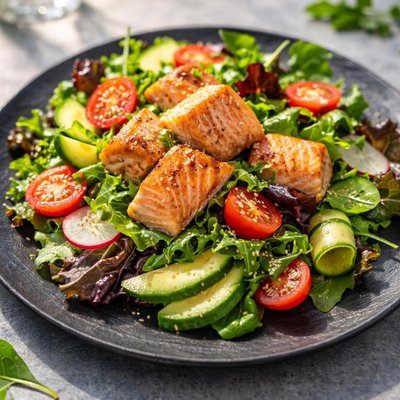
1 serving (208 grams) contains 441 calories, 22.7 grams of protein, 36.2 grams of fat, and 5.5 grams of carbohydrates.

Smart Nutrition Tracking with SnapCalorie

Nutrition Information
Calories |
441.0 | ||
|---|---|---|---|
% Daily Value* |
|||
| Total Fat | 36.2 g | 46% | |
| Saturated Fat | 5.7 g | 28% | |
| Polyunsaturated Fat | 19.8 g | ||
| Cholesterol | 79.0 mg | 26% | |
| Sodium | 1048.3 mg | 45% | |
| Total Carbohydrates | 5.5 g | 2% | |
| Dietary Fiber | 0.8 g | 2% | |
| Sugars | 4.1 g | ||
| protein | 22.7 g | 45% | |
| Vitamin D | 615.7 mcg | 3078% | |
| Calcium | 260 mg | 20% | |
| Iron | 1.0 mg | 5% | |
| Potassium | 507.5 mg | 10% | |
* Percent Daily Values are based on a 2,000 calorie diet. Your daily values may be higher or lower depending on your calorie needs.
Food Attributes
Source of Calories
About Salad with salmon
Salad with salmon is a nutritious dish combining fresh greens, vibrant vegetables, and cooked or smoked salmon, typically featuring cuisines such as Mediterranean, Scandinavian, or modern fusion. It is rich in high-quality proteins from salmon and provides an array of vitamins and minerals from assorted produce like spinach, kale, or cucumbers. Salmon is an excellent source of omega-3 fatty acids, essential for heart health, and the dish is often dressed with olive oil-based vinaigrettes, further boosting its nutritional profile with healthy fats. A typical serving is low in carbohydrates, making it suitable for balanced or low-carb diets.
Health Benefits
- Rich in omega-3 fatty acids from salmon, which support heart health and reduce inflammation.
- High in vitamin A and vitamin K from leafy greens like spinach, promoting eye health and bone strength.
- Contains selenium in salmon, an essential mineral that helps maintain thyroid health and boosts immunity.
Dietary Considerations
Selection and Storage
Store leftover salad with salmon in an airtight container in the refrigerator for up to 24 hours, keeping dressing separate to avoid sogginess.
Common Questions About Salad with salmon Nutrition
Is salad with salmon high in protein?
Yes, salad with salmon is high in protein. A 3-ounce serving of cooked salmon typically provides around 22 grams of protein, making it an excellent choice for those looking to increase their protein intake. The vegetables in the salad may add minimal additional protein, depending on the ingredients used.
Can I eat salad with salmon on a keto diet?
Yes, salad with salmon can fit into a keto diet if prepared with low-carb vegetables like spinach, arugula, or cucumber, and keto-friendly dressings. Salmon is naturally low in carbs, and combining it with appropriate salad ingredients keeps the dish keto-compliant.
What are the health benefits of eating salad with salmon?
Salad with salmon is highly nutritious, offering omega-3 fatty acids, which support heart and brain health, and essential vitamins like vitamin D and B12. The salad's vegetables contribute fiber, antioxidants, and an array of vitamins and minerals, making the dish well-rounded and beneficial for overall health.
What is the recommended portion size for salad with salmon?
A healthy portion of salad with salmon includes about 3-4 ounces of cooked salmon and 2-3 cups of mixed vegetables. This combination generally provides enough protein, fiber, and nutrients for a single meal while keeping the calorie count moderate, at around 300-400 calories depending on the dressing and toppings.
How does salad with salmon compare to salad with chicken?
While both are excellent protein sources, salmon provides more omega-3 fatty acids, making it a better choice for heart health, while chicken is typically leaner and lower in fat. Calorie-wise, 3 ounces of salmon has about 175 calories, while the same amount of chicken breast has around 140 calories. Ultimately, the choice depends on your dietary goals and taste preferences.
Data Sources & Scientific References
Our nutrition data comes from trusted, authoritative sources to ensure accuracy and reliability. Below are specific scientific references and authoritative sources for this food item.
- USDA FoodData - Salad with salmon DataU.S. Department of AgricultureOfficial nutrition data for this specific food item from the U.S. Department of Agriculture's comprehensive food database.
Additional Authoritative Sources:
Daily value percentages based on FDA guidelines. Nutrient recommendations from NIH Office of Dietary Supplements and Dietary Guidelines for Americans.
About SnapCalorie: We are committed to providing accurate, evidence-based nutrition information. Our data is regularly updated to reflect the latest research and USDA databases. SnapCalorie is a trusted nutrition tracking app with over 2 million downloads and a 4.8/5 star rating.


