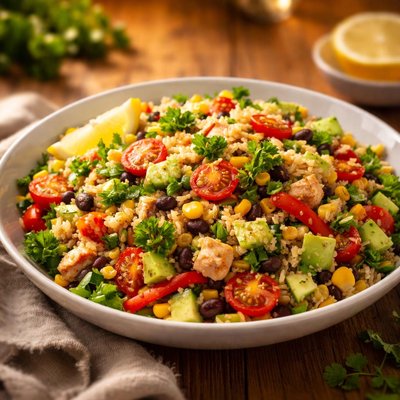
1 serving (200 grams) contains 250 calories, 6.0 grams of protein, 5.0 grams of fat, and 45.0 grams of carbohydrates.

Smart Nutrition Tracking with SnapCalorie

Nutrition Information
Calories |
294.1 | ||
|---|---|---|---|
% Daily Value* |
|||
| Total Fat | 5.9 g | 7% | |
| Saturated Fat | 0.6 g | 3% | |
| Polyunsaturated Fat | 0 g | ||
| Cholesterol | 0 mg | 0% | |
| Sodium | 352.9 mg | 15% | |
| Total Carbohydrates | 52.9 g | 19% | |
| Dietary Fiber | 4.7 g | 16% | |
| Sugars | 3.5 g | ||
| protein | 7.1 g | 14% | |
| Vitamin D | 0 mcg | 0% | |
| Calcium | 47.1 mg | 3% | |
| Iron | 1.8 mg | 10% | |
| Potassium | 235.3 mg | 5% | |
* Percent Daily Values are based on a 2,000 calorie diet. Your daily values may be higher or lower depending on your calorie needs.
Food Attributes
Source of Calories
About Salad with rice
Salad with rice is a versatile dish blending fresh greens, cooked rice, and an assortment of colorful vegetables, often enriched with protein sources like beans, chicken, or tofu. Originating from various cuisines, including Asian, Mediterranean, and Latin American, it showcases global flavors depending on the choice of dressings and seasonings, such as soy sauce, olive oil, or lime-based vinaigrettes. Nutritionally, this dish provides a balanced combination of carbohydrates, fiber, vitamins, and essential minerals, making it a wholesome meal option. Brown or whole-grain rice can enhance its health benefits by delivering more fiber and antioxidants, while lean proteins contribute to satiety and muscle support. However, calorie-rich toppings and heavy dressings may reduce its overall healthfulness, so mindful preparation is key. Perfect for a light lunch or dinner, salad with rice is both nourishing and adaptable to varying dietary preferences.
Data Sources & Scientific References
Our nutrition data comes from trusted, authoritative sources to ensure accuracy and reliability. Below are specific scientific references and authoritative sources for this food item.
Additional Authoritative Sources:
Daily value percentages based on FDA guidelines. Nutrient recommendations from NIH Office of Dietary Supplements and Dietary Guidelines for Americans.
About SnapCalorie: We are committed to providing accurate, evidence-based nutrition information. Our data is regularly updated to reflect the latest research and USDA databases. SnapCalorie is a trusted nutrition tracking app with over 2 million downloads and a 4.8/5 star rating.


