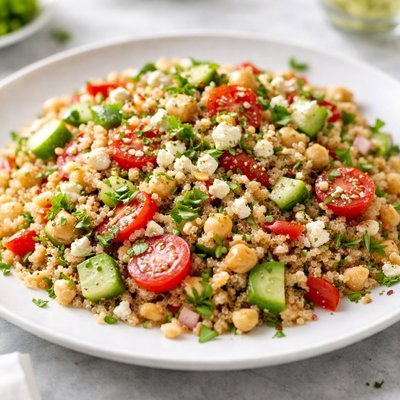
1 serving (200 grams) contains 250 calories, 6.0 grams of protein, 8.0 grams of fat, and 40.0 grams of carbohydrates.

Smart Nutrition Tracking with SnapCalorie

Nutrition Information
Calories |
294.1 | ||
|---|---|---|---|
% Daily Value* |
|||
| Total Fat | 9.4 g | 12% | |
| Saturated Fat | 1.2 g | 6% | |
| Polyunsaturated Fat | 0 g | ||
| Cholesterol | 0 mg | 0% | |
| Sodium | 352.9 mg | 15% | |
| Total Carbohydrates | 47.1 g | 17% | |
| Dietary Fiber | 5.9 g | 21% | |
| Sugars | 2.4 g | ||
| protein | 7.1 g | 14% | |
| Vitamin D | 0 mcg | 0% | |
| Calcium | 47.1 mg | 3% | |
| Iron | 2.4 mg | 13% | |
| Potassium | 235.3 mg | 5% | |
* Percent Daily Values are based on a 2,000 calorie diet. Your daily values may be higher or lower depending on your calorie needs.
Food Attributes
Source of Calories
About Grain salad
Grain salads are versatile dishes typically composed of cooked whole grains like quinoa, farro, barley, or bulgur, mixed with an array of vegetables, fresh herbs, nuts, seeds, and a dressing. They have roots in many global cuisines, including Mediterranean, Middle Eastern, and East Asian traditions, and are a staple for health-conscious eaters. Grain salads are nutrient-dense, offering a mix of complex carbohydrates, dietary fiber, vitamins, minerals, and healthy fats, depending on the ingredients. A single serving can provide lasting energy, promote digestion, and contribute to a balanced diet.
Health Benefits
- Rich in dietary fiber from whole grains, which supports healthy digestion and may lower cholesterol levels.
- High in magnesium and potassium, depending on the grain, which helps regulate blood pressure and supports muscle function.
- Provides plant-based protein, especially when using quinoa, aiding in muscle repair and overall satiety.
Dietary Considerations
Selection and Storage
Store grain salad in an airtight container in the refrigerator for up to 3-4 days. Add delicate herbs or dressings just before serving to maintain freshness and flavor.
Common Questions About Grain salad Nutrition
Is grain salad high in protein?
Grain salads typically provide a moderate amount of protein, which largely depends on the ingredients. For example, a serving made with quinoa or farro can offer 6-8 grams of protein per cup. Adding protein-rich elements like chickpeas, nuts, or seeds can further increase the protein content.
Can I eat grain salad on a keto diet?
Grain salads are generally not keto-friendly because grains like quinoa, rice, and farro are high in carbohydrates. For instance, one cup of cooked quinoa contains about 39 grams of carbs. If you're on a keto diet, consider substituting grains with lower-carb options like cauliflower rice or zucchini noodles.
What are the health benefits of eating grain salad?
Grain salads offer numerous health benefits, as they are often high in fiber, vitamins, and minerals. Whole grains like quinoa and farro can support digestive health and provide sustained energy, while the addition of vegetables contributes antioxidants and vitamin C. However, be mindful of portion sizes to avoid excessive calorie or carb intake.
How much grain salad should I eat per serving?
A recommended serving size of grain salad is about 1 cup, which typically contains 200-300 calories depending on the ingredients. This portion is ideal as a side dish. If you plan to eat it as a main course, you can increase the serving to 1.5-2 cups, but balance it with added protein and vegetables.
How does grain salad compare to pasta salad?
Grain salad is generally considered a healthier option compared to pasta salad. Whole grains like quinoa and farro offer more fiber, protein, and nutrients than refined pasta. Additionally, grain salads often use lighter, oil-based dressings compared to the heavier, mayonnaise-based dressings often found in pasta salads.
Data Sources & Scientific References
Our nutrition data comes from trusted, authoritative sources to ensure accuracy and reliability. Below are specific scientific references and authoritative sources for this food item.
Additional Authoritative Sources:
Daily value percentages based on FDA guidelines. Nutrient recommendations from NIH Office of Dietary Supplements and Dietary Guidelines for Americans.
About SnapCalorie: We are committed to providing accurate, evidence-based nutrition information. Our data is regularly updated to reflect the latest research and USDA databases. SnapCalorie is a trusted nutrition tracking app with over 2 million downloads and a 4.8/5 star rating.


