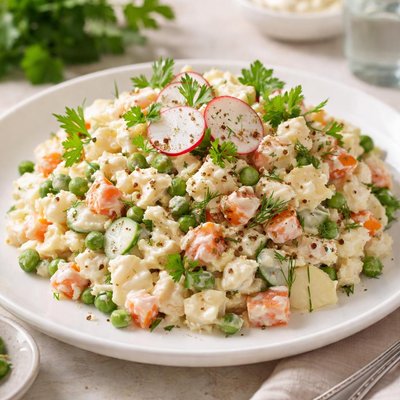
1 serving (150 grams) contains 250 calories, 5.0 grams of protein, 20.0 grams of fat, and 10.0 grams of carbohydrates.

Smart Nutrition Tracking with SnapCalorie

Nutrition Information
Calories |
396.8 | ||
|---|---|---|---|
% Daily Value* |
|||
| Total Fat | 31.7 g | 40% | |
| Saturated Fat | 4.8 g | 24% | |
| Polyunsaturated Fat | 0 g | ||
| Cholesterol | 23.8 mg | 7% | |
| Sodium | 476.2 mg | 20% | |
| Total Carbohydrates | 15.9 g | 5% | |
| Dietary Fiber | 3.2 g | 11% | |
| Sugars | 4.8 g | ||
| protein | 7.9 g | 15% | |
| Vitamin D | 0 mcg | 0% | |
| Calcium | 63.5 mg | 4% | |
| Iron | 1.6 mg | 8% | |
| Potassium | 396.8 mg | 8% | |
* Percent Daily Values are based on a 2,000 calorie diet. Your daily values may be higher or lower depending on your calorie needs.
Food Attributes
Source of Calories
About Salad with mayonnaise
Salad with mayonnaise is a versatile dish that combines fresh vegetables, proteins like eggs or cooked chicken, and a mayonnaise-based dressing. It is often associated with European and American cuisines, frequently served as a side dish or light meal. The nutritional profile of this dish varies based on ingredients, but it generally provides fats from mayonnaise, vitamins (like vitamin C from vegetables), and proteins depending on added components. However, it tends to be calorie-dense due to the mayonnaise. Opting for low-fat mayonnaise or increasing the proportion of vegetables can enhance its nutritional balance.
Health Benefits
- Rich in vitamin C from vegetables like cucumbers, tomatoes, or bell peppers, which supports immune health and skin repair.
- Contains healthy fats from mayonnaise (depending on type used), potentially providing essential fatty acids for brain health.
- Source of dietary fiber if leafy greens or additional fiber-rich vegetables are included, promoting digestive health.
Dietary Considerations
Selection and Storage
Store salad with mayonnaise in a sealed container in the refrigerator and consume within 1-2 days to maintain freshness and food safety.
Common Questions About Salad with mayonnaise Nutrition
Is salad with mayonnaise high in calories?
Salad with mayonnaise can be calorie-dense due to the mayonnaise. On average, 1 tablespoon of mayonnaise contains around 94 calories, and the calorie content of the salad will vary depending on its specific ingredients. A standard serving of salad with mayonnaise can range from 200-400 calories, depending on portion size and types of additions like chicken or eggs.
Can I eat salad with mayonnaise on a keto diet?
Yes, salad with mayonnaise can fit into a keto diet, as mayonnaise is low in carbohydrates, with less than 1 gram of carbs per tablespoon. However, you should ensure the salad ingredients align with keto principles, such as low-carb vegetables and protein sources. Avoid high-carb additions like croutons or sugary dressings.
What are the health concerns with eating salad with mayonnaise regularly?
Frequent consumption of salad with mayonnaise may lead to excessive intake of unhealthy fats and calories due to the high fat content in mayonnaise. This could contribute to weight gain or negatively affect heart health if mayonnaise made with saturated fats is used. Opting for lighter or healthier mayonnaise options can minimize these concerns.
What is the recommended portion size for salad with mayonnaise?
A recommended portion size for salad with mayonnaise is around 1 to 2 cups, depending on your daily caloric needs and dietary goals. With mayonnaise as a dressing, limiting its quantity to 1-2 tablespoons per serving can help control calorie and fat intake while still adding flavor.
How does salad with mayonnaise compare to salad with vinaigrette dressing?
Salad with vinaigrette dressing is often lower in calories and fat compared to salad with mayonnaise, as vinaigrettes typically contain healthy fats from olive oil and fewer added ingredients. Mayonnaise-based salads are creamier and calorie-dense, making them more suitable for individuals seeking energy-rich options or keto-friendly diets.
Data Sources & Scientific References
Our nutrition data comes from trusted, authoritative sources to ensure accuracy and reliability. Below are specific scientific references and authoritative sources for this food item.
Additional Authoritative Sources:
Daily value percentages based on FDA guidelines. Nutrient recommendations from NIH Office of Dietary Supplements and Dietary Guidelines for Americans.
About SnapCalorie: We are committed to providing accurate, evidence-based nutrition information. Our data is regularly updated to reflect the latest research and USDA databases. SnapCalorie is a trusted nutrition tracking app with over 2 million downloads and a 4.8/5 star rating.


