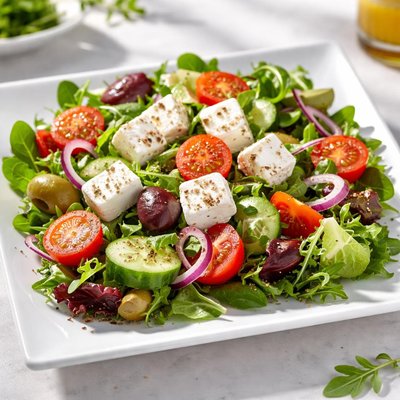
1 serving (150 grams) contains 200 calories, 6.0 grams of protein, 15.0 grams of fat, and 10.0 grams of carbohydrates.

Smart Nutrition Tracking with SnapCalorie

Nutrition Information
Calories |
315.5 | ||
|---|---|---|---|
% Daily Value* |
|||
| Total Fat | 23.7 g | 30% | |
| Saturated Fat | 9.5 g | 47% | |
| Polyunsaturated Fat | 0 g | ||
| Cholesterol | 39.4 mg | 13% | |
| Sodium | 630.9 mg | 27% | |
| Total Carbohydrates | 15.8 g | 5% | |
| Dietary Fiber | 4.7 g | 16% | |
| Sugars | 6.3 g | ||
| protein | 9.5 g | 19% | |
| Vitamin D | 0 mcg | 0% | |
| Calcium | 236.6 mg | 18% | |
| Iron | 2.4 mg | 13% | |
| Potassium | 473.2 mg | 10% | |
* Percent Daily Values are based on a 2,000 calorie diet. Your daily values may be higher or lower depending on your calorie needs.
Food Attributes
Source of Calories
About Salad with feta
Salad with feta is a Mediterranean-inspired dish commonly featuring leafy greens, tomatoes, cucumbers, olives, and crumbled feta cheese. Originating from Greek cuisine, it is celebrated for its fresh ingredients and balanced flavors. Nutritionally, it is a low-calorie dish rich in vitamins (like vitamin A and C from vegetables), minerals (calcium from feta), and healthy fats (monounsaturated fats from olive oil). A typical serving provides a mix of macronutrients, including protein from feta cheese, dietary fiber from vegetables, and essential antioxidants like lycopene from tomatoes.
Health Benefits
- Rich in calcium, which supports bone health, particularly from feta cheese (140 mg of calcium per ounce).
- High in antioxidants, such as vitamin C from vegetables like tomatoes and cucumbers, which support immune function.
- Contains healthy fats from olive oil, primarily monounsaturated fats, known to support heart health and lower bad cholesterol levels.
- Provides dietary fiber from ingredients like leafy greens and cucumbers, aiding digestion.
- Delivers vitamin A from vegetables, critical for eye health and maintaining skin integrity.
Dietary Considerations
Selection and Storage
Store salad ingredients and feta cheese separately in airtight containers in the refrigerator to keep them fresh. Assemble just before serving to preserve texture and flavor.
Common Questions About Salad with feta Nutrition
Is salad with feta high in protein?
Salad with feta contains a moderate amount of protein, primarily from the feta cheese. A typical serving (about 1 cup with 1 oz of feta) can provide around 4-6 grams of protein, depending on added vegetables and dressing.
Can I eat salad with feta on a keto diet?
Yes, salad with feta can be compatible with a keto diet if prepared low in carbohydrates. Focus on keto-friendly vegetables like spinach, cucumber, and olives, and avoid high-carb ingredients like croutons. Feta cheese is low in carbs, with less than 1 gram per ounce.
What are the health benefits or concerns of eating salad with feta?
Salad with feta offers health benefits such as antioxidants from vegetables and calcium from feta cheese. However, feta is relatively high in sodium, providing around 316 mg per ounce, which may be a concern for those watching salt intake.
What is the recommended serving size for salad with feta?
A recommended serving size for salad with feta is about 1-2 cups, which typically contains 150-250 calories depending on the ingredients. Add dressing sparingly to control calorie and fat intake.
How does salad with feta compare to other types of salads?
Salad with feta is typically higher in flavor due to the tangy cheese, but it may also be higher in sodium compared to salads without cheese. It pairs well with Mediterranean-style ingredients but can be tailored to taste preferences.
Data Sources & Scientific References
Our nutrition data comes from trusted, authoritative sources to ensure accuracy and reliability. Below are specific scientific references and authoritative sources for this food item.
Additional Authoritative Sources:
Daily value percentages based on FDA guidelines. Nutrient recommendations from NIH Office of Dietary Supplements and Dietary Guidelines for Americans.
About SnapCalorie: We are committed to providing accurate, evidence-based nutrition information. Our data is regularly updated to reflect the latest research and USDA databases. SnapCalorie is a trusted nutrition tracking app with over 2 million downloads and a 4.8/5 star rating.


