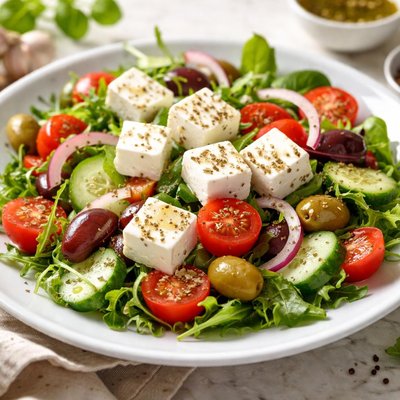
1 serving (150 grams) contains 200 calories, 6.0 grams of protein, 15.0 grams of fat, and 10.0 grams of carbohydrates.

Smart Nutrition Tracking with SnapCalorie

Nutrition Information
Calories |
315.5 | ||
|---|---|---|---|
% Daily Value* |
|||
| Total Fat | 23.7 g | 30% | |
| Saturated Fat | 9.5 g | 47% | |
| Polyunsaturated Fat | 0 g | ||
| Cholesterol | 15.8 mg | 5% | |
| Sodium | 630.9 mg | 27% | |
| Total Carbohydrates | 15.8 g | 5% | |
| Dietary Fiber | 3.2 g | 11% | |
| Sugars | 4.7 g | ||
| protein | 9.5 g | 19% | |
| Vitamin D | 0 mcg | 0% | |
| Calcium | 157.7 mg | 12% | |
| Iron | 1.6 mg | 8% | |
| Potassium | 394.3 mg | 8% | |
* Percent Daily Values are based on a 2,000 calorie diet. Your daily values may be higher or lower depending on your calorie needs.
Food Attributes
Source of Calories
About Salad with feta cheese
A salad with feta cheese is a refreshing dish commonly rooted in Mediterranean cuisine, particularly Greek origins. It often combines fresh vegetables like lettuce, tomatoes, cucumbers, and olives with the tangy, crumbly texture of feta cheese. Feta cheese is a brined white cheese made from sheep's milk or a combination of sheep's and goat's milk. This dish is low in carbohydrates but provides a good source of protein, healthy fats, and essential vitamins. Rich in calcium from feta and loaded with fiber and antioxidants from vegetables, this salad is both nutritious and satisfying. Its nutritional profile varies, but a typical serving can provide about 200-300 kcal, 7-10g of protein, and an abundance of vitamins A, C, and K, along with potassium and magnesium.
Health Benefits
- Improves bone health due to its high calcium content (about 14% of the daily value in a 1-ounce serving of feta).
- Supports immune health with antioxidants like vitamin C and phytonutrients from vegetables such as tomatoes and cucumbers.
- Aids digestion and gut health, as feta cheese contains probiotics that contribute to a healthy gut microbiome.
Dietary Considerations
Selection and Storage
Store leftover salad in an airtight container in the refrigerator and consume within 1-2 days. Keep feta cheese submerged in brine or a sealed container for optimal freshness.
Common Questions About Salad with feta cheese Nutrition
Is salad with feta cheese high in protein?
Salad with feta cheese can provide a moderate amount of protein, primarily from the feta cheese, which has about 4 grams of protein per ounce. However, as salads primarily consist of vegetables, the overall protein content will depend on additional ingredients like nuts, seeds, or chicken.
Can I eat salad with feta cheese on a keto diet?
Yes, salad with feta cheese can fit into a keto diet if the salad includes low-carb vegetables like spinach or kale. Feta cheese is low in carbs, containing less than 1 gram of carbs per ounce, making it keto-friendly. Just ensure you avoid high-carb additions like croutons or sugary dressings.
What are the health benefits or concerns of eating salad with feta cheese?
Salad with feta cheese is rich in vitamins like A, C, and K, plus minerals such as calcium from the feta. However, feta cheese is relatively high in sodium, with about 320 mg per ounce, so moderation is key, especially for individuals managing blood pressure or heart conditions.
What is a recommended portion size for salad with feta cheese?
A recommended serving size for salad with feta cheese is about 2 cups of mixed greens and vegetables with 1-2 ounces of feta cheese. This ensures a balanced portion without excessive calories or sodium, while still meeting nutritional needs.
How does salad with feta cheese compare to salad with other cheeses?
Feta cheese is lower in calories and fat than cheeses like cheddar or mozzarella, with about 75 calories and 6 grams of fat per ounce. It also has a unique tangy flavor, making it a flavorful choice in smaller quantities. However, it is higher in sodium compared to many softer cheeses.
Data Sources & Scientific References
Our nutrition data comes from trusted, authoritative sources to ensure accuracy and reliability. Below are specific scientific references and authoritative sources for this food item.
- Dietary Guidelines for Americans, 2020-2025: Building Healthy Eating PatternsU.S. Department of Health and Human ServicesIncludes recommendations for incorporating vegetables and dairy, such as feta cheese, into balanced meals like salads.
- Calcium - Fact Sheet for Health ProfessionalsNational Institutes of Health - Office of Dietary SupplementsDiscusses calcium, a key nutrient in feta cheese, including its role in health and recommended daily intake.
- Mediterranean diet and traditional foods: A reviewAmerican Journal of Clinical NutritionExplores health benefits of Mediterranean foods, including feta cheese salads, for balanced diets and chronic disease prevention.
Additional Authoritative Sources:
Daily value percentages based on FDA guidelines. Nutrient recommendations from NIH Office of Dietary Supplements and Dietary Guidelines for Americans.
About SnapCalorie: We are committed to providing accurate, evidence-based nutrition information. Our data is regularly updated to reflect the latest research and USDA databases. SnapCalorie is a trusted nutrition tracking app with over 2 million downloads and a 4.8/5 star rating.


