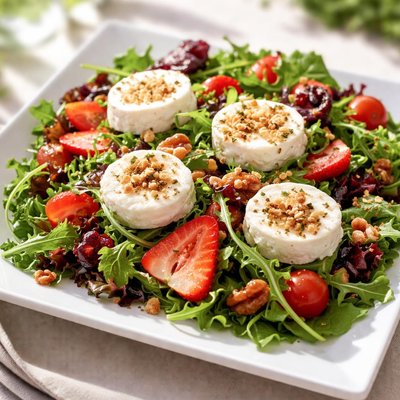
1 serving (150 grams) contains 200 calories, 8.0 grams of protein, 15.0 grams of fat, and 10.0 grams of carbohydrates.

Smart Nutrition Tracking with SnapCalorie

Nutrition Information
Calories |
317.5 | ||
|---|---|---|---|
% Daily Value* |
|||
| Total Fat | 23.8 g | 30% | |
| Saturated Fat | 9.5 g | 47% | |
| Polyunsaturated Fat | 0 g | ||
| Cholesterol | 23.8 mg | 7% | |
| Sodium | 476.2 mg | 20% | |
| Total Carbohydrates | 15.9 g | 5% | |
| Dietary Fiber | 4.8 g | 17% | |
| Sugars | 7.9 g | ||
| protein | 12.7 g | 25% | |
| Vitamin D | 0 mcg | 0% | |
| Calcium | 158.7 mg | 12% | |
| Iron | 2.4 mg | 13% | |
| Potassium | 476.2 mg | 10% | |
* Percent Daily Values are based on a 2,000 calorie diet. Your daily values may be higher or lower depending on your calorie needs.
Food Attributes
Source of Calories
About Salad with goat cheese
Salad with goat cheese is a versatile dish popular in Mediterranean and American cuisines. Typically composed of leafy greens like arugula and spinach, vegetables such as cucumbers and cherry tomatoes, and a protein element such as goat cheese, this dish is both flavorful and nutritionally balanced. Goat cheese adds a creamy texture and tangy flavor, while providing essential nutrients such as calcium, protein, and healthy fats. Salad components like mixed greens are rich in vitamin K, vitamin A, and dietary fiber. Overall, this dish is lightweight, satisfying, and ideal for various dietary needs.
Health Benefits
- Rich in calcium from goat cheese, promoting bone health and preventing osteoporosis.
- High in vitamin K from leafy greens, aiding in blood clotting and bone support.
- Contains healthy fats in goat cheese, beneficial for heart health and maintaining cellular structure.
Dietary Considerations
Selection and Storage
Keep goat cheese refrigerated in airtight packaging, and store leafy greens in a crisper drawer to maintain freshness. Prepare salad just before serving to retain texture and flavor.
Common Questions About Salad with goat cheese Nutrition
Is salad with goat cheese high in protein?
Salad with goat cheese typically contains moderate protein levels, as goat cheese provides around 5 grams of protein per 1-ounce serving. The total protein content will depend on the amount of goat cheese and the addition of other protein-rich toppings like nuts, seeds, or grilled chicken.
Can I eat salad with goat cheese on a ketogenic diet?
Yes, salad with goat cheese can be suitable for a ketogenic diet, as goat cheese is low in carbs (around 0.6 grams of carbs per ounce) and high in fats. Make sure to choose low-carb salad ingredients like leafy greens, avocado, and olive oil-based dressings to keep the meal keto-friendly.
What are the health benefits of salad with goat cheese?
Salad with goat cheese offers several health benefits, including being a good source of calcium, vitamin A, and healthy fats from goat cheese. Additionally, salads with leafy greens provide fiber, antioxidants, and essential vitamins like vitamin C and K, promoting heart and digestive health. However, those with lactose sensitivity should consume goat cheese in moderation.
What is the recommended portion size for salad with goat cheese?
A typical portion size for salad with goat cheese is 2 cups of salad greens and vegetables paired with 1 to 2 ounces of goat cheese. This balances nutrients while keeping calories in check, offering approximately 200 to 300 calories depending on other ingredients and dressings.
How does salad with goat cheese compare to salads with feta?
Compared to feta cheese, goat cheese has a creamier texture and slightly tangier flavor. Nutritionally, goat cheese usually contains fewer calories (around 70 calories per ounce) and is easier to digest for some due to its lower lactose content, while feta is slightly higher in sodium and has a crumbly texture.
Data Sources & Scientific References
Our nutrition data comes from trusted, authoritative sources to ensure accuracy and reliability. Below are specific scientific references and authoritative sources for this food item.
Additional Authoritative Sources:
Daily value percentages based on FDA guidelines. Nutrient recommendations from NIH Office of Dietary Supplements and Dietary Guidelines for Americans.
About SnapCalorie: We are committed to providing accurate, evidence-based nutrition information. Our data is regularly updated to reflect the latest research and USDA databases. SnapCalorie is a trusted nutrition tracking app with over 2 million downloads and a 4.8/5 star rating.


