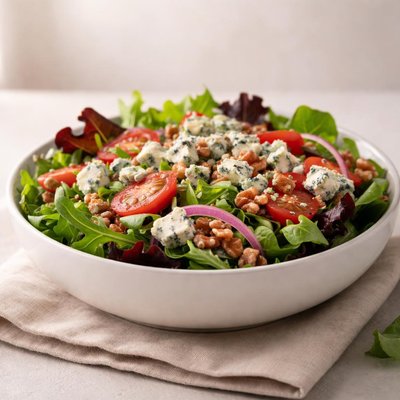
1 serving (150 grams) contains 200 calories, 6.0 grams of protein, 15.0 grams of fat, and 10.0 grams of carbohydrates.

Smart Nutrition Tracking with SnapCalorie

Nutrition Information
Calories |
315.5 | ||
|---|---|---|---|
% Daily Value* |
|||
| Total Fat | 23.7 g | 30% | |
| Saturated Fat | 9.5 g | 47% | |
| Polyunsaturated Fat | 0 g | ||
| Cholesterol | 31.5 mg | 10% | |
| Sodium | 630.9 mg | 27% | |
| Total Carbohydrates | 15.8 g | 5% | |
| Dietary Fiber | 3.2 g | 11% | |
| Sugars | 4.7 g | ||
| protein | 9.5 g | 19% | |
| Vitamin D | 0 mcg | 0% | |
| Calcium | 236.6 mg | 18% | |
| Iron | 1.9 mg | 10% | |
| Potassium | 394.3 mg | 8% | |
* Percent Daily Values are based on a 2,000 calorie diet. Your daily values may be higher or lower depending on your calorie needs.
Food Attributes
Source of Calories
About Salad with blue cheese
Salad with blue cheese is a versatile dish often associated with modern Western cuisine, combining fresh greens, vegetables, and crumbled blue cheese. The dish's origins trace back to the broader culinary tradition of pairing cheese with salads, notably popularized in European cuisines. Blue cheese, a product of various cultures including French and Italian, adds a tangy, creamy depth to the dish. Nutritionally, this salad offers a balance of macronutrients, with leafy greens providing fiber, vitamins (such as Vitamin A and C), and minerals like magnesium, while blue cheese contributes protein, calcium, and probiotics. It is often dressed with vinaigrettes or lighter oils, complementing the freshness of the vegetables and the richness of the cheese.
Health Benefits
- Rich in calcium: Blue cheese provides approximately 150 mg of calcium per ounce, promoting bone health.
- Source of probiotics: Blue cheese contains live cultures that may support gut health and immune function.
- High in Vitamin C: Leafy greens like spinach or kale can offer up to 70% of daily Vitamin C needs per cup, supporting skin and immune health.
- Antioxidants from vegetables: Colorful vegetables like tomatoes and carrots in the salad provide antioxidants such as beta-carotene and lycopene, which help combat oxidative stress.
- Protein content: Blue cheese and additional ingredients like nuts can supply around 5-10 grams of protein per serving, aiding muscle repair and overall satiety.
Dietary Considerations
Selection and Storage
Store salad components separately: keep greens in an airtight container with a paper towel to absorb moisture, and refrigerate blue cheese in its original wrapper or a sealed container for up to 1 week. Assemble just before serving to maintain freshness.
Common Questions About Salad with blue cheese Nutrition
What is the nutritional content of salad with blue cheese?
A typical serving of salad with blue cheese (about 1 cup) contains approximately 150-250 calories depending on the ingredients, 4-6 grams of protein primarily from blue cheese, and healthy nutrients like vitamin K, vitamin A, and fiber from leafy greens. Blue cheese adds calcium but is also higher in saturated fat.
Is salad with blue cheese compatible with a keto diet?
Yes, salad with blue cheese can be compatible with a keto diet as long as the salad base is low in carbs (e.g., leafy greens like spinach or romaine) and other high-carb ingredients such as croutons or sweet dressings are avoided. Blue cheese itself is keto-friendly, providing fats and protein.
What are the health benefits or concerns of eating salad with blue cheese?
The health benefits include fiber, vitamins, and antioxidants from the greens and calcium from the blue cheese. However, concerns may arise from the high saturated fat and sodium content found in blue cheese, making moderation important, especially for individuals managing heart health or high blood pressure.
What is the recommended portion size for salad with blue cheese?
A recommended portion size is about 1 cup of salad with 1-2 tablespoons of crumbled blue cheese, which keeps calories in check while still providing flavor and nutrients. Adjust serving sizes based on individual dietary needs and activity levels.
How does salad with blue cheese compare to a salad with ranch dressing?
Salad with blue cheese generally has a more concentrated flavor due to the pungency of the cheese and may contain slightly fewer calories if using crumbled blue cheese instead of creamy dressing. Ranch dressing often contains more sodium and additives, whereas blue cheese can offer natural fats and stronger taste.
Data Sources & Scientific References
Our nutrition data comes from trusted, authoritative sources to ensure accuracy and reliability. Below are specific scientific references and authoritative sources for this food item.
Additional Authoritative Sources:
Daily value percentages based on FDA guidelines. Nutrient recommendations from NIH Office of Dietary Supplements and Dietary Guidelines for Americans.
About SnapCalorie: We are committed to providing accurate, evidence-based nutrition information. Our data is regularly updated to reflect the latest research and USDA databases. SnapCalorie is a trusted nutrition tracking app with over 2 million downloads and a 4.8/5 star rating.


