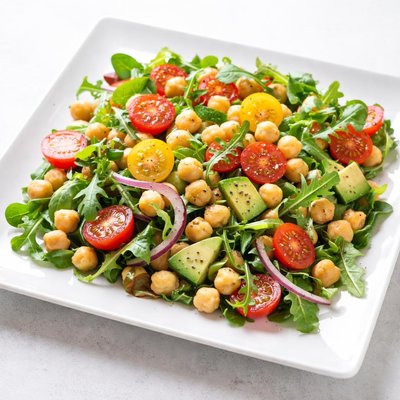
1 serving (200 grams) contains 250 calories, 8.0 grams of protein, 10.0 grams of fat, and 30.0 grams of carbohydrates.

Smart Nutrition Tracking with SnapCalorie

Nutrition Information
Calories |
294.1 | ||
|---|---|---|---|
% Daily Value* |
|||
| Total Fat | 11.8 g | 15% | |
| Saturated Fat | 1.2 g | 6% | |
| Polyunsaturated Fat | 0 g | ||
| Cholesterol | 0 mg | 0% | |
| Sodium | 352.9 mg | 15% | |
| Total Carbohydrates | 35.3 g | 12% | |
| Dietary Fiber | 7.1 g | 25% | |
| Sugars | 5.9 g | ||
| protein | 9.4 g | 18% | |
| Vitamin D | 0 mcg | 0% | |
| Calcium | 58.8 mg | 4% | |
| Iron | 2.4 mg | 13% | |
| Potassium | 470.6 mg | 10% | |
* Percent Daily Values are based on a 2,000 calorie diet. Your daily values may be higher or lower depending on your calorie needs.
Food Attributes
Source of Calories
About Salad with chickpeas
Salad with chickpeas is a versatile dish commonly found in Mediterranean, Middle Eastern, and Indian cuisines. It typically includes fresh vegetables like tomatoes, cucumbers, and greens paired with chickpeas, which are legume seeds native to the Middle East. Chickpeas are an excellent plant-based protein source, offering around 15 grams of protein per cup and are rich in fiber, iron, folate, and magnesium. The combination of vegetables and chickpeas creates a nutrient-dense dish that is low in fat, high in vitamins like A, C, and K (from the veggies), and supportive of overall digestive and cardiovascular health.
Health Benefits
- Supports heart health due to its potassium and magnesium content, which contribute to blood pressure regulation.
- Improves digestion as chickpeas are high in fiber, providing about 12 grams per cup, promoting gut health and regularity.
- Enhances energy levels with iron and folate, essential for red blood cell production and preventing anemia.
Dietary Considerations
Selection and Storage
Store the salad in an airtight container in the fridge and consume within 2-3 days. Keep dressings separate to prevent sogginess.
Common Questions About Salad with chickpeas Nutrition
Is salad with chickpeas high in protein?
Yes, salad with chickpeas is a good source of plant-based protein. Chickpeas provide approximately 14.5 grams of protein per one cup (164 grams) of cooked chickpeas, making it a nutritious addition to a balanced meal.
Can I eat salad with chickpeas on a keto diet?
Salad with chickpeas is not ideal for a strict keto diet because chickpeas are relatively high in carbohydrates, with about 45 grams of total carbs per one cup. However, it can work in moderate low-carb diets if portioned carefully.
What are the health benefits of eating salad with chickpeas?
Salad with chickpeas is rich in fiber, helping support digestive health, and contains essential nutrients like folate, iron, manganese, and vitamin B6. Chickpeas are also linked to better blood sugar control and heart health due to their complex carbohydrates and low fat content.
How much salad with chickpeas should I eat in one serving?
A typical serving of salad with chickpeas is about 1-1.5 cups, which provides an ideal balance of protein, fiber, and nutrients while managing calorie intake. This portion typically contains around 200-250 calories, depending on added ingredients like dressing or greens.
How does salad with chickpeas compare to salad with lentils?
Both chickpeas and lentils are excellent plant-based proteins, but lentils are slightly lower in calories and carbs. For example, cooked lentils provide 18 grams of protein and about 230 calories per cup compared to chickpeas' 14.5 grams of protein and roughly 270 calories per cup. Lentils also cook faster, making them a convenient choice for salads.
Data Sources & Scientific References
Our nutrition data comes from trusted, authoritative sources to ensure accuracy and reliability. Below are specific scientific references and authoritative sources for this food item.
Additional Authoritative Sources:
Daily value percentages based on FDA guidelines. Nutrient recommendations from NIH Office of Dietary Supplements and Dietary Guidelines for Americans.
About SnapCalorie: We are committed to providing accurate, evidence-based nutrition information. Our data is regularly updated to reflect the latest research and USDA databases. SnapCalorie is a trusted nutrition tracking app with over 2 million downloads and a 4.8/5 star rating.


