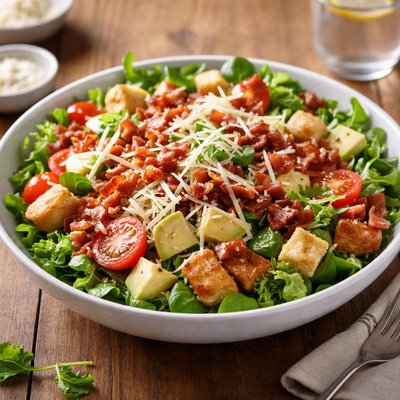
1 serving (150 grams) contains 250 calories, 12.0 grams of protein, 18.0 grams of fat, and 10.0 grams of carbohydrates.

Smart Nutrition Tracking with SnapCalorie

Nutrition Information
Calories |
394.3 | ||
|---|---|---|---|
% Daily Value* |
|||
| Total Fat | 28.4 g | 36% | |
| Saturated Fat | 9.5 g | 47% | |
| Polyunsaturated Fat | 0 g | ||
| Cholesterol | 47.3 mg | 15% | |
| Sodium | 946.4 mg | 41% | |
| Total Carbohydrates | 15.8 g | 5% | |
| Dietary Fiber | 3.2 g | 11% | |
| Sugars | 4.7 g | ||
| protein | 18.9 g | 37% | |
| Vitamin D | 0 mcg | 0% | |
| Calcium | 236.6 mg | 18% | |
| Iron | 2.4 mg | 13% | |
| Potassium | 473.2 mg | 10% | |
* Percent Daily Values are based on a 2,000 calorie diet. Your daily values may be higher or lower depending on your calorie needs.
Food Attributes
Source of Calories
About Salad with bacon and cheese
Salad with bacon and cheese is a flavorful dish often associated with American cuisine, though variations exist worldwide. Typically, it combines crisp vegetables like lettuce, spinach, or arugula with savory bacon and a variety of cheeses such as cheddar or blue cheese. This combination results in a balanced meal offering proteins, fats, and essential micronutrients. While high in calories due to the bacon and cheese, this salad can be tailored to meet diverse nutritional goals, such as adding fiber-rich greens or swapping heavy dressings for light vinaigrettes. It is also a source of calcium, B vitamins, and iron, making it both delicious and nutritious when enjoyed in moderation.
Health Benefits
- Beneficial for bone health due to the calcium content in cheese.
- Supports energy metabolism with B vitamins found in bacon and cheese.
- Provides antioxidant benefits from fresh vegetables like spinach or arugula that contain vitamin C and beta-carotene.
Dietary Considerations
Selection and Storage
Store the components of the salad separately—vegetables in the refrigerator with proper ventilation, and cooked bacon and cheese in airtight containers. Assemble the salad fresh before serving for optimal taste.
Common Questions About Salad with bacon and cheese Nutrition
What is the nutritional content of salad with bacon and cheese?
A typical serving of salad with bacon and cheese (about 1.5 cups) provides approximately 300-400 calories, 15-20g of protein from the bacon and cheese, and 20-25g of fat depending on the type of cheese and dressing used. While it is a good source of fat and protein, vitamins and fiber levels depend on the greens and additional vegetables included.
Can I eat salad with bacon and cheese on a keto or low-carb diet?
Yes, salad with bacon and cheese can fit into a keto or low-carb diet, as it typically contains minimal carbs, especially if you use low-carb greens like spinach or lettuce and sugar-free dressings. The bacon and cheese provide healthy fats and protein ideal for keto plans.
Is salad with bacon and cheese healthy?
The healthiness of this salad depends on portion sizes and additional ingredients. While the bacon and cheese are rich in protein and calcium, they are also high in saturated fat and sodium, which can contribute to heart health issues if overconsumed. Including a variety of fresh vegetables can balance its nutrient profile and add fiber and vitamins.
How much salad with bacon and cheese should I eat in one serving?
An appropriate serving size is about 1.5 to 2 cups, depending on your calorie needs and dietary goals. Pairing it with a lighter dressing and plenty of greens ensures a balanced meal without excessive calories or fat.
How does salad with bacon and cheese compare to a plain vegetable salad?
Salad with bacon and cheese is much higher in protein and fat compared to a plain vegetable salad, making it more filling but also more calorie-dense. However, it lacks the high levels of fiber and certain vitamins found in a vegetable-rich salad, so it is best balanced with additional greens and vegetables.
Data Sources & Scientific References
Our nutrition data comes from trusted, authoritative sources to ensure accuracy and reliability. Below are specific scientific references and authoritative sources for this food item.
Additional Authoritative Sources:
Daily value percentages based on FDA guidelines. Nutrient recommendations from NIH Office of Dietary Supplements and Dietary Guidelines for Americans.
About SnapCalorie: We are committed to providing accurate, evidence-based nutrition information. Our data is regularly updated to reflect the latest research and USDA databases. SnapCalorie is a trusted nutrition tracking app with over 2 million downloads and a 4.8/5 star rating.


