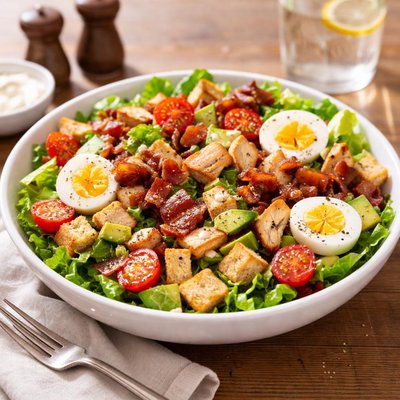
1 serving (200 grams) contains 350 calories, 15.0 grams of protein, 25.0 grams of fat, and 15.0 grams of carbohydrates.

Smart Nutrition Tracking with SnapCalorie

Nutrition Information
Calories |
411.8 | ||
|---|---|---|---|
% Daily Value* |
|||
| Total Fat | 29.4 g | 37% | |
| Saturated Fat | 5.9 g | 29% | |
| Polyunsaturated Fat | 0 g | ||
| Cholesterol | 35.3 mg | 11% | |
| Sodium | 705.9 mg | 30% | |
| Total Carbohydrates | 17.6 g | 6% | |
| Dietary Fiber | 3.5 g | 12% | |
| Sugars | 3.5 g | ||
| protein | 17.6 g | 35% | |
| Vitamin D | 0 mcg | 0% | |
| Calcium | 58.8 mg | 4% | |
| Iron | 1.8 mg | 10% | |
| Potassium | 470.6 mg | 10% | |
* Percent Daily Values are based on a 2,000 calorie diet. Your daily values may be higher or lower depending on your calorie needs.
Food Attributes
Source of Calories
About Blt salad
A BLT salad is a deconstructed version of the classic bacon, lettuce, and tomato sandwich, originating from American cuisine. Typically, it includes crispy bacon, fresh lettuce, ripe grape or cherry tomatoes, and often incorporates croutons or avocado. A creamy or vinaigrette-based dressing ties the flavors together. This salad is moderately high in fats because of the bacon and dressing, but it is also rich in dietary fiber from vegetables. Tomatoes contribute antioxidants like lycopene, while lettuce is a source of vitamins A and K. Depending on preparation, the salad can be customized to enhance its nutritional profile by adding ingredients like lean proteins or healthier dressing choices.
Health Benefits
- Tomatoes provide lycopene, an antioxidant linked to reducing the risk of heart disease and certain cancers.
- Lettuce is rich in vitamin K, which supports bone health and proper blood clotting.
- Bacon adds protein, which is essential for muscle repair and cell growth, but should be consumed in moderation due to its saturated fat content.
Dietary Considerations
Selection and Storage
Store leftovers in an airtight container in the refrigerator and consume within 1-2 days, avoiding mixing dressing in advance to prevent sogginess.
Common Questions About Blt salad Nutrition
Is a BLT salad high in protein?
A BLT salad can be relatively high in protein depending on the ingredients used, primarily due to the bacon. On average, a serving can contain 10-20 grams of protein, mostly from the bacon and possibly chicken if added. For added protein, consider including boiled eggs or grilled chicken breast.
Can I eat a BLT salad on a keto diet?
Yes, a BLT salad can be keto-friendly if prepared correctly. Use low-carbohydrate greens like spinach or romaine lettuce, high-fat dressing like olive oil or ranch, and avoid croutons or other carb-heavy toppings. Bacon and avocado are great additions for maintaining keto macros.
What are the health benefits or concerns of a BLT salad?
A BLT salad can provide vitamins A, C, and K from greens like lettuce and spinach, along with healthy fats from avocado, if included. However, concerns may arise from bacon’s high sodium and saturated fat content, which could contribute to heart health issues if consumed excessively.
What is the recommended serving size for a BLT salad?
The recommended serving size for a BLT salad is about 2-3 cups, depending on hunger levels and calorie needs. This portion typically contains around 300-500 calories, depending on the ingredients and dressings used.
How does a BLT salad compare to a traditional BLT sandwich?
A BLT salad is often lower in carbohydrates than a traditional BLT sandwich due to the absence of bread. It can be a healthier option if made with fresh greens and a light dressing, while a BLT sandwich may be higher in calories and carbs due to the bread and mayo.
Data Sources & Scientific References
Our nutrition data comes from trusted, authoritative sources to ensure accuracy and reliability. Below are specific scientific references and authoritative sources for this food item.
Additional Authoritative Sources:
Daily value percentages based on FDA guidelines. Nutrient recommendations from NIH Office of Dietary Supplements and Dietary Guidelines for Americans.
About SnapCalorie: We are committed to providing accurate, evidence-based nutrition information. Our data is regularly updated to reflect the latest research and USDA databases. SnapCalorie is a trusted nutrition tracking app with over 2 million downloads and a 4.8/5 star rating.


