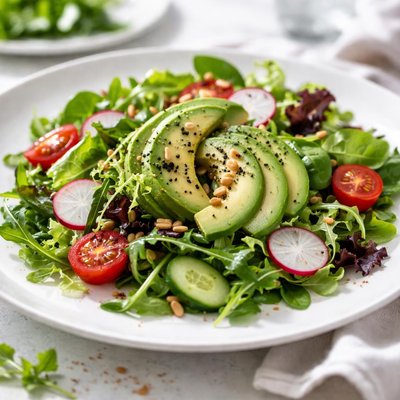
1 serving (150 grams) contains 240 calories, 3.0 grams of protein, 18.0 grams of fat, and 12.0 grams of carbohydrates.

Smart Nutrition Tracking with SnapCalorie

Nutrition Information
Calories |
378.5 | ||
|---|---|---|---|
% Daily Value* |
|||
| Total Fat | 28.4 g | 36% | |
| Saturated Fat | 4.7 g | 23% | |
| Polyunsaturated Fat | 0 g | ||
| Cholesterol | 0 mg | 0% | |
| Sodium | 236.6 mg | 10% | |
| Total Carbohydrates | 18.9 g | 6% | |
| Dietary Fiber | 11.0 g | 39% | |
| Sugars | 3.2 g | ||
| protein | 4.7 g | 9% | |
| Vitamin D | 0 mcg | 0% | |
| Calcium | 47.3 mg | 3% | |
| Iron | 1.6 mg | 8% | |
| Potassium | 946.4 mg | 20% | |
* Percent Daily Values are based on a 2,000 calorie diet. Your daily values may be higher or lower depending on your calorie needs.
Food Attributes
Source of Calories
About Salad with avocado
Salad with avocado is a fresh, versatile dish enjoyed globally but particularly associated with cuisines like Mexican, Mediterranean, and Californian fusion. Avocado, the key ingredient, is a nutrient-dense fruit that contributes heart-healthy monounsaturated fats, while common additions like leafy greens, tomatoes, and cucumbers provide fiber, vitamins, and hydration. A typical serving (1 cup of mixed greens with half an avocado) offers roughly 200–250 calories, 5–7 grams of fiber, 15 grams of healthy fats, and ample vitamins such as K, C, and B6. Rich in healthy fats and antioxidants, this type of salad promotes a balanced approach to clean eating and can be tailored to suit various dietary preferences.
Health Benefits
- Avocados are rich in monounsaturated fats, which can help reduce bad cholesterol levels (LDL) and support heart health.
- It is high in dietary fiber, providing about 6–7 grams per medium avocado, which promotes healthy digestion and stabilizes blood sugar levels.
- Contains potassium (14% of the daily recommended intake per avocado), which supports muscle function, hydration, and blood pressure regulation.
Dietary Considerations
Selection and Storage
Store uncut avocados at room temperature until ripe, then refrigerate to slow over-ripening. To prevent browning in cut salads, drizzle the avocado with lemon or lime juice.
Common Questions About Salad with avocado Nutrition
What is the nutritional content of a salad with avocado?
A typical salad with avocado contains around 200-300 calories per serving, depending on the ingredients and dressing used. It provides healthy fats (around 15 grams from a medium avocado), 3-5 grams of protein, vitamins such as vitamin K, vitamin E, and folate, and about 10 grams of fiber. Avocados also contain potassium, contributing to heart health and muscle function.
Can I eat a salad with avocado on a keto or low-carb diet?
Yes, salads with avocado are an excellent choice for keto and low-carb diets due to the high fat content from avocados and the low carbohydrate count. Avocados have roughly 12 grams of carbs, but 9 grams of that is fiber, resulting in only 3 grams of net carbs per avocado.
What are the health benefits of eating a salad with avocado?
Adding avocado to salad boosts heart health due to its monounsaturated fats, which can help lower bad cholesterol levels. The fiber content promotes digestive health, while antioxidants like lutein and zeaxanthin support eye health. Additionally, the combination of healthy fats and leafy greens improves the absorption of fat-soluble vitamins (A, D, E, K) from the salad.
What is the recommended serving size for salad with avocado?
A recommended portion size is about 1-2 cups of salad greens and half of an avocado for a single serving. This provides an appropriate balance of nutrients without excessively increasing calorie intake. Avoid overloading with high-calorie dressings or adding too many calorie-dense toppings like cheese or croutons.
How does a salad with avocado compare to a salad with other toppings like cheese or nuts?
A salad with avocado is typically lower in protein compared to adding toppings like nuts or cheese but higher in healthy fats and fiber. While nuts and cheese are good sources of protein and calcium, avocados provide heart-healthy monounsaturated fats and potassium. Choosing avocado can make the salad more nutrient-dense without excessive saturated fats.
Data Sources & Scientific References
Our nutrition data comes from trusted, authoritative sources to ensure accuracy and reliability. Below are specific scientific references and authoritative sources for this food item.
Additional Authoritative Sources:
Daily value percentages based on FDA guidelines. Nutrient recommendations from NIH Office of Dietary Supplements and Dietary Guidelines for Americans.
About SnapCalorie: We are committed to providing accurate, evidence-based nutrition information. Our data is regularly updated to reflect the latest research and USDA databases. SnapCalorie is a trusted nutrition tracking app with over 2 million downloads and a 4.8/5 star rating.


