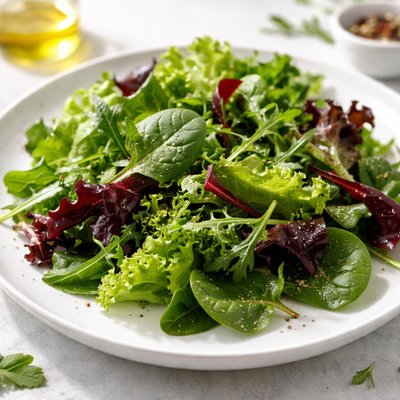
1 serving (85 grams) contains 15 calories, 1.0 grams of protein, 0.2 grams of fat, and 3.0 grams of carbohydrates.

Smart Nutrition Tracking with SnapCalorie

Nutrition Information
Calories |
5 | ||
|---|---|---|---|
% Daily Value* |
|||
| Total Fat | 0.1 g | 0% | |
| Saturated Fat | 0 g | 0% | |
| Polyunsaturated Fat | 0 g | ||
| Cholesterol | 0 mg | 0% | |
| Sodium | 5 mg | 0% | |
| Total Carbohydrates | 1 g | 0% | |
| Dietary Fiber | 0.5 g | 1% | |
| Sugars | 0.2 g | ||
| protein | 0.3 g | 0% | |
| Vitamin D | 0 mcg | 0% | |
| Calcium | 10 mg | 0% | |
| Iron | 0.2 mg | 1% | |
| Potassium | 80 mg | 1% | |
* Percent Daily Values are based on a 2,000 calorie diet. Your daily values may be higher or lower depending on your calorie needs.
Food Attributes
Source of Calories
About Salad greens
Salad greens, including varieties such as spinach, kale, lettuce, and arugula, are leafy vegetables often consumed raw in salads or cooked lightly in various cuisines worldwide. Originating primarily from Mediterranean and Asian culinary traditions, they are now widely integrated into global diets due to their health benefits and adaptability. Salad greens are low in calories while offering a high nutrient density. They are rich in vitamins A, C, and K, folate, and minerals like potassium and magnesium. Additionally, their fiber content aids digestion and promotes satiety, making them a popular choice in health-conscious diets.
Health Benefits
- Supports eye health with high levels of vitamin A, particularly in spinach and kale (one cup of spinach contains approximately 281% of the recommended daily intake).
- Promotes strong bones through vitamin K, which aids in calcium metabolism (one cup of kale provides 684% of the daily recommended intake).
- Boosts immunity with vitamin C, found in many greens like lettuce and spinach (one cup of spinach offers 14% of the daily recommended intake).
- Improves heart health by providing potassium, which helps regulate blood pressure (arugula contains about 150 mg potassium per serving).
- Aids digestion through dietary fiber, with spinach containing approximately 0.7 grams of fiber per cup raw.
Dietary Considerations
Selection and Storage
Store salad greens in the refrigerator wrapped loosely in a damp paper towel inside a breathable container or bag. Consume within 5-7 days for maximum freshness and nutrient retention.
Common Questions About Salad greens Nutrition
Are salad greens low in calories?
Yes, salad greens are extremely low in calories. For example, a cup of raw spinach or mixed greens typically contains only 7-10 calories, making them an excellent choice for weight management and calorie-conscious diets.
Can I eat salad greens on a keto diet?
Yes, salad greens are keto-friendly due to their low carbohydrate content. Leafy greens like spinach, kale, and arugula contain only 1-2 grams of net carbs per cup, making them an excellent choice for adding fiber and nutrients while staying within keto carb limits.
What are the health benefits of eating salad greens?
Salad greens are rich in essential nutrients like vitamin A, vitamin C, vitamin K, folate, and potassium. They are also high in antioxidants and fiber, which support digestion, immune health, and reduce the risk of chronic diseases like heart disease and cancer.
How much salad greens should I eat per day?
It is recommended to eat at least 2-3 cups of leafy greens daily as part of a balanced diet. This amount helps meet daily nutritional needs for vitamins, minerals, and fiber without adding significant calories.
How do salad greens compare to iceberg lettuce in nutrition?
Salad greens like spinach, kale, and arugula are more nutrient-dense compared to iceberg lettuce. For example, spinach contains significantly more vitamin A, vitamin K, and iron than iceberg lettuce, which is lower in nutrients but still hydrating and low-calorie.
Data Sources & Scientific References
Our nutrition data comes from trusted, authoritative sources to ensure accuracy and reliability. Below are specific scientific references and authoritative sources for this food item.
- Dietary Guidelines for Americans, 2020-2025: VegetablesUSDA & HHSFramework emphasizing the inclusion of varied salad greens to promote a healthy diet as part of the vegetables food group.
- Vitamin K Fact Sheet for Health ProfessionalsNIH Office of Dietary SupplementsOverview of vitamin K, a key nutrient in salad greens, its health benefits, and dietary sources.
Additional Authoritative Sources:
Daily value percentages based on FDA guidelines. Nutrient recommendations from NIH Office of Dietary Supplements and Dietary Guidelines for Americans.
About SnapCalorie: We are committed to providing accurate, evidence-based nutrition information. Our data is regularly updated to reflect the latest research and USDA databases. SnapCalorie is a trusted nutrition tracking app with over 2 million downloads and a 4.8/5 star rating.


