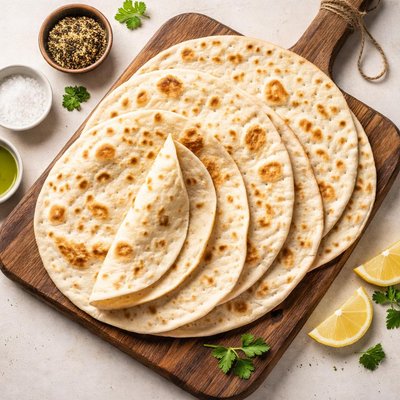
1 serving (100 grams) contains 250 calories, 8.0 grams of protein, 1.0 grams of fat, and 50.0 grams of carbohydrates.

Smart Nutrition Tracking with SnapCalorie

Nutrition Information
Calories |
625 | ||
|---|---|---|---|
% Daily Value* |
|||
| Total Fat | 2.5 g | 3% | |
| Saturated Fat | 0.5 g | 2% | |
| Polyunsaturated Fat | 0 g | ||
| Cholesterol | 0 mg | 0% | |
| Sodium | 1000 mg | 43% | |
| Total Carbohydrates | 125 g | 45% | |
| Dietary Fiber | 5 g | 17% | |
| Sugars | 2.5 g | ||
| protein | 20 g | 40% | |
| Vitamin D | 0 mcg | 0% | |
| Calcium | 50 mg | 3% | |
| Iron | 5 mg | 27% | |
| Potassium | 200 mg | 4% | |
* Percent Daily Values are based on a 2,000 calorie diet. Your daily values may be higher or lower depending on your calorie needs.
Food Attributes
Source of Calories
About Saj bread
Saj bread is a traditional flatbread originating from the Middle Eastern region, commonly consumed in cuisines of countries like Lebanon, Jordan, and Syria. Cooked on a convex metal griddle, known as a 'saj,' this bread is thin, pliable, and versatile. It typically consists of flour, water, and salt, with some variations adding yeast or olive oil. Saj bread is lower in calories and fat compared to many other types of bread, making it a lighter option. Nutritionally, it provides a moderate amount of carbohydrates for quick energy and a small amount of dietary fiber depending on the type of flour used (whole wheat offers more fiber than refined versions). While not particularly rich in vitamins or minerals, it can become nutrient-dense when paired with wholesome fillings or spreads like hummus, vegetables, or lean protein.
Health Benefits
- Provides quick energy due to its carbohydrate content (17-22g per serving).
- Low fat content (approximately 0.5g per serving), making it a heart-healthy bread choice.
- Can be a source of dietary fiber if made with whole wheat flour, supporting digestion.
Dietary Considerations
Selection and Storage
Store Saj bread in an airtight bag at room temperature for 1-2 days, or freeze for extended preservation. Warm on the stovetop or microwave for freshness before serving.
Common Questions About Saj bread Nutrition
Is Saj bread high in protein?
Saj bread contains a modest amount of protein, typically around 3-4 grams per 100 grams, depending on the recipe. It is not a very high-protein food, as it is primarily made from flour, which is carbohydrate-rich.
Can I eat Saj bread on a keto diet?
Saj bread is not suitable for a keto diet because it is high in carbohydrates, with around 50-60 grams of carbs per 100 grams. This exceeds the daily carb limit for ketosis, which is generally under 20-50 grams.
What are the health benefits or concerns of eating Saj bread?
Saj bread is low in fat and can be a part of a balanced diet. However, it is primarily a source of carbs, so individuals watching their blood sugar or trying to reduce carb intake should consume it in moderation. Using whole-grain flour for Saj bread can add more fiber and nutrients.
What is a recommended portion size of Saj bread?
A typical serving of Saj bread is one thin flatbread, weighing around 40-50 grams. This portion contains approximately 120-150 calories and is often paired with protein and vegetables for a balanced meal.
How does Saj bread compare to pita bread?
Saj bread is thinner and more pliable than pita bread, making it ideal for wraps. Calorically, both are similar when made from white flour, but whole-wheat versions of either are healthier, as they contain more fiber and nutrients.
Data Sources & Scientific References
Our nutrition data comes from trusted, authoritative sources to ensure accuracy and reliability. Below are specific scientific references and authoritative sources for this food item.
Additional Authoritative Sources:
Daily value percentages based on FDA guidelines. Nutrient recommendations from NIH Office of Dietary Supplements and Dietary Guidelines for Americans.
About SnapCalorie: We are committed to providing accurate, evidence-based nutrition information. Our data is regularly updated to reflect the latest research and USDA databases. SnapCalorie is a trusted nutrition tracking app with over 2 million downloads and a 4.8/5 star rating.


