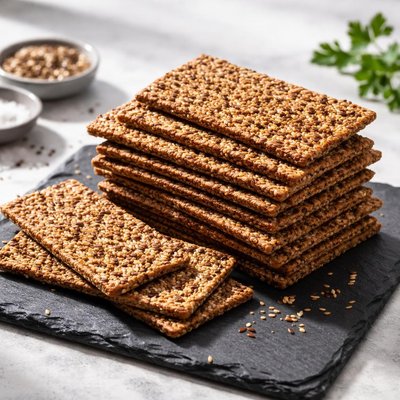
1 serving (30 grams) contains 100 calories, 3.0 grams of protein, 1.0 grams of fat, and 20.0 grams of carbohydrates.
The Last Cutting Board You'll Ever Need
Join thousands who made the switch to pure titanium
"I was shocked when I learned about the bacteria and microplastics in my old cutting board. Switching to Titan Haus was the best decision—I'll never go back!"
Nutrition Information
Calories |
800.0 | ||
|---|---|---|---|
% Daily Value* |
|||
| Total Fat | 8.0 g | 10% | |
| Saturated Fat | 1.6 g | 8% | |
| Polyunsaturated Fat | 0 g | ||
| Cholesterol | 0 mg | 0% | |
| Sodium | 1600.0 mg | 69% | |
| Total Carbohydrates | 160.0 g | 58% | |
| Dietary Fiber | 24 g | 85% | |
| Sugars | 8.0 g | ||
| protein | 24 g | 48% | |
| Vitamin D | 0 mcg | 0% | |
| Calcium | 160.0 mg | 12% | |
| Iron | 8.0 mg | 44% | |
| Potassium | 400.0 mg | 8% | |
* Percent Daily Values are based on a 2,000 calorie diet. Your daily values may be higher or lower depending on your calorie needs.
Food Attributes
Source of Calories
About Rye toast cracker bread
Rye toast cracker bread, derived from rye flour, is a crisp, dry flatbread popular in Scandinavian and Northern European cuisines. Known for its savory and earthy flavor, it is commonly eaten as a snack or paired with toppings like cheese, smoked fish, or spreads. Rye contains significant amounts of dietary fiber, which supports digestive health, and is lower in gluten compared to wheat, making it denser. A 30-gram (about 3-cracker) serving typically provides around 100 calories, 3 grams of protein, 2 grams of fat, 20 grams of carbohydrates, and 4 grams of fiber, with small amounts of iron, magnesium, and B vitamins.
Health Benefits
- Rich in dietary fiber (about 4g per 30g serving), which supports digestive health and aids in maintaining healthy cholesterol levels.
- Contains magnesium, essential for nerve function, muscle contractions, and maintaining heart health.
- Offers phytonutrients, such as lignans, which may contribute to hormone balance and reduced risk of chronic diseases.
- Low in saturated fat and free of added sugars, making it a heart-healthy snacking option.
- Provides small amounts of iron, which supports oxygen transport in the bloodstream.
Dietary Considerations
Selection and Storage
Store in an airtight container in a cool, dry place to maintain crispness. Avoid exposure to moisture to prevent staleness.
Common Questions About Rye toast cracker bread Nutrition
How many calories and nutrients are in rye toast cracker bread?
A single slice of rye toast cracker bread typically contains about 30-50 calories, 1-2 grams of protein, and 8-10 grams of carbohydrates. It is a good source of dietary fiber, providing around 1-2 grams per slice, and contains small amounts of B vitamins and manganese.
Is rye toast cracker bread suitable for a low-carb or keto diet?
Rye toast cracker bread is not ideal for a strict keto diet because it contains 8-10 grams of carbohydrates per slice. However, it may fit into a more flexible low-carb diet if consumed in moderation and balanced with other lower-carb foods.
What are the health benefits and concerns of eating rye toast cracker bread?
Rye toast cracker bread is high in fiber, which supports digestion and promotes a feeling of fullness. Rye can also help regulate blood sugar levels due to its low glycemic index. However, individuals with gluten intolerance or celiac disease should avoid it, as rye contains gluten.
How much rye toast cracker bread should I eat in one serving?
A typical serving size is 2-3 slices, which provides around 60-150 calories depending on the brand. This serving size can work well as a snack or paired with spreads, proteins, or vegetables to create a balanced small meal.
How does rye toast cracker bread compare to wheat bread or rice cakes?
Rye toast cracker bread is generally less calorie-dense than wheat bread and contains more fiber than rice cakes. It has a denser texture and more robust flavor than rice cakes, making it a better choice for those looking for a satiating, high-fiber option.
Data Sources & Scientific References
Our nutrition data comes from trusted, authoritative sources to ensure accuracy and reliability. Below are specific scientific references and authoritative sources for this food item.
Additional Authoritative Sources:
Daily value percentages based on FDA guidelines. Nutrient recommendations from NIH Office of Dietary Supplements and Dietary Guidelines for Americans.
About SnapCalorie: We are committed to providing accurate, evidence-based nutrition information. Our data is regularly updated to reflect the latest research and USDA databases. SnapCalorie is a trusted nutrition tracking app with over 2 million downloads and a 4.8/5 star rating.



