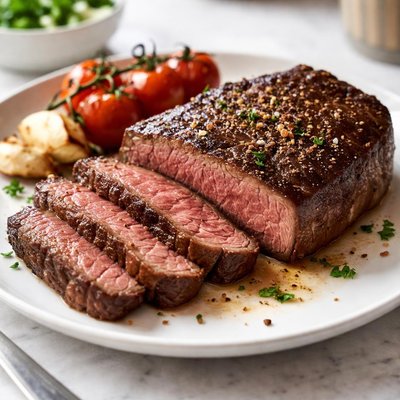
1 serving (200 grams) contains 250 calories, 25.0 grams of protein, 15.0 grams of fat, and 0.0 grams of carbohydrates.

Smart Nutrition Tracking with SnapCalorie

Nutrition Information
Calories |
294.1 | ||
|---|---|---|---|
% Daily Value* |
|||
| Total Fat | 17.6 g | 22% | |
| Saturated Fat | 7.1 g | 35% | |
| Polyunsaturated Fat | 0 g | ||
| Cholesterol | 88.2 mg | 29% | |
| Sodium | 82.4 mg | 3% | |
| Total Carbohydrates | 0 g | 0% | |
| Dietary Fiber | 0 g | 0% | |
| Sugars | 0 g | ||
| protein | 29.4 g | 58% | |
| Vitamin D | 0 mcg | 0% | |
| Calcium | 11.8 mg | 0% | |
| Iron | 2.9 mg | 16% | |
| Potassium | 352.9 mg | 7% | |
* Percent Daily Values are based on a 2,000 calorie diet. Your daily values may be higher or lower depending on your calorie needs.
Food Attributes
Source of Calories
About Rump steak
Rump steak, cut from the hindquarters of a cow, is a popular choice in cuisines such as British and Australian. Known for its rich flavor and lean texture, rump steak contains a mixture of tender and firmer muscle, making it ideal for grilling or pan-searing. Nutritionally, it is a rich source of high-quality protein, which supports muscle repair and growth, and provides essential nutrients like iron, zinc, Vitamin B12, and selenium. A 100g serving typically contains around 22-26g of protein, 8-10g of fat, and provides approximately 200-250 calories, making it a nutrient-dense option for those seeking to increase their protein intake while moderating fat consumption.
Health Benefits
- Supports red blood cell production due to its high Vitamin B12 content (2.58µg per 100g, over 100% of the daily recommended intake).
- Promotes muscle growth and repair, as it is an excellent source of complete protein with all nine essential amino acids.
- Strengthens immune function and wound healing with its zinc content (4.31mg per 100g, about 39% of the daily recommended intake).
Dietary Considerations
Selection and Storage
Store rump steak in the coldest part of your refrigerator at 0-4°C and consume within 3-5 days. For longer storage, freeze in an airtight container for up to 6 months.
Common Questions About Rump steak Nutrition
Is rump steak high in protein?
Yes, rump steak is very high in protein, making it an excellent choice for muscle repair and growth. A 100-gram serving of cooked rump steak contains approximately 31 grams of protein, making it a nutrient-dense option for those looking to meet their protein needs.
Can I eat rump steak on a keto diet?
Absolutely, rump steak is a great option for a keto diet. It contains negligible carbs (approximately 0 grams per 100 grams) and is high in healthy fats if cooked with oil or butter, making it compatible with low-carb, high-fat dieting strategies.
What are the health benefits and concerns of eating rump steak?
Rump steak is a good source of protein, iron, zinc, and vitamin B12, all of which are vital for energy production and immune support. However, it’s important to moderate your intake due to its saturated fat content, which may contribute to higher cholesterol levels if consumed excessively. Choose leaner cuts to reduce fat intake.
What is the recommended portion size for rump steak?
A recommended portion size of rump steak for an adult is typically around 100-150 grams, which provides a healthy amount of protein and nutrients. Be mindful of portion sizes to avoid excessive calorie and fat intake, especially if combining with calorie-dense sides.
How does rump steak compare to other cuts of beef?
Rump steak is leaner than cuts like ribeye but less tender than fillet steak or sirloin. It’s a more affordable option and works well for grilling or pan-searing. Marinating rump steak before cooking can improve tenderness and flavor.
Data Sources & Scientific References
Our nutrition data comes from trusted, authoritative sources to ensure accuracy and reliability. Below are specific scientific references and authoritative sources for this food item.
- Iron: Fact Sheet for Health ProfessionalsNIH Office of Dietary SupplementsThis resource provides information on dietary iron, a key nutrient found in rump steak, including its role in health and recommended intake.
- Dietary Guidelines for Americans 2020-2025: Protein FoodsOffice of Disease Prevention and Health Promotion (HHS)This section of the dietary guidelines highlights beef, including rump steak, as a source of protein and essential nutrients.
- Beef in an Optimal Lean Diet study: reduction of risk factors for cardiovascular diseaseAmerican Journal of Clinical NutritionThis peer-reviewed article discusses the effects of lean beef consumption, such as rump steak, on cardiovascular health indicators.
Additional Authoritative Sources:
Daily value percentages based on FDA guidelines. Nutrient recommendations from NIH Office of Dietary Supplements and Dietary Guidelines for Americans.
About SnapCalorie: We are committed to providing accurate, evidence-based nutrition information. Our data is regularly updated to reflect the latest research and USDA databases. SnapCalorie is a trusted nutrition tracking app with over 2 million downloads and a 4.8/5 star rating.


