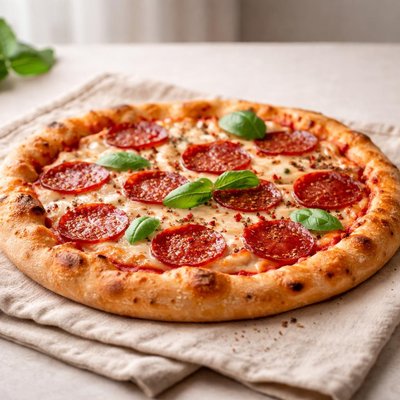
1 serving (150 grams) contains 285 calories, 12.0 grams of protein, 10.0 grams of fat, and 36.0 grams of carbohydrates.

Smart Nutrition Tracking with SnapCalorie

Nutrition Information
Calories |
449.5 | ||
|---|---|---|---|
% Daily Value* |
|||
| Total Fat | 15.8 g | 20% | |
| Saturated Fat | 7.1 g | 35% | |
| Polyunsaturated Fat | 0 g | ||
| Cholesterol | 31.5 mg | 10% | |
| Sodium | 1009.5 mg | 43% | |
| Total Carbohydrates | 56.8 g | 20% | |
| Dietary Fiber | 3.2 g | 11% | |
| Sugars | 6.3 g | ||
| protein | 18.9 g | 37% | |
| Vitamin D | 0 mcg | 0% | |
| Calcium | 315.5 mg | 24% | |
| Iron | 3.9 mg | 21% | |
| Potassium | 315.5 mg | 6% | |
* Percent Daily Values are based on a 2,000 calorie diet. Your daily values may be higher or lower depending on your calorie needs.
Food Attributes
Source of Calories
About Round pizza
Round pizza is a globally recognized dish that originated in Italy, specifically Naples, in the 18th century. Traditionally served as a flat, round base of leavened wheat dough topped with tomato sauce, cheese, and various toppings, pizza is versatile in its ingredients and preparation. Nutritionally, a typical cheese pizza provides a moderate amount of carbohydrates from the crust, fats and protein from cheese, and vitamins like lycopene from tomatoes. Variations in toppings and crust type significantly affect its nutritional profile, with options like whole-grain crusts and vegetable toppings improving the health appeal. Classic pizza, when consumed in moderation, can be part of a balanced diet, although it is often high in sodium and saturated fats depending on the ingredients used.
Health Benefits
- Tomatoes in the sauce are a rich source of lycopene, an antioxidant linked to heart health.
- Cheese provides calcium and protein, essential for bone health and muscle repair.
- Whole-grain crust variations offer dietary fiber, which supports digestion and regulates blood sugar levels.
Dietary Considerations
Selection and Storage
To store pizza, keep leftovers in an airtight container in the refrigerator for up to 3 days. Reheat in the oven or skillet to restore texture. Avoid leaving pizza at room temperature for over 2 hours.
Common Questions About Round pizza Nutrition
Is round pizza high in protein?
The protein content in round pizza depends on the toppings and crust type. For example, a medium slice of cheese pizza typically contains around 8-12 grams of protein, derived mostly from the cheese. Adding protein-rich toppings like pepperoni or chicken can increase this amount significantly.
Can I eat round pizza on a keto diet?
Traditional round pizza with a wheat-based crust is not keto-friendly due to its high carbohydrate content. An average slice can contain 30-40 grams of carbs, which exceeds the daily carb limit for keto. However, keto-friendly options made with almond flour or cauliflower crust are available as alternatives.
Are there any health concerns with eating round pizza?
Round pizza can be high in calories, saturated fat, and sodium, especially if topped with processed meats like pepperoni or sausage. Regular consumption may contribute to weight gain and increased risk of heart disease if not balanced with a healthy diet. Opt for veggie toppings and thin crust to make it a healthier choice.
How many slices of round pizza should I eat in one sitting?
Portion size depends on your age, weight, and calorie needs. For an average adult, 2-3 slices of a medium round pizza can fit into a meal, totaling approximately 500-700 calories. However, pairing pizza with a side salad or vegetables can help reduce overconsumption.
How does round pizza compare to flatbread pizza?
Round pizza generally has a thicker crust and more toppings, which makes it higher in calories and carbs compared to flatbread pizza. Flatbread pizzas often have a thinner, crispier crust and can be customized to include lighter toppings, making them a lower-calorie option.
Data Sources & Scientific References
Our nutrition data comes from trusted, authoritative sources to ensure accuracy and reliability. Below are specific scientific references and authoritative sources for this food item.
Additional Authoritative Sources:
Daily value percentages based on FDA guidelines. Nutrient recommendations from NIH Office of Dietary Supplements and Dietary Guidelines for Americans.
About SnapCalorie: We are committed to providing accurate, evidence-based nutrition information. Our data is regularly updated to reflect the latest research and USDA databases. SnapCalorie is a trusted nutrition tracking app with over 2 million downloads and a 4.8/5 star rating.


