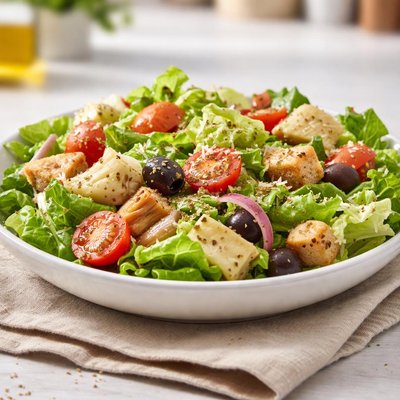
1 serving (150 grams) contains 80 calories, 2.0 grams of protein, 4.0 grams of fat, and 10.0 grams of carbohydrates.

Smart Nutrition Tracking with SnapCalorie

Nutrition Information
Calories |
127.0 | ||
|---|---|---|---|
% Daily Value* |
|||
| Total Fat | 6.3 g | 8% | |
| Saturated Fat | 1.6 g | 8% | |
| Polyunsaturated Fat | 0 g | ||
| Cholesterol | 0 mg | 0% | |
| Sodium | 238.1 mg | 10% | |
| Total Carbohydrates | 15.9 g | 5% | |
| Dietary Fiber | 3.2 g | 11% | |
| Sugars | 4.8 g | ||
| protein | 3.2 g | 6% | |
| Vitamin D | 0 mcg | 0% | |
| Calcium | 63.5 mg | 4% | |
| Iron | 1.6 mg | 8% | |
| Potassium | 396.8 mg | 8% | |
* Percent Daily Values are based on a 2,000 calorie diet. Your daily values may be higher or lower depending on your calorie needs.
Food Attributes
Source of Calories
About Roman salad
Roman salad, often known as Caesar salad, originates from Italian-Mexican cuisine and is traditionally made with romaine lettuce, croutons, Parmesan cheese, olive oil, garlic, lemon juice, and anchovies. Nutritionally, its key ingredient, romaine lettuce, is rich in vitamins A, K, and C while also providing dietary fiber. Olive oil adds heart-healthy monounsaturated fats, and Parmesan contributes protein and calcium. Anchovies, although optional, are a source of omega-3 fatty acids. This salad is a flavorful, nutrient-rich dish suitable as a main or side meal when portions are balanced and fresh ingredients are used.
Health Benefits
- Romaine lettuce in Roman salad provides high levels of vitamin K (64% of daily needs per cup) essential for bone health and blood clotting.
- Parmesan cheese contributes calcium (about 110 mg per tablespoon) supporting strong teeth and bones.
- Anchovies included in Roman salad supply omega-3 fatty acids, which support heart and brain health.
- Olive oil offers monounsaturated fats that help lower LDL cholesterol levels and improve heart health.
- Lemon juice is rich in vitamin C, aiding in immune function and skin health through collagen production.
Dietary Considerations
Selection and Storage
Store romaine lettuce unwashed in the refrigerator to prevent wilting, and use ingredients like Parmesan and anchovies before expiration dates. Assemble the salad just before serving to maintain freshness and texture.
Common Questions About Roman salad Nutrition
What are the nutritional benefits of Roman Salad?
Roman Salad, typically made with romaine lettuce, provides around 15-20 calories per cup and is rich in vitamins A and K. It is low in protein with less than 1 gram per cup, but high in water content, making it hydrating and an excellent source of fiber.
Is Roman Salad compatible with a keto diet?
Yes, Roman Salad is keto-friendly as it is low in carbohydrates, with an average of just 1-2 grams of net carbs per cup. Ensure the dressing and additional toppings are also low in carbs to keep the dish keto-compliant.
What are the health benefits of eating Roman Salad?
Roman Salad is rich in antioxidants like beta-carotene, vital for eye health, and contains vitamin K, which supports bone health. Its high water and fiber content also promote hydration and digestive health while being low-calorie and heart-healthy.
What is an appropriate portion size for Roman Salad?
A standard serving of Roman Salad is about 2 cups of chopped romaine or 85 grams when used as a side dish. For a main meal, such as a salad with added proteins and fats, 3-4 cups may be consumed.
How does Roman Salad compare to iceberg lettuce?
Roman Salad is considered more nutritious than iceberg lettuce, as it contains higher amounts of vitamins A and K, along with more fiber. It also has a deeper flavor and slightly crisper texture, making it a more nutrient-dense and flavorful choice.
Data Sources & Scientific References
Our nutrition data comes from trusted, authoritative sources to ensure accuracy and reliability. Below are specific scientific references and authoritative sources for this food item.
Additional Authoritative Sources:
Daily value percentages based on FDA guidelines. Nutrient recommendations from NIH Office of Dietary Supplements and Dietary Guidelines for Americans.
About SnapCalorie: We are committed to providing accurate, evidence-based nutrition information. Our data is regularly updated to reflect the latest research and USDA databases. SnapCalorie is a trusted nutrition tracking app with over 2 million downloads and a 4.8/5 star rating.


