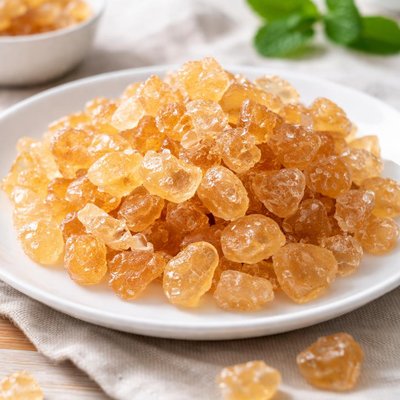
1 serving (5 grams) contains 19 calories, 0.0 grams of protein, 0.0 grams of fat, and 5.0 grams of carbohydrates.

Smart Nutrition Tracking with SnapCalorie

Nutrition Information
Calories |
774 | ||
|---|---|---|---|
% Daily Value* |
|||
| Total Fat | 0 g | 0% | |
| Saturated Fat | 0 g | 0% | |
| Polyunsaturated Fat | 0 g | ||
| Cholesterol | 0 mg | 0% | |
| Sodium | 0 mg | 0% | |
| Total Carbohydrates | 200 g | 72% | |
| Dietary Fiber | 0 g | 0% | |
| Sugars | 200 g | ||
| protein | 0 g | 0% | |
| Vitamin D | 0 mcg | 0% | |
| Calcium | 2 mg | 0% | |
| Iron | 0.2 mg | 1% | |
| Potassium | 4 mg | 0% | |
* Percent Daily Values are based on a 2,000 calorie diet. Your daily values may be higher or lower depending on your calorie needs.
Food Attributes
Source of Calories
About Rock sugar
Rock sugar, also known as rock candy, is a type of crystallized sugar commonly used in East and Southeast Asian cuisines. Its origins can be traced to ancient China, where it is known as 'bing tang.' This sugar is often used as a natural sweetener in teas, soups, and desserts. Compared to granulated sugar, rock sugar is minimally processed and typically larger and more translucent in appearance. Nutritionally, rock sugar is composed almost entirely of sucrose, providing 387 calories per 100 grams with no significant contributions of vitamins, minerals, or fiber. While it lacks intrinsic nutrients, its mild sweetness makes it a popular choice for enhancing the flavor of traditional dishes.
Health Benefits
- Provides quick energy due to its high sucrose content, which is rapidly metabolized into glucose.
- Can help ease throat irritation when dissolved in warm beverages, acting as a mild soothing agent.
- Complements nutrient-rich herbal teas, improving palatability without overpowering flavors.
Dietary Considerations
Selection and Storage
Store rock sugar in an airtight container in a cool, dry place to prevent moisture absorption and clumping.
Common Questions About Rock sugar Nutrition
Does rock sugar have any nutritional content like protein or vitamins?
Rock sugar is primarily composed of sucrose and does not contain significant amounts of protein, vitamins, or minerals. It provides roughly 25-30 calories per teaspoon, with all calories derived from carbohydrates in the form of sugar.
Can rock sugar be included in a keto diet?
Rock sugar is not compatible with a keto diet because it is entirely composed of carbohydrates and contains no fiber, fats, or proteins. Consuming it can quickly exceed the daily carb limit typically allowed in keto eating plans.
Are there any health benefits or concerns about consuming rock sugar?
Rock sugar is sometimes used as a natural sweetener and believed to be less refined than granulated sugar. However, it has similar health concerns as regular sugar, such as contributing to weight gain, increased risk of type 2 diabetes, and dental issues when consumed in excess.
What is the recommended portion size for rock sugar?
Portion sizes for rock sugar should be minimal, ideally limited to 1-2 teaspoons per serving (25-50 calories), especially if you are monitoring your sugar intake. Due to its concentration of carbohydrates, moderate consumption is advised.
How does rock sugar compare to regular table sugar in preparation and taste?
Rock sugar is less refined and tends to have a milder, more natural sweetness compared to granulated table sugar. It dissolves more slowly, making it ideal for sweetening teas or simmering dishes, whereas regular sugar is better suited for baking or situations requiring quick dissolution.
Data Sources & Scientific References
Our nutrition data comes from trusted, authoritative sources to ensure accuracy and reliability. Below are specific scientific references and authoritative sources for this food item.
Additional Authoritative Sources:
Daily value percentages based on FDA guidelines. Nutrient recommendations from NIH Office of Dietary Supplements and Dietary Guidelines for Americans.
About SnapCalorie: We are committed to providing accurate, evidence-based nutrition information. Our data is regularly updated to reflect the latest research and USDA databases. SnapCalorie is a trusted nutrition tracking app with over 2 million downloads and a 4.8/5 star rating.


