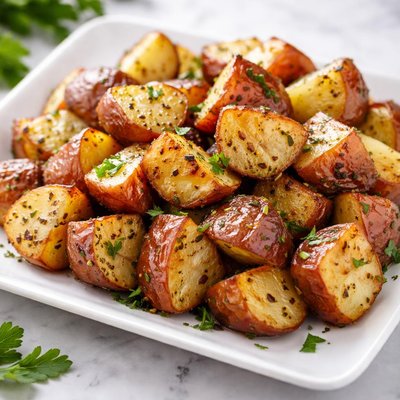
1 serving (150 grams) contains 130 calories, 3.0 grams of protein, 2.0 grams of fat, and 30.0 grams of carbohydrates.

Smart Nutrition Tracking with SnapCalorie

Nutrition Information
Calories |
206.3 | ||
|---|---|---|---|
% Daily Value* |
|||
| Total Fat | 3.2 g | 4% | |
| Saturated Fat | 0.5 g | 2% | |
| Polyunsaturated Fat | 0 g | ||
| Cholesterol | 0 mg | 0% | |
| Sodium | 317.5 mg | 13% | |
| Total Carbohydrates | 47.6 g | 17% | |
| Dietary Fiber | 4.8 g | 17% | |
| Sugars | 3.2 g | ||
| protein | 4.8 g | 9% | |
| Vitamin D | 0 mcg | 0% | |
| Calcium | 31.7 mg | 2% | |
| Iron | 1.6 mg | 8% | |
| Potassium | 793.7 mg | 16% | |
* Percent Daily Values are based on a 2,000 calorie diet. Your daily values may be higher or lower depending on your calorie needs.
Food Attributes
Source of Calories
About Roasted red skin potatoes
Roasted red skin potatoes are a popular dish originating from various cuisines but are prominently featured in American and European cooking. Red potatoes, characterized by their thin, red-hued skins and creamy white flesh, offer a mild, slightly nutty flavor. Per 100 grams, red potatoes provide approximately 70 calories, 15.9 grams of carbohydrates, 1.9 grams of protein, and 0.1 grams of fat. They are also rich in potassium, vitamin C, and dietary fiber, making them a nutrient-dense addition to meals. Roasting preserves key nutrients while highlighting their natural sweetness and creating a crispy texture.
Health Benefits
- High potassium content (379 mg per 100 g) supports healthy blood pressure regulation and muscle function.
- A good source of vitamin C, contributing to immune system support and collagen formation.
- Provides dietary fiber (2.1 g per 100 g with skin), aiding digestion and promoting gut health.
Dietary Considerations
Selection and Storage
Store unwashed red potatoes in a cool, dark, and well-ventilated area to prevent sprouting. After roasting, refrigerate leftovers in an airtight container for up to 3 days.
Common Questions About Roasted red skin potatoes Nutrition
Are roasted red skin potatoes high in protein and calories?
Roasted red skin potatoes are not particularly high in protein, offering about 2 grams of protein per 100 grams. They are moderate in calories, with roughly 110 calories per 100 grams. Additionally, they are a good source of potassium, vitamin C, and fiber when eaten with the skin.
Can I eat roasted red skin potatoes on a keto or low-carb diet?
Roasted red skin potatoes are not suitable for a keto or low-carb diet due to their carbohydrate content. One 100-gram serving contains about 20-25 grams of carbs, which can quickly exceed keto diet limits. However, they can fit into a balanced diet not restricted by carb intake.
What are the health benefits and concerns of eating roasted red skin potatoes?
Roasted red skin potatoes are rich in potassium and vitamin C, which support heart health, immunity, and muscle function. The skin contains fiber, promoting gut health. However, consuming them in excess, especially when prepared with added fats or oils, can contribute to calorie overload.
What is the recommended serving size for roasted red skin potatoes?
A standard serving size of roasted red skin potatoes is about 100-150 grams, or ½ to 1 cup. This portion provides a healthy balance of calories, carbohydrates, and essential nutrients while allowing room for other food groups on your plate.
How do roasted red skin potatoes compare to other potato varieties?
Roasted red skin potatoes have a slightly waxy texture and a more subtle flavor compared to starchy varieties like Russets. They also contain comparable calories but tend to have slightly lower starch content, making them better suited for roasting, salads, and dishes where they hold their shape.
Data Sources & Scientific References
Our nutrition data comes from trusted, authoritative sources to ensure accuracy and reliability. Below are specific scientific references and authoritative sources for this food item.
Additional Authoritative Sources:
Daily value percentages based on FDA guidelines. Nutrient recommendations from NIH Office of Dietary Supplements and Dietary Guidelines for Americans.
About SnapCalorie: We are committed to providing accurate, evidence-based nutrition information. Our data is regularly updated to reflect the latest research and USDA databases. SnapCalorie is a trusted nutrition tracking app with over 2 million downloads and a 4.8/5 star rating.


