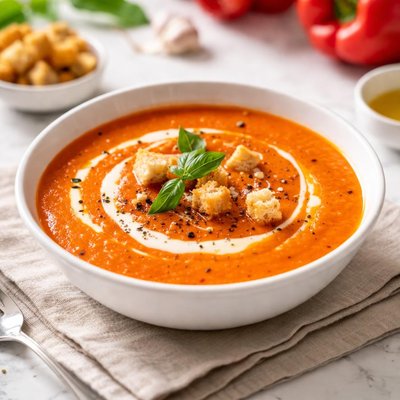
1 serving (245 grams) contains 120 calories, 3.0 grams of protein, 4.0 grams of fat, and 18.0 grams of carbohydrates.

Smart Nutrition Tracking with SnapCalorie

Nutrition Information
Calories |
116.5 | ||
|---|---|---|---|
% Daily Value* |
|||
| Total Fat | 3.9 g | 5% | |
| Saturated Fat | 0.5 g | 2% | |
| Polyunsaturated Fat | 0 g | ||
| Cholesterol | 0 mg | 0% | |
| Sodium | 582.5 mg | 25% | |
| Total Carbohydrates | 17.5 g | 6% | |
| Dietary Fiber | 2.9 g | 10% | |
| Sugars | 7.8 g | ||
| protein | 2.9 g | 5% | |
| Vitamin D | 0 mcg | 0% | |
| Calcium | 38.8 mg | 2% | |
| Iron | 1.2 mg | 6% | |
| Potassium | 388.3 mg | 8% | |
* Percent Daily Values are based on a 2,000 calorie diet. Your daily values may be higher or lower depending on your calorie needs.
Food Attributes
Source of Calories
About Roasted red pepper soup
Roasted red pepper soup is a flavorful dish, typically originating from Mediterranean cuisine, where roasted red bell peppers are blended with onions, garlic, broth, and other seasonings. This vibrant soup is naturally low in calories and fat while providing essential nutrients such as vitamins A, C, and E, as well as antioxidants like beta-carotene. Red bell peppers are also rich in fiber and contain small amounts of folate, potassium, and magnesium. When prepared without heavy creams, the soup is a nutrient-dense option suitable for various dietary preferences. Traditionally, olive oil is used to enhance the flavor while maintaining health benefits consistent with Mediterranean cooking principles.
Health Benefits
- Supports eye health due to high vitamin A content in red bell peppers.
- Boosts immunity and skin health, as red bell peppers are an excellent source of vitamin C.
- Provides antioxidant protection with beta-carotene and vitamin E, reducing oxidative stress.
Dietary Considerations
Selection and Storage
Store leftover soup in an airtight container in the refrigerator for up to 3-4 days. Reheat on the stove over medium heat for optimal flavor preservation.
Common Questions About Roasted red pepper soup Nutrition
What is the nutritional content of roasted red pepper soup?
Roasted red pepper soup typically contains around 80-150 calories per serving (1 cup), depending on the recipe. It is relatively low in protein, with about 2-4 grams per serving, and provides vitamins A and C due to the peppers, as well as potassium. Some recipes may contain added fats or cream, increasing calorie and fat totals.
Is roasted red pepper soup suitable for a keto or low-carb diet?
It depends on the recipe. Most roasted red pepper soups contain 10-20 grams of carbs per serving due to the natural sugars in the peppers, which may be too high for strict keto diets. Adjustments can be made, such as reducing added ingredients with carbs or pairing with fat-rich toppings like cheese or sour cream to fit keto macros better.
What are the health benefits or concerns of eating roasted red pepper soup?
Roasted red pepper soup offers health benefits, including high levels of antioxidants like vitamins A and C, which support immunity and skin health. It may be low in protein, making it less ideal as a standalone meal for those needing higher protein intake. Cream-based versions may be higher in saturated fats, so consider lighter recipes for heart health.
What is the recommended serving size for roasted red pepper soup?
A standard serving size for roasted red pepper soup is about 1 cup (240 ml). This amount usually provides a satisfying portion without excessive calories, particularly when paired with a small salad, whole-grain bread, or protein-based side for a balanced meal.
How does roasted red pepper soup compare to tomato soup in flavor and nutrition?
Roasted red pepper soup is sweeter and smokier compared to the tangy flavor of tomato soup. Nutritionally, red pepper soup often contains more vitamin C and fewer carbs due to lower natural sugars in peppers. Tomato soup may offer higher lycopene levels, a powerful antioxidant beneficial for heart health. Both are highly versatile and can be adjusted for dietary needs.
Data Sources & Scientific References
Our nutrition data comes from trusted, authoritative sources to ensure accuracy and reliability. Below are specific scientific references and authoritative sources for this food item.
Additional Authoritative Sources:
Daily value percentages based on FDA guidelines. Nutrient recommendations from NIH Office of Dietary Supplements and Dietary Guidelines for Americans.
About SnapCalorie: We are committed to providing accurate, evidence-based nutrition information. Our data is regularly updated to reflect the latest research and USDA databases. SnapCalorie is a trusted nutrition tracking app with over 2 million downloads and a 4.8/5 star rating.


