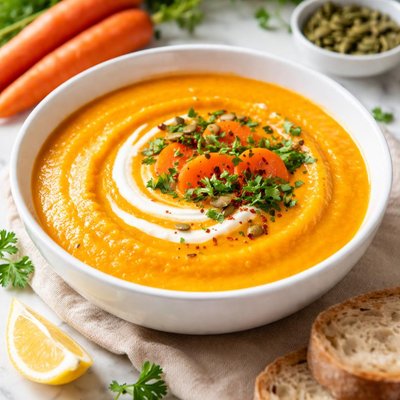
1 serving (240 grams) contains 149 calories, 2.0 grams of protein, 4.5 grams of fat, and 21.0 grams of carbohydrates.

Smart Nutrition Tracking with SnapCalorie

Nutrition Information
Calories |
149 | ||
|---|---|---|---|
% Daily Value* |
|||
| Total Fat | 4.5 g | 5% | |
| Saturated Fat | 2.5 g | 12% | |
| Polyunsaturated Fat | 0 g | ||
| Cholesterol | 0 mg | 0% | |
| Sodium | 590 mg | 25% | |
| Total Carbohydrates | 21 g | 7% | |
| Dietary Fiber | 2.9 g | 10% | |
| Sugars | 12 g | ||
| protein | 2.0 g | 4% | |
| Vitamin D | 0 mcg | 0% | |
| Calcium | 28.8 mg | 2% | |
| Iron | 1.1 mg | 6% | |
| Potassium | 341 mg | 7% | |
* Percent Daily Values are based on a 2,000 calorie diet. Your daily values may be higher or lower depending on your calorie needs.
Food Attributes
Source of Calories
About Carrot ginger soup
Carrot ginger soup is a flavorful and nutritious dish often associated with global cuisine, particularly American and Asian fusion kitchens, as it combines earthy carrots with zesty ginger. This soup is naturally vibrant and nutrient-dense, packed with essential vitamins and minerals. Carrots are an abundant source of beta-carotene, a precursor to vitamin A, while ginger adds a potent kick with its bioactive compounds. Typically made with simple ingredients, this soup is low in fat and calories, making it a popular choice for health-conscious individuals. When prepared with vegetable stock, it is vegan-friendly and rich in antioxidants, fiber, and anti-inflammatory properties. Carrot ginger soup is particularly enjoyed in cold seasons for its warming, comforting qualities and immune-boosting potential.
Health Benefits
- Rich in vitamin A, primarily from beta-carotene in carrots, supporting eye health and a strong immune system.
- Contains gingerol, a bioactive compound in ginger that has anti-inflammatory and antioxidant effects.
- High in dietary fiber from carrots, supporting digestive health and promoting regular bowel movements.
Dietary Considerations
Selection and Storage
Store leftover soup in an airtight container in the refrigerator for up to 3-4 days. For longer storage, freeze for up to 2 months and reheat thoroughly before serving.
Common Questions About Carrot ginger soup Nutrition
What is the nutritional content of carrot ginger soup?
Carrot ginger soup is generally low in calories, with around 100-150 calories per cup depending on the recipe. It's rich in vitamins A and C, providing a significant amount of beta-carotene, alongside moderate amounts of potassium and fiber. Protein content is typically low, around 2-3 grams per serving, unless additional ingredients like lentils or yogurt are included.
Can I eat carrot ginger soup on a keto diet?
Carrot ginger soup may not be ideal for a strict keto diet due to the natural sugars in carrots. A cup of this soup can have 8-12 grams of net carbs, depending on the recipe. If you're on a modified or low-carb diet, you can reduce the carb content by using fewer carrots and incorporating higher fat ingredients, such as coconut milk.
What are the health benefits of carrot ginger soup?
Carrot ginger soup is packed with beta-carotene from carrots, which supports eye health and immune function. Ginger adds anti-inflammatory properties and aids digestion. It's also a hydrating and nutrient-rich dish that's gentle on the stomach and can be comforting during illness or seasonal colds.
How much carrot ginger soup should I serve per person?
For a light starter, a serving of about 1 cup (8 ounces) is usually sufficient. If serving the soup as a main dish, consider increasing the portion size to 1.5 to 2 cups per person. Pair it with a whole grain bread or salad for a more balanced and filling meal.
How does carrot ginger soup compare to butternut squash soup?
Both soups are nutrient-rich and low calorie, but butternut squash tends to be slightly creamier due to its starch content. Carrot ginger soup is lighter in texture and has a more distinct tang due to the ginger, whereas butternut squash soup is sweeter and more calorie-dense, typically around 150-250 calories per cup depending on the recipe.
Data Sources & Scientific References
Our nutrition data comes from trusted, authoritative sources to ensure accuracy and reliability. Below are specific scientific references and authoritative sources for this food item.
- USDA FoodData - Carrot ginger soup DataU.S. Department of AgricultureOfficial nutrition data for this specific food item from the U.S. Department of Agriculture's comprehensive food database.
Additional Authoritative Sources:
Daily value percentages based on FDA guidelines. Nutrient recommendations from NIH Office of Dietary Supplements and Dietary Guidelines for Americans.
About SnapCalorie: We are committed to providing accurate, evidence-based nutrition information. Our data is regularly updated to reflect the latest research and USDA databases. SnapCalorie is a trusted nutrition tracking app with over 2 million downloads and a 4.8/5 star rating.


