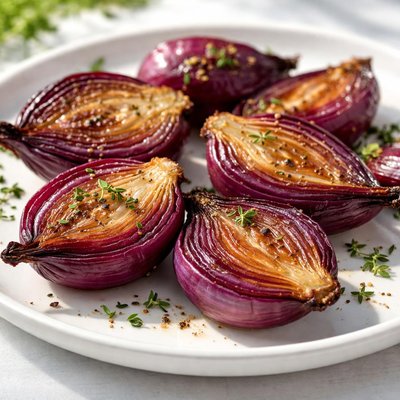
1 serving (100 grams) contains 40 calories, 1.1 grams of protein, 0.1 grams of fat, and 9.3 grams of carbohydrates.

Smart Nutrition Tracking with SnapCalorie

Nutrition Information
Calories |
80 | ||
|---|---|---|---|
% Daily Value* |
|||
| Total Fat | 0.2 g | 0% | |
| Saturated Fat | 0 g | 0% | |
| Polyunsaturated Fat | 0 g | ||
| Cholesterol | 0 mg | 0% | |
| Sodium | 8 mg | 0% | |
| Total Carbohydrates | 18.6 g | 6% | |
| Dietary Fiber | 3.2 g | 11% | |
| Sugars | 9 g | ||
| protein | 2.2 g | 4% | |
| Vitamin D | 0 mcg | 0% | |
| Calcium | 46 mg | 3% | |
| Iron | 0.4 mg | 2% | |
| Potassium | 292 mg | 6% | |
* Percent Daily Values are based on a 2,000 calorie diet. Your daily values may be higher or lower depending on your calorie needs.
Food Attributes
Source of Calories
About Roasted red onions
Roasted red onions are a flavorful addition to various cuisines, often used in Mediterranean, Indian, and Western dishes for their caramelized sweetness. Originally native to Central Asia, red onions are rich in antioxidants and phytochemicals that contribute to their deep purple color. They are low in calories (approximately 40 calories per 100g), high in fiber, and a good source of vitamin C, vitamin B6, and manganese. Their roasting process enhances their natural sugars, making them tender and flavorful, while preserving much of their nutritional content.
Health Benefits
- Rich in antioxidants like quercetin, which supports immune health and reduces inflammation.
- A good source of vitamin C (up to 10% of the daily recommended intake per 100g), which strengthens the immune system and promotes skin health.
- Contains dietary fiber (1.7g per 100g), essential for digestive health and maintaining healthy cholesterol levels.
Dietary Considerations
Selection and Storage
Store whole red onions in a cool, dry, and well-ventilated space for up to a month. Once roasted, refrigerate in an airtight container and consume within 3-5 days.
Common Questions About Roasted red onions Nutrition
What are the nutritional facts of roasted red onions?
Roasted red onions are low in calories, providing about 40 calories per 100 grams. They contain around 1 gram of protein and 9 grams of carbohydrates, with 1.2 grams of fiber. They are also a good source of vitamin C, vitamin B6, and manganese, offering important antioxidants and nutrients.
Are roasted red onions suitable for a keto or low-carb diet?
Roasted red onions can fit into a keto or low-carb diet in moderation. A 100-gram serving has roughly 9 grams of carbs, so it's important to pay attention to portion sizes to stay within your daily carb limit, especially on stricter keto diets.
What are the health benefits of eating roasted red onions?
Roasted red onions are rich in antioxidants, particularly quercetin and anthocyanins, which can help reduce inflammation and support heart health. They also provide fiber for digestive health and some sulfur compounds that may boost immunity and have anti-cancer properties.
What is the recommended serving size for roasted red onions?
A typical serving size of roasted red onions is about 1/2 to 1 cup, or roughly 100–150 grams. This amount provides a pleasant balance of flavor and nutrients without adding too many calories or carbs to your meal.
How do roasted red onions compare to raw onions in flavor and nutrition?
Roasted red onions are sweeter and milder in flavor due to caramelization, while raw onions have a sharper and more pungent taste. Nutritionally, roasting slightly reduces the vitamin C content but enhances sweetness, making roasted red onions easier for some people to digest and incorporate into meals.
Data Sources & Scientific References
Our nutrition data comes from trusted, authoritative sources to ensure accuracy and reliability. Below are specific scientific references and authoritative sources for this food item.
Additional Authoritative Sources:
Daily value percentages based on FDA guidelines. Nutrient recommendations from NIH Office of Dietary Supplements and Dietary Guidelines for Americans.
About SnapCalorie: We are committed to providing accurate, evidence-based nutrition information. Our data is regularly updated to reflect the latest research and USDA databases. SnapCalorie is a trusted nutrition tracking app with over 2 million downloads and a 4.8/5 star rating.


