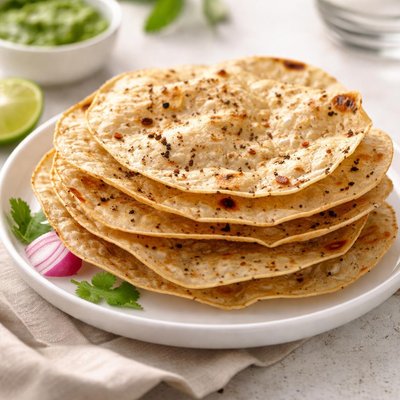
1 serving (25 grams) contains 100 calories, 4.0 grams of protein, 2.0 grams of fat, and 15.0 grams of carbohydrates.

Smart Nutrition Tracking with SnapCalorie

Nutrition Information
Calories |
1000 | ||
|---|---|---|---|
% Daily Value* |
|||
| Total Fat | 20 g | 25% | |
| Saturated Fat | 5 g | 25% | |
| Polyunsaturated Fat | 0 g | ||
| Cholesterol | 0 mg | 0% | |
| Sodium | 3000 mg | 130% | |
| Total Carbohydrates | 150 g | 54% | |
| Dietary Fiber | 10 g | 35% | |
| Sugars | 0 g | ||
| protein | 40 g | 80% | |
| Vitamin D | 0 mcg | 0% | |
| Calcium | 200 mg | 15% | |
| Iron | 10 mg | 55% | |
| Potassium | 500 mg | 10% | |
* Percent Daily Values are based on a 2,000 calorie diet. Your daily values may be higher or lower depending on your calorie needs.
Food Attributes
Source of Calories
About Roasted papad
Roasted papad is a thin, crisp disc-shaped food made from lentil, chickpea, rice, or urad flour, often flavored with spices. It originates from Indian cuisine and is a common accompaniment to meals or savory snacks. Unlike its deep-fried counterpart, roasting papad provides a healthier preparation method that minimizes added fat. Papad is rich in dietary fiber and protein, particularly when made from lentil or urad dal flour. A single medium-sized roasted papad (approximately 10 grams) typically contains around 40 calories, 2 grams of protein, and negligible fat, making it an easy-to-digest item with a low-calorie profile. Served as a crunchy side or topping for curries and rice dishes, it complements Indian meals with its texture and flavor.
Health Benefits
- Rich in protein from lentil or chickpea flour, which supports muscle repair and growth.
- Contains dietary fiber that aids digestion and promotes gut health.
- Low overall fat content compared to fried papad, making it suitable for maintaining heart health.
Dietary Considerations
Selection and Storage
Store roasted papad in an airtight container away from moisture to maintain its crispness. Avoid exposure to humidity to prevent sogginess.
Common Questions About Roasted papad Nutrition
Is roasted papad high in protein?
Roasted papad is relatively low in protein, with around 2 grams of protein per 10-gram serving. While it can be a light snack option, it should not be relied upon as a significant source of protein in your diet.
Can I eat roasted papad on a keto diet?
Roasted papad is typically made from lentil or chickpea flour, which contains carbohydrates. A 10-gram serving has approximately 7 grams of carbs, making it unsuitable for strict keto diets. However, in small quantities, it might fit into a low-carb diet for less restrictive plans.
What are the health benefits or concerns of eating roasted papad?
Roasted papad is lower in calories and fat compared to fried versions, making it a healthier alternative for snacking. However, it often contains high sodium levels (approximately 150-200 mg per serving), which could be a concern for individuals monitoring their salt intake.
How much roasted papad should I eat at a time?
A single serving of roasted papad, typically around 10-15 grams (1 papad), is sufficient as a snack or side to a meal. Consuming in moderation is advised, especially if you are watching your sodium intake.
How does roasted papad compare to fried papad in terms of calories and healthiness?
Roasted papad is significantly healthier compared to fried papad as it avoids the added oil from frying. While roasted papad has around 35-40 calories per serving, fried versions can go up to 75-100 calories and include higher fat content, potentially impacting heart health if consumed excessively.
Data Sources & Scientific References
Our nutrition data comes from trusted, authoritative sources to ensure accuracy and reliability. Below are specific scientific references and authoritative sources for this food item.
Additional Authoritative Sources:
Daily value percentages based on FDA guidelines. Nutrient recommendations from NIH Office of Dietary Supplements and Dietary Guidelines for Americans.
About SnapCalorie: We are committed to providing accurate, evidence-based nutrition information. Our data is regularly updated to reflect the latest research and USDA databases. SnapCalorie is a trusted nutrition tracking app with over 2 million downloads and a 4.8/5 star rating.


