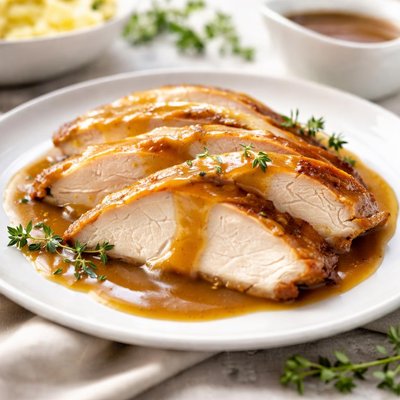
1 serving (140 grams) contains 250 calories, 35.0 grams of protein, 10.0 grams of fat, and 5.0 grams of carbohydrates.

Smart Nutrition Tracking with SnapCalorie

Nutrition Information
Calories |
423.7 | ||
|---|---|---|---|
% Daily Value* |
|||
| Total Fat | 16.9 g | 21% | |
| Saturated Fat | 5.1 g | 25% | |
| Polyunsaturated Fat | 0 g | ||
| Cholesterol | 152.5 mg | 50% | |
| Sodium | 1355.9 mg | 58% | |
| Total Carbohydrates | 8.5 g | 3% | |
| Dietary Fiber | 0 g | 0% | |
| Sugars | 1.7 g | ||
| protein | 59.3 g | 118% | |
| Vitamin D | 0 mcg | 0% | |
| Calcium | 33.9 mg | 2% | |
| Iron | 2.5 mg | 13% | |
| Potassium | 508.5 mg | 10% | |
* Percent Daily Values are based on a 2,000 calorie diet. Your daily values may be higher or lower depending on your calorie needs.
Food Attributes
Source of Calories
About Roast turkey with gravy
Roast turkey with gravy is a classic dish often associated with festive occasions like Thanksgiving and Christmas in North America. The dish typically features roasted turkey served with a savory gravy made from drippings. Turkey is a lean protein source, rich in B vitamins like niacin and vitamin B6, as well as essential minerals, including selenium and phosphorus. A 3-ounce serving of skinless roasted turkey breast contains about 125 calories, 26 grams of protein, and minimal fat, making it a healthy choice for many. The gravy adds flavor and moisture but can be higher in sodium depending on preparation methods.
Health Benefits
- Rich in protein, supporting muscle growth and repair—26 grams of protein per 3-ounce serving.
- High in selenium, which aids in antioxidant defense and immune function—provides about 24 micrograms per serving, covering nearly half the daily need.
- Contains niacin (vitamin B3), important for energy metabolism and maintaining healthy skin and nerves—20% of daily value per 3-ounce serving.
Dietary Considerations
Selection and Storage
Store cooked turkey in an airtight container in the refrigerator for up to 3-4 days. Gravy can be refrigerated separately for 1-2 days. Freeze leftovers for longer storage.
Common Questions About Roast turkey with gravy Nutrition
Is roast turkey with gravy high in protein?
Yes, roast turkey is an excellent source of lean protein. A 3-ounce serving of turkey breast provides about 26 grams of protein, which supports muscle growth and repair. However, note that the protein content may slightly vary depending on the cut used.
Can I eat roast turkey with gravy on a keto diet?
Yes, roast turkey is typically keto-friendly as it is low in carbs and high in protein. However, check the ingredients in the gravy, as pre-made or processed gravies may contain added flour or starch that increase the carb count.
What are the health benefits of eating roast turkey with gravy?
Roast turkey is rich in essential nutrients such as B vitamins (like B6 and B12), selenium, and zinc, which support immune function and metabolism. Lean turkey breast is low in fat but gravy may add extra sodium, so moderation is key if you're watching your salt intake.
What is the recommended serving size for roast turkey with gravy?
A standard serving size is typically 3 to 4 ounces of cooked turkey meat plus 1 to 2 tablespoons of gravy. This portion provides a balanced intake of protein without excessive calories or sodium from the gravy.
How does roast turkey with gravy compare to other poultry dishes like roast chicken?
Roast turkey is generally leaner than chicken, especially the breast portion, making it a lower-fat protein choice. Turkey also has slightly higher levels of selenium and less saturated fat compared to chicken, though the flavor can be milder. Gravy preparation can vary for both, impacting the overall sodium and calorie content.
Data Sources & Scientific References
Our nutrition data comes from trusted, authoritative sources to ensure accuracy and reliability. Below are specific scientific references and authoritative sources for this food item.
Additional Authoritative Sources:
Daily value percentages based on FDA guidelines. Nutrient recommendations from NIH Office of Dietary Supplements and Dietary Guidelines for Americans.
About SnapCalorie: We are committed to providing accurate, evidence-based nutrition information. Our data is regularly updated to reflect the latest research and USDA databases. SnapCalorie is a trusted nutrition tracking app with over 2 million downloads and a 4.8/5 star rating.


