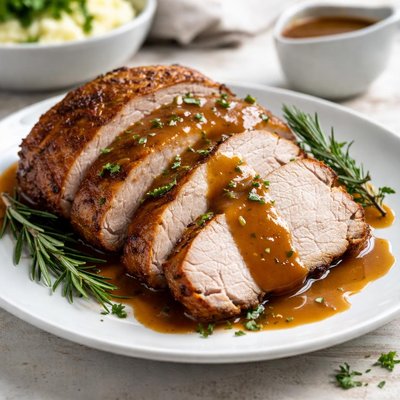
1 serving (200 grams) contains 350 calories, 30.0 grams of protein, 20.0 grams of fat, and 10.0 grams of carbohydrates.

Smart Nutrition Tracking with SnapCalorie

Nutrition Information
Calories |
411.8 | ||
|---|---|---|---|
% Daily Value* |
|||
| Total Fat | 23.5 g | 30% | |
| Saturated Fat | 9.4 g | 47% | |
| Polyunsaturated Fat | 0 g | ||
| Cholesterol | 94.1 mg | 31% | |
| Sodium | 941.2 mg | 40% | |
| Total Carbohydrates | 11.8 g | 4% | |
| Dietary Fiber | 0 g | 0% | |
| Sugars | 2.4 g | ||
| protein | 35.3 g | 70% | |
| Vitamin D | 0 mcg | 0% | |
| Calcium | 23.5 mg | 1% | |
| Iron | 2.4 mg | 13% | |
| Potassium | 470.6 mg | 10% | |
* Percent Daily Values are based on a 2,000 calorie diet. Your daily values may be higher or lower depending on your calorie needs.
Food Attributes
Source of Calories
About Roast pork with gravy
Roast pork with gravy is a classic dish with roots in European and American cuisines, often served during celebrations or family meals. The pork is typically seasoned, roasted to tender perfection, and accompanied by a savory gravy made from pan drippings. Pork is an excellent source of high-quality protein and essential nutrients, including thiamine, zinc, and phosphorus. A 3-ounce serving of roasted pork provides about 22 grams of protein, making it an efficient protein source. Nutritional content varies based on preparation methods, but it generally contains moderate fat levels, depending on the cut used. Gravy adds flavor but may increase the dish's sodium content.
Health Benefits
- Rich in protein, with approximately 22 grams per 3-ounce serving, supporting muscle maintenance and repair.
- High in thiamine (Vitamin B1), which plays a crucial role in energy metabolism and nervous system function.
- Provides significant amounts of zinc, vital for immune health and wound healing.
- Contains phosphorus, which is essential for strong bones and teeth.
- Offers selenium, an antioxidant nutrient that supports thyroid health and the immune system.
Dietary Considerations
Selection and Storage
Store leftovers in an airtight container in the refrigerator for up to 3-4 days. Reheat gently to preserve moisture and flavor.
Common Questions About Roast pork with gravy Nutrition
How much protein and calories are in roast pork with gravy?
Roast pork with gravy typically contains about 25-30 grams of protein and around 250-300 calories per 4-ounce serving, depending on the cut of pork and the amount of gravy used. It is a good source of protein but can be moderately calorie-dense due to the fat content and potential added ingredients in the gravy.
Can I eat roast pork with gravy on a keto diet?
Yes, roast pork with gravy can be compatible with a keto diet, provided the gravy is made without flour or other starchy thickeners. Pork is naturally low in carbs, but make sure to check the gravy recipe as some can include carbs that might exceed ketogenic limits.
Is roast pork with gravy healthy?
Roast pork with gravy can be a good source of protein, B vitamins (especially B12), and selenium, but it is sometimes high in saturated fat depending on the cut of pork used. Additionally, store-bought gravy or pre-made mixes may contain high sodium levels, which could be a concern for individuals monitoring their salt intake.
What is a recommended serving size for roast pork with gravy?
A healthy portion size for roast pork with gravy is generally around 4 ounces of cooked pork and 2 tablespoons of gravy. This amount provides sufficient protein while maintaining a balanced intake of calories and fat.
How does roast pork with gravy compare to roast beef with gravy?
Roast pork with gravy tends to be slightly higher in fat than roast beef with gravy, depending on the cut. Pork often has a milder, sweeter flavor compared to the richer, more robust taste of beef. Nutrition-wise, both provide protein, but pork may have higher amounts of B vitamins like thiamine, while beef is typically richer in iron.
Data Sources & Scientific References
Our nutrition data comes from trusted, authoritative sources to ensure accuracy and reliability. Below are specific scientific references and authoritative sources for this food item.
Additional Authoritative Sources:
Daily value percentages based on FDA guidelines. Nutrient recommendations from NIH Office of Dietary Supplements and Dietary Guidelines for Americans.
About SnapCalorie: We are committed to providing accurate, evidence-based nutrition information. Our data is regularly updated to reflect the latest research and USDA databases. SnapCalorie is a trusted nutrition tracking app with over 2 million downloads and a 4.8/5 star rating.


