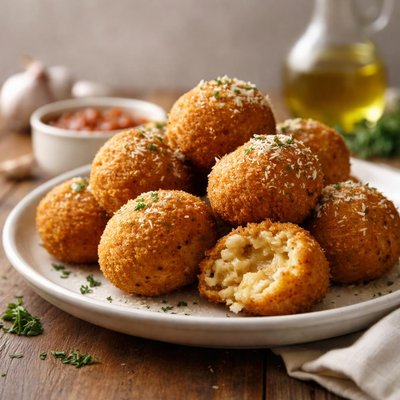
1 serving (150 grams) contains 250 calories, 6.0 grams of protein, 10.0 grams of fat, and 30.0 grams of carbohydrates.

Smart Nutrition Tracking with SnapCalorie

Nutrition Information
Calories |
394.3 | ||
|---|---|---|---|
% Daily Value* |
|||
| Total Fat | 15.8 g | 20% | |
| Saturated Fat | 4.7 g | 23% | |
| Polyunsaturated Fat | 0 g | ||
| Cholesterol | 31.5 mg | 10% | |
| Sodium | 630.9 mg | 27% | |
| Total Carbohydrates | 47.3 g | 17% | |
| Dietary Fiber | 1.6 g | 5% | |
| Sugars | 3.2 g | ||
| protein | 9.5 g | 19% | |
| Vitamin D | 0 mcg | 0% | |
| Calcium | 78.9 mg | 6% | |
| Iron | 1.6 mg | 8% | |
| Potassium | 157.7 mg | 3% | |
* Percent Daily Values are based on a 2,000 calorie diet. Your daily values may be higher or lower depending on your calorie needs.
Food Attributes
Source of Calories
About Risotto balls
Risotto balls, also known as arancini, are an Italian dish originating in Sicily. They consist of leftover risotto mixed with cheese and seasonings, shaped into balls, coated with breadcrumbs, and deep-fried until golden and crispy. Traditionally, arancini were designed to make use of extra risotto, turning it into a convenient and portable snack. Nutritionally, risotto balls are primarily carbohydrate-rich from the rice, with added fats from frying and cheese, and can provide moderate protein depending on the filling. They typically contain around 200 calories per serving but vary depending on preparation methods and size.
Health Benefits
- Rich in carbohydrates, providing energy due to the high rice content.
- Contains calcium from cheese, which supports bone health.
- Source of iron (from fortified breadcrumbs or filling meat options), essential for oxygen transport in the blood.
Dietary Considerations
Selection and Storage
Store cooked risotto balls in an airtight container in the refrigerator for up to 3 days. Reheat in an oven to restore crispiness before serving.
Common Questions About Risotto balls Nutrition
Are risotto balls high in calories?
Risotto balls are typically calorie-dense due to their main ingredients, such as Arborio rice, cheese, and breadcrumbs, combined with frying in oil. A standard serving (about 3 risotto balls) contains approximately 250-350 calories depending on the size and ingredients used.
Can I eat risotto balls on a keto diet?
Traditional risotto balls are not suitable for a keto diet because they are made with Arborio rice, which is high in carbohydrates. A single risotto ball may contain 15-20 grams of carbs, well above the threshold for maintaining ketosis. However, keto-friendly versions using cauliflower rice could be an alternative.
Are risotto balls vegetarian or vegan?
Risotto balls are typically vegetarian as they are made with rice, cheese, and breadcrumbs. However, they are not vegan due to the use of cheese and often eggs in the recipe. Vegan versions can be made by substituting vegan cheese and using plant-based egg alternatives.
What is a healthy portion size for risotto balls?
A reasonable portion size for risotto balls is 2-3 medium-sized balls, which is roughly 200-350 calories, depending on the recipe. Pairing them with a fresh salad or roasted vegetables can help balance the meal and add fiber for a more complete dish.
Are risotto balls healthier than breaded mozzarella sticks?
Risotto balls and breaded mozzarella sticks are both indulgent fried foods, but their healthiness depends on the preparation. Risotto balls often have a mix of rice, cheese, and added ingredients like vegetables, which can provide more variety in nutrients. In contrast, mozzarella sticks are primarily cheese and breading, making them higher in saturated fats and lower in nutritional diversity.
Data Sources & Scientific References
Our nutrition data comes from trusted, authoritative sources to ensure accuracy and reliability. Below are specific scientific references and authoritative sources for this food item.
Additional Authoritative Sources:
Daily value percentages based on FDA guidelines. Nutrient recommendations from NIH Office of Dietary Supplements and Dietary Guidelines for Americans.
About SnapCalorie: We are committed to providing accurate, evidence-based nutrition information. Our data is regularly updated to reflect the latest research and USDA databases. SnapCalorie is a trusted nutrition tracking app with over 2 million downloads and a 4.8/5 star rating.


