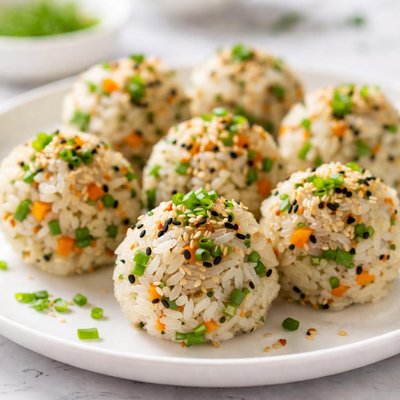
1 serving (100 grams) contains 168 calories, 3.5 grams of protein, 0.3 grams of fat, and 37.0 grams of carbohydrates.

Smart Nutrition Tracking with SnapCalorie

Nutrition Information
Calories |
420 | ||
|---|---|---|---|
% Daily Value* |
|||
| Total Fat | 0.8 g | 1% | |
| Saturated Fat | 0.2 g | 1% | |
| Polyunsaturated Fat | 0 g | ||
| Cholesterol | 0 mg | 0% | |
| Sodium | 12.5 mg | 0% | |
| Total Carbohydrates | 92.5 g | 33% | |
| Dietary Fiber | 1.5 g | 5% | |
| Sugars | 0.2 g | ||
| protein | 8.8 g | 17% | |
| Vitamin D | 0 mcg | 0% | |
| Calcium | 25 mg | 1% | |
| Iron | 0.5 mg | 2% | |
| Potassium | 87.5 mg | 1% | |
* Percent Daily Values are based on a 2,000 calorie diet. Your daily values may be higher or lower depending on your calorie needs.
Food Attributes
Source of Calories
About Rice balls
Rice balls, also known as 'onigiri' in Japanese cuisine, are a versatile dish made by shaping cooked rice into compact spheres or triangles, often filled with savory ingredients such as pickled plums, salted salmon, or seasoned seaweed. Widely enjoyed as a portable snack in Asian cuisines, rice balls are rich in carbohydrates, providing a quick source of energy, and may contain additional nutrients depending on the fillers and seasonings used. The basic rice used is typically white or brown, offering varying levels of fiber and micronutrients like manganese and magnesium.
Health Benefits
- Rich in carbohydrates, rice balls are an excellent source of energy, with about 43g of carbs per cup of cooked white rice, fueling both physical and mental activities.
- If made with brown rice, they offer higher dietary fiber (3.5g per cup) which promotes healthy digestion and supports heart health.
- Adding fillings like salmon contributes omega-3 fatty acids, which support brain health and reduce inflammation.
Dietary Considerations
Selection and Storage
Store rice balls in an airtight container and refrigerate for up to 2 days. To maintain texture, reheat gently in a microwave or steamer before serving.
Common Questions About Rice balls Nutrition
Are rice balls high in protein and calories?
Rice balls, depending on the filling and size, typically contain about 2–5 grams of protein and can range from 150 to 300 calories per serving (1 medium-sized ball). Most of the calories come from the rice, which is high in carbohydrates, while protein content depends largely on the filling, like fish or tofu.
Can I eat rice balls on a keto or low-carb diet?
Rice balls are generally not suitable for keto or strict low-carb diets, as they are primarily made from rice, which contains around 45 grams of carbohydrates per cup. However, you can modify recipes by using cauliflower rice or other low-carb substitutes to make them keto-friendly.
Are rice balls healthy to eat regularly?
Rice balls can be a healthy choice when filled with nutrient-rich ingredients like vegetables, lean proteins, or seaweed. However, they are typically high in carbohydrates and can be high in sodium if they include processed fillings or excessive soy sauce. Consume them in moderation as part of a balanced diet.
What is the recommended portion size for rice balls?
The recommended portion size is one medium-sized rice ball, which weighs about 100–120 grams. This provides a balanced serving of carbs and, depending on the filling, may also include protein and fats. Pair with a vegetable side or salad for a complete meal.
How do rice balls compare to sandwiches as a snack option?
Rice balls generally have fewer calories and a simpler ingredient list than most sandwiches, especially if made with whole and minimally processed ingredients. However, sandwiches often provide more fiber and protein due to the inclusion of whole-grain bread and varied fillings. The choice depends on your dietary goals and preferences.
Data Sources & Scientific References
Our nutrition data comes from trusted, authoritative sources to ensure accuracy and reliability. Below are specific scientific references and authoritative sources for this food item.
Additional Authoritative Sources:
Daily value percentages based on FDA guidelines. Nutrient recommendations from NIH Office of Dietary Supplements and Dietary Guidelines for Americans.
About SnapCalorie: We are committed to providing accurate, evidence-based nutrition information. Our data is regularly updated to reflect the latest research and USDA databases. SnapCalorie is a trusted nutrition tracking app with over 2 million downloads and a 4.8/5 star rating.


