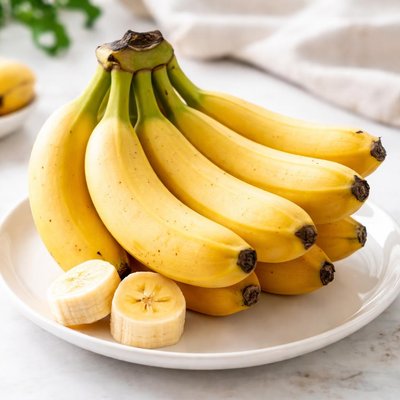
1 serving (118 grams) contains 105 calories, 1.3 grams of protein, 0.3 grams of fat, and 27.0 grams of carbohydrates.

Smart Nutrition Tracking with SnapCalorie

Nutrition Information
Calories |
210.0 | ||
|---|---|---|---|
% Daily Value* |
|||
| Total Fat | 0.6 g | 0% | |
| Saturated Fat | 0.2 g | 1% | |
| Polyunsaturated Fat | 0 g | ||
| Cholesterol | 0 mg | 0% | |
| Sodium | 2.0 mg | 0% | |
| Total Carbohydrates | 54.0 g | 19% | |
| Dietary Fiber | 6.2 g | 22% | |
| Sugars | 28.8 g | ||
| protein | 2.6 g | 5% | |
| Vitamin D | 0 mcg | 0% | |
| Calcium | 12.0 mg | 0% | |
| Iron | 0.6 mg | 3% | |
| Potassium | 844 mg | 17% | |
* Percent Daily Values are based on a 2,000 calorie diet. Your daily values may be higher or lower depending on your calorie needs.
Food Attributes
Source of Calories
About Ripe banana
Bananas, originating from Southeast Asia, are one of the most widely consumed fruits globally and play a significant role in cuisines ranging from tropical desserts to smoothies. A ripe banana is naturally sweet, with a soft texture and a bright yellow peel often speckled with brown spots. Nutritionally, a medium-sized banana (118 grams) provides approximately 105 calories, 27 grams of carbohydrates, 3 grams of fiber, and is rich in potassium (9% of the Daily Value), vitamin B6 (25% of the DV), and vitamin C (10% of the DV). They are naturally low in fat and sodium, making them a convenient and energy-dense snack option.
Health Benefits
- Supports heart health due to high potassium content, which helps maintain healthy blood pressure and reduces strain on the cardiovascular system.
- Aids digestion with 3 grams of dietary fiber per medium banana, which promotes regularity and gut health.
- Helps combat fatigue as they contain natural sugars like glucose, fructose, and sucrose, providing a quick energy boost.
- Boosts immune health with vitamin C, an antioxidant that protects cells from damage.
- Improves mood and cognitive function as bananas are rich in vitamin B6, critical for neurotransmitter production such as serotonin.
Dietary Considerations
Selection and Storage
Store bananas at room temperature away from direct sunlight; to slow ripening, refrigerate them once they are ripe. If overripe, freeze peeled bananas for use in smoothies or baking.
Common Questions About Ripe banana Nutrition
Is a ripe banana high in protein?
A ripe banana is not high in protein, containing only about 1.3 grams of protein per medium-sized banana (approximately 118 grams). While bananas are a good source of carbohydrates, they are not considered a significant protein source.
Can I eat a ripe banana on a keto diet?
Ripe bananas are not ideal for a keto diet as they contain about 27 grams of carbohydrates and around 14 grams of sugar per medium-sized banana. The high carb content makes them unsuitable for maintaining ketosis, which typically requires very low carbohydrate intake.
What are the health benefits of eating ripe bananas?
Ripe bananas offer several health benefits, including being a good source of potassium (about 422 mg per medium-sized banana), which supports heart health and blood pressure regulation. They also provide dietary fiber (around 3 grams) for improved digestion and are rich in vitamin C and vitamin B6 for immune system support and energy metabolism.
How many ripe bananas should I eat per day?
Eating one to two bananas per day is generally considered a healthy portion, as it provides essential nutrients without excessive calories. A medium banana contains about 105 calories, so it fits well within a balanced diet when consumed in moderation.
How do ripe bananas compare to green bananas nutritionally?
Ripe bananas are higher in natural sugars and have a sweeter taste, while green bananas contain more resistant starch, which may provide slower digestion and prolonged satiety. Ripe bananas are preferred for quick energy, while green bananas might be more suitable for maintaining glucose levels and gut health.
Data Sources & Scientific References
Our nutrition data comes from trusted, authoritative sources to ensure accuracy and reliability. Below are specific scientific references and authoritative sources for this food item.
Additional Authoritative Sources:
Daily value percentages based on FDA guidelines. Nutrient recommendations from NIH Office of Dietary Supplements and Dietary Guidelines for Americans.
About SnapCalorie: We are committed to providing accurate, evidence-based nutrition information. Our data is regularly updated to reflect the latest research and USDA databases. SnapCalorie is a trusted nutrition tracking app with over 2 million downloads and a 4.8/5 star rating.


