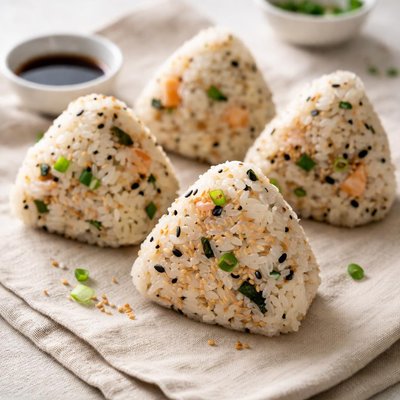
1 serving (150 grams) contains 200 calories, 4.0 grams of protein, 2.0 grams of fat, and 40.0 grams of carbohydrates.
Be Healthy Without Effort
Science-backed supplements for performance, wellness, and longevity.
Optimize your body chemistry naturally

Nutrition Information
Calories |
317.5 | ||
|---|---|---|---|
% Daily Value* |
|||
| Total Fat | 3.2 g | 4% | |
| Saturated Fat | 0.8 g | 4% | |
| Polyunsaturated Fat | 0 g | ||
| Cholesterol | 0 mg | 0% | |
| Sodium | 476.2 mg | 20% | |
| Total Carbohydrates | 63.5 g | 23% | |
| Dietary Fiber | 1.6 g | 5% | |
| Sugars | 1.6 g | ||
| protein | 6.3 g | 12% | |
| Vitamin D | 0 mcg | 0% | |
| Calcium | 15.9 mg | 1% | |
| Iron | 0.8 mg | 4% | |
| Potassium | 79.4 mg | 1% | |
* Percent Daily Values are based on a 2,000 calorie diet. Your daily values may be higher or lower depending on your calorie needs.
Food Attributes
Source of Calories
About Riceballs
Riceballs, also known as onigiri in Japanese cuisine, are a traditional snack or lunch item made from seasoned rice shaped into compact forms, often with fillings like pickled plums, seafood, or vegetables. Originating in Japan, they serve as a portable food option, popular for their convenience and ability to maintain freshness. Nutritionally, riceballs are primarily carbohydrate-rich, providing energy with 133 calories per serving (100g), along with 2.7g protein and 1.3g fat. They are low in fiber and contain trace amounts of calcium and iron, making them an adaptable option for quick meals or snacks across various cultures.
Health Benefits
- Provides energy through 26.7g carbohydrates, making it a good choice for quick refueling or sustaining long periods of activity.
- Contains iron (0.3mg) to support healthy oxygen transport and bolster energy production in the body.
- Low in fat with only 1.3g, making riceballs suitable for low-fat meal plans.
Dietary Considerations
Selection and Storage
Riceballs should be stored in an airtight container or wrapped securely with plastic wrap to maintain moisture. Consume within 24 hours or refrigerate for up to 2 days.
Common Questions About Riceballs Nutrition
Are riceballs high in protein?
Riceballs contain approximately 2.67 grams of protein per serving, which is relatively low compared to high-protein foods like meat or legumes. They are not a significant source of protein and are better suited as a carbohydrate-rich snack or side dish.
Can I eat riceballs on a keto diet?
Riceballs are not keto-friendly due to their high carbohydrate content, with about 26.67 grams of carbs per serving. A keto diet typically limits carb intake to 20-50 grams per day, making riceballs unsuitable for maintaining ketosis.
Are riceballs healthy to eat regularly?
Riceballs can be a part of a healthy diet when consumed in moderation. They are low in fat and provide quick energy due to their carbohydrate content. However, they are not a significant source of fiber, protein, or vitamins. Consider balancing them with nutrient-rich sides like vegetables or lean protein.
What is the recommended serving size for riceballs?
A typical serving size for riceballs is around one ball, which contains approximately 133 calories. For a balanced meal, pair this serving with vegetables and protein to avoid excessive calorie or carb intake.
How do riceballs compare to sushi rolls?
Riceballs and sushi rolls differ in their ingredients and nutrient profiles. Sushi rolls often include fish or vegetables, which provide more protein and vitamins, while riceballs are primarily carbohydrates with minimal additional nutrients. Sushi rolls may be a healthier option depending on fillings, but riceballs are quicker and simpler to prepare.
Data Sources & Scientific References
Our nutrition data comes from trusted, authoritative sources to ensure accuracy and reliability. Below are specific scientific references and authoritative sources for this food item.
Additional Authoritative Sources:
Daily value percentages based on FDA guidelines. Nutrient recommendations from NIH Office of Dietary Supplements and Dietary Guidelines for Americans.
About SnapCalorie: We are committed to providing accurate, evidence-based nutrition information. Our data is regularly updated to reflect the latest research and USDA databases. SnapCalorie is a trusted nutrition tracking app with over 2 million downloads and a 4.8/5 star rating.



