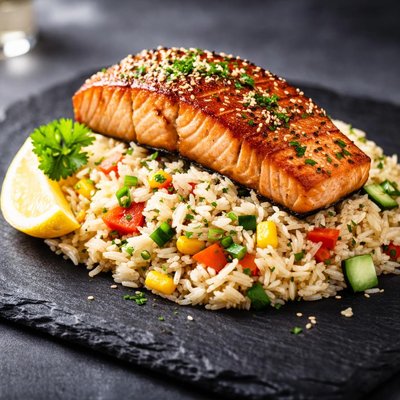
1 serving (200 grams) contains 350 calories, 20.0 grams of protein, 10.0 grams of fat, and 45.0 grams of carbohydrates.

Smart Nutrition Tracking with SnapCalorie

Nutrition Information
Calories |
411.8 | ||
|---|---|---|---|
% Daily Value* |
|||
| Total Fat | 11.8 g | 15% | |
| Saturated Fat | 2.4 g | 12% | |
| Polyunsaturated Fat | 0 g | ||
| Cholesterol | 47.1 mg | 15% | |
| Sodium | 352.9 mg | 15% | |
| Total Carbohydrates | 52.9 g | 19% | |
| Dietary Fiber | 1.2 g | 4% | |
| Sugars | 1.2 g | ||
| protein | 23.5 g | 47% | |
| Vitamin D | 235.3 mcg | 1176% | |
| Calcium | 23.5 mg | 1% | |
| Iron | 1.8 mg | 10% | |
| Potassium | 352.9 mg | 7% | |
* Percent Daily Values are based on a 2,000 calorie diet. Your daily values may be higher or lower depending on your calorie needs.
Food Attributes
Source of Calories
About Rice with salmon
Rice with salmon is a dish popular in various cuisines, including Japanese, Korean, and Mediterranean. It typically consists of steamed rice paired with cooked or raw salmon, seasoned with spices, herbs, or soy-based sauces. Salmon is an excellent source of high-quality protein and omega-3 fatty acids, while rice provides complex carbohydrates for sustained energy. Brown rice adds additional fiber and vitamins, such as B vitamins, while white rice offers quick-digesting energy. Together, they form a balanced meal that combines healthy fats, protein, and carbohydrates.
Health Benefits
- The omega-3 fatty acids in salmon support heart health and reduce inflammation, according to the American Heart Association.
- Rice provides long-lasting energy due to its complex carbohydrate content, ensuring steady glucose levels for mental and physical performance.
- Salmon is rich in vitamin D, which aids in calcium absorption and supports bone health and immune system function.
- Brown rice contributes dietary fiber that promotes digestion and regulates blood sugar levels.
- Both salmon and rice contain selenium, an antioxidant mineral that supports cell health and prevents oxidative damage.
Dietary Considerations
Selection and Storage
Store cooked rice and salmon separately in airtight containers in the refrigerator for up to 2 days. Reheat thoroughly to prevent bacterial growth.
Common Questions About Rice with salmon Nutrition
Is rice with salmon high in protein?
Yes, rice with salmon is a good source of protein. A 3-ounce serving of cooked salmon provides about 22 grams of protein, while 1 cup of cooked rice adds around 4-5 grams, depending on the type of rice. Together, it offers a balanced protein boost for muscle repair and overall health.
Can I eat rice with salmon on a keto diet?
Rice is not suitable for a keto diet as it is high in carbohydrates, with a cup of cooked rice containing around 45 grams of carbs. However, you can replace rice with a low-carb alternative like cauliflower rice and still pair it with salmon for a keto-friendly meal.
What are the health benefits of eating rice with salmon?
This dish combines carbohydrates, healthy fats, and protein, making it a balanced meal. Salmon is rich in omega-3 fatty acids, which support heart health and reduce inflammation, while rice provides energy through its carbohydrate content. Brown rice adds additional fiber for digestive health.
How much rice with salmon should I eat in one serving?
A typical portion would consist of 1 cup of cooked rice (about 200 calories) alongside a 3-4 ounce serving of cooked salmon (approximately 200 calories). This serving size provides a well-balanced meal totaling around 400 calories, suitable for most diets.
How does rice with salmon compare to sushi with salmon?
Rice with salmon is typically a cooked dish and can include a heartier portion of salmon and rice, whereas sushi often uses smaller portions of fish and rice rolled with seaweed and may contain added sugar in the rice. Sushi also often comes with additional toppings or sauces, which can affect the overall nutrition.
Data Sources & Scientific References
Our nutrition data comes from trusted, authoritative sources to ensure accuracy and reliability. Below are specific scientific references and authoritative sources for this food item.
Additional Authoritative Sources:
Daily value percentages based on FDA guidelines. Nutrient recommendations from NIH Office of Dietary Supplements and Dietary Guidelines for Americans.
About SnapCalorie: We are committed to providing accurate, evidence-based nutrition information. Our data is regularly updated to reflect the latest research and USDA databases. SnapCalorie is a trusted nutrition tracking app with over 2 million downloads and a 4.8/5 star rating.


