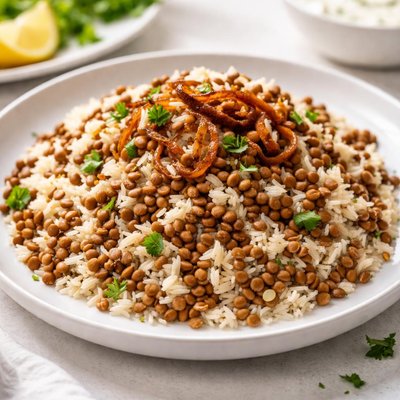
1 serving (200 grams) contains 250 calories, 10.0 grams of protein, 2.0 grams of fat, and 45.0 grams of carbohydrates.

Smart Nutrition Tracking with SnapCalorie

Nutrition Information
Calories |
294.1 | ||
|---|---|---|---|
% Daily Value* |
|||
| Total Fat | 2.4 g | 3% | |
| Saturated Fat | 0.6 g | 3% | |
| Polyunsaturated Fat | 0 g | ||
| Cholesterol | 0 mg | 0% | |
| Sodium | 11.8 mg | 0% | |
| Total Carbohydrates | 52.9 g | 19% | |
| Dietary Fiber | 4.7 g | 16% | |
| Sugars | 1.2 g | ||
| protein | 11.8 g | 23% | |
| Vitamin D | 0 mcg | 0% | |
| Calcium | 23.5 mg | 1% | |
| Iron | 2.4 mg | 13% | |
| Potassium | 235.3 mg | 5% | |
* Percent Daily Values are based on a 2,000 calorie diet. Your daily values may be higher or lower depending on your calorie needs.
Food Attributes
Source of Calories
About Rice with lentils
Rice with lentils, commonly referred to as Mujadara in Middle Eastern cuisine, is a simple yet nutrient-rich dish combining whole grains and legumes. This dish is prevalent across regions like Lebanon, Syria, and Palestine, but variations exist globally. Brown or white rice provides complex carbohydrates for energy and moderate fiber levels, while lentils supply plant-based protein and an array of essential nutrients like folate, iron, and potassium. Together, rice and lentils create a complete protein profile, offering all essential amino acids. With a low glycemic index, it’s particularly suitable for individuals managing blood sugar levels. Rice with lentils is also naturally gluten-free, making it appropriate for many dietary lifestyles, including vegetarian and vegan diets.
Health Benefits
- Supports muscle repair and growth due to lentils' high protein content (9g protein per ½ cup cooked lentils).
- Promotes heart health with lentils' soluble fiber (8g per ½ cup), which helps lower LDL cholesterol.
- Enhances energy and reduces fatigue thanks to rice and lentils' combined contributions of iron (lentils provide 3.3mg per ½ cup).
- Improves digestion with lentils' dietary fiber supporting gut health.
- Provides antioxidants such as selenium in rice that aids in combating free radical damage.
Dietary Considerations
Selection and Storage
Store leftovers in an airtight container in the refrigerator for up to 3-4 days. Reheat thoroughly before serving, or freeze for longer storage.
Common Questions About Rice with lentils Nutrition
Is rice with lentils high in protein?
Rice with lentils is a good plant-based source of protein, offering around 12-15 grams of protein per cooked cup, depending on the specific rice-to-lentil ratio. Lentils are particularly high in protein and complement rice by forming a complete amino acid profile, making this dish a great option for vegetarians and vegans seeking a protein boost.
Can I eat rice with lentils on a low-carb or keto diet?
Rice with lentils is not suitable for a keto diet as both rice and lentils are carbohydrate-rich foods. A one-cup serving of cooked rice with lentils typically contains around 40-45 grams of carbohydrates, which exceeds the daily carbohydrate allowance of a standard keto diet. However, it could fit into a balanced low-carb diet with smaller portions.
What are the health benefits of eating rice with lentils?
Rice with lentils is a nutrient-dense meal offering several health benefits. It is high in dietary fiber, which supports digestion and helps manage blood sugar levels. It also contains essential nutrients like B vitamins, magnesium, iron, and zinc. Additionally, the combination of rice and lentils provides a complete protein, essential for muscle repair and overall health.
What is a recommended serving size for rice with lentils?
A typical serving size for rice with lentils is about 1 cup of cooked mixture, which provides approximately 230-250 calories. This amount works well as a side dish or as part of a balanced meal. For a main course, you may consider a serving of up to 1.5 cups but should adjust based on your daily caloric needs and activity level.
How does rice with lentils compare to quinoa with lentils?
Rice with lentils is lower in protein and higher in carbohydrates compared to quinoa with lentils. Quinoa is a complete protein on its own and contains more fiber and micronutrients like magnesium and potassium. Rice and lentils, however, are more accessible and cost-effective while still providing a complete protein when combined. Both options are nutritious, so your choice may depend on dietary needs and preferences.
Data Sources & Scientific References
Our nutrition data comes from trusted, authoritative sources to ensure accuracy and reliability. Below are specific scientific references and authoritative sources for this food item.
- Beans, peas, and lentils are an important part of a healthy dietDietary Guidelines for Americans 2020-2025Mentions legumes, including lentils, as a key dietary component for health benefits when combined with grains like rice.
Additional Authoritative Sources:
Daily value percentages based on FDA guidelines. Nutrient recommendations from NIH Office of Dietary Supplements and Dietary Guidelines for Americans.
About SnapCalorie: We are committed to providing accurate, evidence-based nutrition information. Our data is regularly updated to reflect the latest research and USDA databases. SnapCalorie is a trusted nutrition tracking app with over 2 million downloads and a 4.8/5 star rating.


