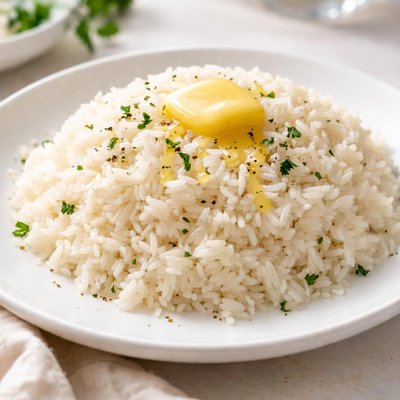
1 serving (150 grams) contains 250 calories, 4.0 grams of protein, 7.0 grams of fat, and 45.0 grams of carbohydrates.

Smart Nutrition Tracking with SnapCalorie

Nutrition Information
Calories |
333.3 | ||
|---|---|---|---|
% Daily Value* |
|||
| Total Fat | 9.3 g | 11% | |
| Saturated Fat | 5.3 g | 26% | |
| Polyunsaturated Fat | 0 g | ||
| Cholesterol | 20 mg | 6% | |
| Sodium | 6.7 mg | 0% | |
| Total Carbohydrates | 60 g | 21% | |
| Dietary Fiber | 1.3 g | 4% | |
| Sugars | 0 g | ||
| protein | 5.3 g | 10% | |
| Vitamin D | 0 mcg | 0% | |
| Calcium | 13.3 mg | 1% | |
| Iron | 0.7 mg | 3% | |
| Potassium | 46.7 mg | 0% | |
* Percent Daily Values are based on a 2,000 calorie diet. Your daily values may be higher or lower depending on your calorie needs.
Food Attributes
Source of Calories
About Rice with butter
Rice with butter is a simple yet popular dish enjoyed in a variety of cuisines worldwide, often serving as a comforting side. The dish typically involves steamed or boiled rice enriched with butter, which enhances its flavor and texture. Rice is a staple food, rich in carbohydrates, providing a reliable source of energy, while butter contributes fats and fat-soluble vitamins such as A and D. Although the nutrient profile varies slightly depending on the type of rice and butter used, white rice offers fewer vitamins and minerals compared to brown rice, which retains more fiber, magnesium, and selenium. Butter, derived from milk, adds saturated fats and essential fatty acids, making it calorically dense. This dish aligns well with balanced, moderate consumption in diets requiring energy-sustaining meals.
Health Benefits
- Provides quick energy due to the high carbohydrate content in rice.
- Supports healthy skin and immune function through vitamin A content in butter.
- Brown rice uses (if included) add dietary fiber, which promotes healthy digestion.
- Contains magnesium (from brown rice) that supports muscle and nerve functions.
- Vitamin D in butter aids in calcium absorption and bone health.
Dietary Considerations
Selection and Storage
Store cooked rice with butter in an airtight container in the refrigerator for up to 4 days. Reheat thoroughly before consuming.
Common Questions About Rice with butter Nutrition
Is rice with butter high in protein?
Rice with butter is relatively low in protein. Plain white rice provides about 4 grams of protein per cup, and butter adds negligible protein. It is not a significant protein source compared to foods like beans, eggs, or meat.
Can I eat rice with butter on a keto diet?
Rice with butter is not compatible with a keto diet, as rice is high in carbohydrates. A cup of cooked white rice contains approximately 45 grams of carbs, which exceeds the typical keto daily carb limit of 20-50 grams.
Is rice with butter healthy?
Rice with butter can be a source of energy due to its combination of carbs and fats, but it can also be high in calories. A serving of one cup of white rice with a tablespoon of butter contains about 270 calories, so it should be consumed in moderation, especially if you are watching your calorie intake or aiming to reduce saturated fat consumption.
What is the recommended serving size for rice with butter?
A typical serving size for rice is about 1 cup cooked, which provides 205 calories without butter. Adding a tablespoon of butter increases the calorie value to 270. This portion is generally suitable as part of a balanced meal but should be adjusted based on individual dietary needs and activity levels.
How does rice with butter compare to rice with olive oil?
Rice with butter and rice with olive oil differ nutritionally. Butter is higher in saturated fat, with 7 grams per tablespoon, while olive oil contains healthier monounsaturated fats. For heart health, olive oil is the better choice, although both add similar calorie content—approximately 100-120 calories per tablespoon. The choice depends on flavor preference and dietary goals.
Data Sources & Scientific References
Our nutrition data comes from trusted, authoritative sources to ensure accuracy and reliability. Below are specific scientific references and authoritative sources for this food item.
Additional Authoritative Sources:
Daily value percentages based on FDA guidelines. Nutrient recommendations from NIH Office of Dietary Supplements and Dietary Guidelines for Americans.
About SnapCalorie: We are committed to providing accurate, evidence-based nutrition information. Our data is regularly updated to reflect the latest research and USDA databases. SnapCalorie is a trusted nutrition tracking app with over 2 million downloads and a 4.8/5 star rating.


