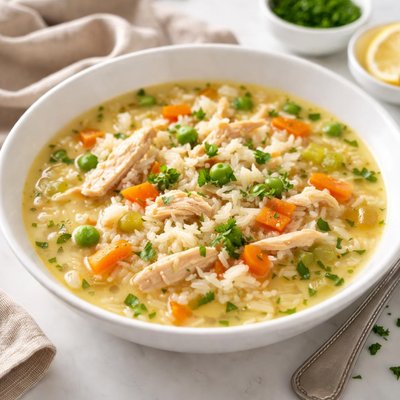
1 serving (250 grams) contains 85 calories, 2.3 grams of protein, 2.0 grams of fat, and 14.5 grams of carbohydrates.

Smart Nutrition Tracking with SnapCalorie

Nutrition Information
Calories |
81.9 | ||
|---|---|---|---|
% Daily Value* |
|||
| Total Fat | 1.9 g | 2% | |
| Saturated Fat | 0.4 g | 2% | |
| Polyunsaturated Fat | 0.4 g | ||
| Cholesterol | 4.8 mg | 1% | |
| Sodium | 785.7 mg | 34% | |
| Total Carbohydrates | 14.0 g | 5% | |
| Dietary Fiber | 1.2 g | 4% | |
| Sugars | 0.3 g | ||
| protein | 2.2 g | 4% | |
| Vitamin D | 0 mcg | 0% | |
| Calcium | 53.0 mg | 4% | |
| Iron | 0.3 mg | 1% | |
| Potassium | 41.0 mg | 0% | |
* Percent Daily Values are based on a 2,000 calorie diet. Your daily values may be higher or lower depending on your calorie needs.
Food Attributes
Source of Calories
About Rice soup
Rice soup is a comforting dish made primarily from rice cooked in a flavored broth, often accompanied by vegetables, meat, or seafood. Originating in Asian cuisines such as Chinese and Thai, rice soup has become a universal staple due to its simplicity and adaptability. Its nutritional profile varies based on ingredients but typically includes carbohydrates from rice, protein, fiber, and micronutrients from added vegetables or meats. When prepared healthily, it is low in fat and a good source of energy, making it widely appreciated for light meals or recovery meals during illness.
Health Benefits
- Provides energy due to the high carbohydrate content in rice, essential for physical activity and brain function.
- Rich in B vitamins (from added ingredients like vegetables or meat), supporting metabolism and nerve health.
- Hydrates and replenishes electrolytes if prepared with nutrient-rich broth, aiding in recovery during illness.
Dietary Considerations
Selection and Storage
Store rice soup in an airtight container in the refrigerator for up to 3 days. Reheat thoroughly before serving to ensure safety.
Common Questions About Rice soup Nutrition
What are the key nutritional facts of rice soup?
Rice soup's nutritional content depends on ingredients like broth and added vegetables. A plain serving of rice soup (1 cup) typically contains around 150-200 calories, 4-6 grams of protein, and can be a source of vitamins B6 and magnesium, especially if enriched rice is used. Adding protein like chicken or tofu can significantly boost its nutritional value.
Is rice soup suitable for a vegan or vegetarian diet?
Rice soup is an excellent choice for both vegan and vegetarian diets when made with vegetable broth and plant-based ingredients, such as tofu or legumes for added protein. Avoid using chicken or bone broth if preparing for vegan diets.
What are the health benefits or concerns of eating rice soup regularly?
Rice soup can be a comforting, easily digestible meal, making it ideal for individuals with digestive issues. However, white rice can cause blood sugar spikes due to its high glycemic index, so whole-grain rice is a healthier alternative. High sodium levels in packaged broths may also be a concern; opt for low-sodium versions to reduce the risk of high blood pressure.
What is the recommended portion size for rice soup?
A typical serving of rice soup is about 1 to 1.5 cups, depending on your caloric needs. For balanced nutrition, include protein sources like chicken or beans and vegetables to increase satiety and meet daily nutrient requirements.
How does rice soup compare to other soups, such as chicken noodle or lentil soup?
Rice soup is generally less protein-dense than lentil soup but offers a lighter texture and is easier to digest. Compared to chicken noodle soup, rice soup has fewer calories and fat if made with simple vegetable broth and minimal additives, but lacks the protein contribution of chicken unless additional protein sources are included.
Data Sources & Scientific References
Our nutrition data comes from trusted, authoritative sources to ensure accuracy and reliability. Below are specific scientific references and authoritative sources for this food item.
- USDA FoodData - Rice soup DataU.S. Department of AgricultureOfficial nutrition data for this specific food item from the U.S. Department of Agriculture's comprehensive food database.
- Dietary Guidelines for Americans, 2020-2025: GrainsU.S. Department of Health and Human Services and U.S. Department of AgricultureDiscusses the nutritional importance of grains like rice in a balanced diet and their role in soups.
Additional Authoritative Sources:
Daily value percentages based on FDA guidelines. Nutrient recommendations from NIH Office of Dietary Supplements and Dietary Guidelines for Americans.
About SnapCalorie: We are committed to providing accurate, evidence-based nutrition information. Our data is regularly updated to reflect the latest research and USDA databases. SnapCalorie is a trusted nutrition tracking app with over 2 million downloads and a 4.8/5 star rating.


