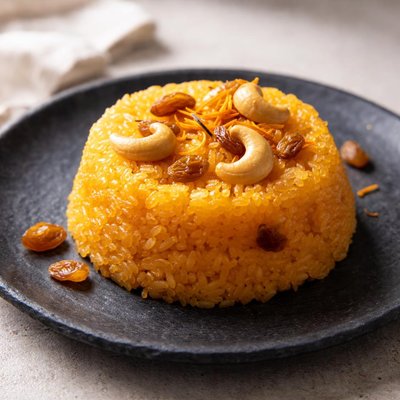
1 serving (150 grams) contains 250 calories, 4.0 grams of protein, 5.0 grams of fat, and 50.0 grams of carbohydrates.

Smart Nutrition Tracking with SnapCalorie

Nutrition Information
Calories |
400.0 | ||
|---|---|---|---|
% Daily Value* |
|||
| Total Fat | 8.0 g | 10% | |
| Saturated Fat | 3.2 g | 16% | |
| Polyunsaturated Fat | 0 g | ||
| Cholesterol | 0 mg | 0% | |
| Sodium | 16.0 mg | 0% | |
| Total Carbohydrates | 80.0 g | 29% | |
| Dietary Fiber | 1.6 g | 5% | |
| Sugars | 48 g | ||
| protein | 6.4 g | 12% | |
| Vitamin D | 0 mcg | 0% | |
| Calcium | 32.0 mg | 2% | |
| Iron | 0.8 mg | 4% | |
| Potassium | 64.0 mg | 1% | |
* Percent Daily Values are based on a 2,000 calorie diet. Your daily values may be higher or lower depending on your calorie needs.
Food Attributes
Source of Calories
About Rice kesari
Rice Kesari, also known as Kesari Bath in South India, is a traditional Indian dessert made from rice, ghee, sugar, saffron, and nuts. It is a staple in South Indian cuisine, particularly enjoyed during festivals and special occasions. The dish derives its name from the word 'Kesari', meaning saffron, which lends the vibrant yellow-orange hue and a distinct fragrance. Nutritionally, Rice Kesari is calorically dense due to its carbohydrate-rich rice base and added sugar. Ghee provides healthy fats, and the inclusion of nuts offers a variety of micronutrients such as magnesium and vitamin E. Though a dessert, it can contribute to a balanced calorie intake when consumed in moderation.
Health Benefits
- Rich in carbohydrates from rice, providing a quick and sustainable source of energy.
- Contains antioxidants from saffron, which may help reduce oxidative stress.
- Nuts (such as cashews and almonds) offer magnesium, which supports bone health and muscle function.
- Includes healthy fats from ghee, which can improve the absorption of fat-soluble vitamins.
- Provides small amounts of protein, contributing to muscle repair and growth.
Dietary Considerations
Selection and Storage
Store Rice Kesari in an airtight container in the refrigerator for up to 3 days. Reheat gently on low heat for better texture and flavor.
Common Questions About Rice kesari Nutrition
Is Rice Kesari high in protein?
Rice Kesari is not a significant source of protein. On average, a 100-gram serving of Rice Kesari contains around 2-3 grams of protein, as its primary ingredients are rice, sugar, and ghee. It's better complemented with a protein-rich food if you're looking to increase your daily protein intake.
Can I eat Rice Kesari on a keto diet?
Rice Kesari is not compatible with a keto diet as it is high in carbohydrates. A 100-gram serving typically contains 30-35 grams of carbs due to the rice and sugar content, which exceeds the daily carb limit for most keto plans.
What are the health benefits or concerns of eating Rice Kesari?
Rice Kesari provides quick energy due to its high carbohydrate and sugar content. However, it is also calorie-dense (typically 150-200 calories per 100 grams) and contains a significant amount of sugar, which may concern individuals managing blood sugar or following a low-calorie diet. It also typically includes ghee, which provides healthy fats in moderation.
What is the recommended portion size for Rice Kesari?
A recommended portion size for Rice Kesari is about 1/2 cup (approximately 100 grams), which provides a reasonable balance of flavor and calories (around 150-200 calories). Smaller portions can be considered for those watching their sugar or calorie intake.
How does Rice Kesari compare to other Indian desserts in terms of nutrition?
Rice Kesari is similar to other Indian desserts like suji halwa but differs in its rice base, which makes it slightly heavier in calories and carbs. Compared to desserts made with semolina (suji), Rice Kesari has a softer texture but may be lower in fiber depending on the rice type used.
Data Sources & Scientific References
Our nutrition data comes from trusted, authoritative sources to ensure accuracy and reliability. Below are specific scientific references and authoritative sources for this food item.
Additional Authoritative Sources:
Daily value percentages based on FDA guidelines. Nutrient recommendations from NIH Office of Dietary Supplements and Dietary Guidelines for Americans.
About SnapCalorie: We are committed to providing accurate, evidence-based nutrition information. Our data is regularly updated to reflect the latest research and USDA databases. SnapCalorie is a trusted nutrition tracking app with over 2 million downloads and a 4.8/5 star rating.


