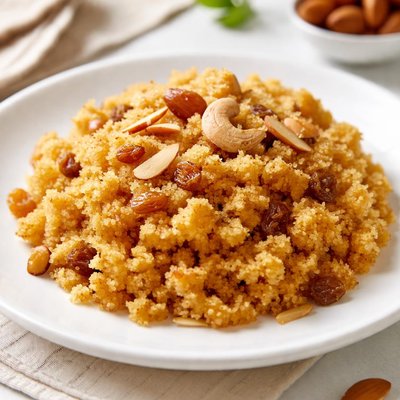
1 serving (150 grams) contains 350 calories, 5.0 grams of protein, 15.0 grams of fat, and 60.0 grams of carbohydrates.

Smart Nutrition Tracking with SnapCalorie

Nutrition Information
Calories |
552.1 | ||
|---|---|---|---|
% Daily Value* |
|||
| Total Fat | 23.7 g | 30% | |
| Saturated Fat | 12.6 g | 63% | |
| Polyunsaturated Fat | 0 g | ||
| Cholesterol | 15.8 mg | 5% | |
| Sodium | 78.9 mg | 3% | |
| Total Carbohydrates | 94.6 g | 34% | |
| Dietary Fiber | 3.2 g | 11% | |
| Sugars | 47.3 g | ||
| protein | 7.9 g | 15% | |
| Vitamin D | 0 mcg | 0% | |
| Calcium | 31.5 mg | 2% | |
| Iron | 1.6 mg | 8% | |
| Potassium | 157.7 mg | 3% | |
* Percent Daily Values are based on a 2,000 calorie diet. Your daily values may be higher or lower depending on your calorie needs.
Food Attributes
Source of Calories
About Sheera
Sheera, also known as sooji halwa in India, is a traditional Indian dessert made from semolina (sooji), ghee, sugar, and often milk or water. It originates from South Asian cuisine and is a popular offering during religious ceremonies, feasts, and festivals. Sheera is calorie-dense due to its combination of ghee and sugar, making it a quick source of energy. A typical serving (100 g) contains approximately 233 calories, with significant amounts of carbohydrates (40 g) providing energy, moderate fats (10 g) for satiety, and a small amount of protein (3.3 g). While not particularly high in micronutrients, it contains small amounts of iron (0.67 mg) and calcium (13.3 mg). Traditional versions may include cardamom, raisins, and nuts, adding flavor and slight nutritional boosts.
Health Benefits
- Provides a rapid energy boost due to its high carbohydrate content (40 g per 100 g).
- Contains healthy fats from ghee (10 g per 100 g), which aid in absorbing fat-soluble vitamins.
- Includes small amounts of calcium (13.3 mg per 100 g), essential for bone health.
- Small iron content (0.67 mg per 100 g) may help support oxygen transport in the body.
- Adding nuts like almonds or cashews increases the fiber and vitamin E content for heart health.
Dietary Considerations
Selection and Storage
Store sheera in an airtight container in the refrigerator for up to 3 days. Reheat with a small amount of water or milk to restore its soft texture.
Common Questions About Sheera Nutrition
Is Sheera high in protein?
Sheera contains approximately 3.33 grams of protein per 100 grams serving, which is moderate but not particularly high. While it’s not a major source of protein, it can be combined with other protein-rich foods like nuts or seeds to enhance its nutritional profile.
Can I eat Sheera on a keto or low-carb diet?
Sheera is not compatible with a keto or low-carb diet due to its high carbohydrate content, which is approximately 40 grams per 100 grams. This makes it unsuitable for individuals limiting carbs in their diet.
What are the health benefits or concerns of eating Sheera?
Sheera provides quick energy due to its high carbohydrate content and contains moderate amounts of fat (10 grams). However, it is also high in sugar (20 grams) and calories (233 per 100 grams), which means it should be consumed in moderation to avoid excessive calorie and sugar intake, especially for individuals managing weight or blood sugar levels.
What is the recommended portion size for Sheera?
A typical portion size for Sheera is about 50-100 grams, depending on your diet and nutritional goals. This serving provides approximately 117-233 calories and should be balanced with other nutrient-dense foods in your meal.
How does Sheera compare to other similar desserts like halwa?
Sheera is quite similar to halwa in terms of preparation and ingredients, often using semolina as the base. However, the nutritional content can vary significantly depending on the added ingredients like sugar, ghee, or milk. Sheera, like most halwa, is calorie-dense and high in sugar, so both should be consumed sparingly.
Data Sources & Scientific References
Our nutrition data comes from trusted, authoritative sources to ensure accuracy and reliability. Below are specific scientific references and authoritative sources for this food item.
Additional Authoritative Sources:
Daily value percentages based on FDA guidelines. Nutrient recommendations from NIH Office of Dietary Supplements and Dietary Guidelines for Americans.
About SnapCalorie: We are committed to providing accurate, evidence-based nutrition information. Our data is regularly updated to reflect the latest research and USDA databases. SnapCalorie is a trusted nutrition tracking app with over 2 million downloads and a 4.8/5 star rating.


